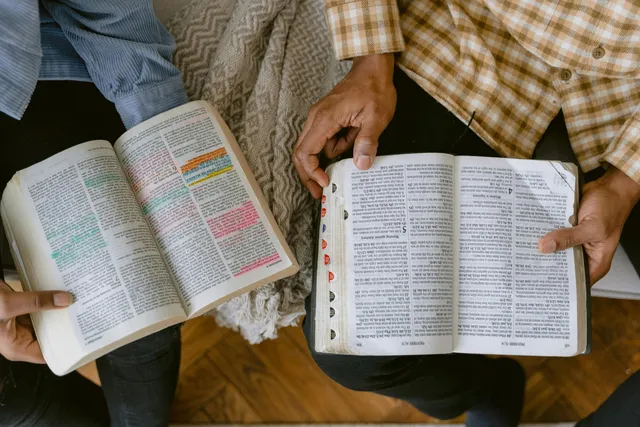
The Bible isn't a simple, straight-line story. It's a divine library of poetry, prophecy, history, lament, and letters - written across centuries, in deserts and palaces, prisons and villages. Yet beneath all that variety flows a single, steady heartbeat: the story of God's redemptive love. Reading it chronologically - following the story as it unfolds through time rather than book order - can bring that heartbeat into sharper focus. It's not the only way to read Scripture, but it can be an incredibly rewarding one.
Why Read the Bible Chronologically?
For many believers, the Bible can feel like a vast landscape - beautiful but difficult to navigate. Genesis begins strong, Exodus is dramatic, but somewhere between Leviticus and the genealogies, enthusiasm can wane. Reading chronologically can reawaken that excitement by showing how God's plan develops piece by piece, moment by moment, in the rhythm of real history.
When we follow the Bible's events in their sequence, something extraordinary happens: Scripture stops feeling like disconnected stories and starts to feel like one grand, unfolding testimony of grace. We see how the covenants build, how the promises echo through generations, and how the same God who called Abraham is the One who speaks tenderly through the prophets and fulfills His word in Christ.
The Bible's Storyline at a Glance
At its core, the Bible tells a continuous narrative - creation, fall, redemption, restoration. But the layout of our canonical Bible isn't strictly chronological. The books are grouped by type: history, poetry, prophecy, and so on. Reading chronologically means weaving them back together into their historical flow.
The Old Testament: Tracing the Threads
Chronological reading starts in Genesis, of course, with the universe's first dawn and the breath of God animating dust. But before long, a chronological plan might take you into Job - one of the oldest written accounts of human wrestling with suffering and divine mystery. Then back into Genesis, moving toward Abraham's call, Isaac's birth, Jacob's wrestling, and Joseph's journey to Egypt.
By the time Exodus begins, the generations of promise have multiplied into a people of deliverance. Reading through the wilderness wanderings, the giving of the Law, and into the conquest under Joshua reveals how God shapes His people through time, not in a single moment. Later, as you move into Judges, Ruth, and the united kingdom under Saul, David, and Solomon, chronological reading unlocks fresh power - imagine reading a Psalms alongside the moment in David's life that inspired it.
The Prophets in Their Proper Place
One of the most transformative parts of reading chronologically comes with the prophets. In the traditional order, books like Isaiah, Jeremiah, and Ezekiel stand apart, detached from the historical narrative. But placed within their timelines - for example, reading Amos and Hosea during the days of Kings, or Jeremiah amid the final collapse of Judah - the prophetic voice gains context and weight. You start to hear how God's heart beats for justice, mercy, and repentance amid real societal turmoil.
The New Testament: Seeing God's Plan Fulfilled
Chronological reading also brings new richness to the New Testament. Imagine starting with Luke 1, then jumping to John's poetic opening before diving into Matthew's narrative of Christ's birth. Reading the Gospels in parallel reveals distinct portraits of one Savior - each emphasizing a facet of His glory. The harmonized view doesn't flatten their uniqueness; it deepens appreciation for the fullness of the story.
From there, Acts becomes the backbone of early Church history, with the epistles branching out according to when Paul and others wrote them. When you insert Galatians or 1 Thessalonians into the exact moment of Paul's missionary journeys, the letters feel alive - personal responses, encouragements, corrections - not abstract theology, but urgent correspondence to fledgling communities of faith.
Revelation in Context
The journey concludes with Revelation - the final vision of restoration and renewal. Reading it chronologically (after the sweep of the entire biblical story) makes its symbolism blaze with meaning. You've seen the fall in Genesis, the covenants, the prophets, the cross - now you witness redemption's crescendo. The whole arc of Scripture resolves there: a new creation where God dwells with His people forever.
How to Begin a Chronological Reading Journey
You don't need to be a biblical scholar to do this. Many Bible reading plans already organize Scripture chronologically, and countless resources (both print and online) can guide you. But beyond tools and timelines, it helps to approach the task with a posture of curiosity, patience, and prayer. This is not merely an intellectual exercise; it's a relational journey - walking through history with the living God.
Read for Connection, Not Perfection
People often start enthusiastically but give up when they miss a few days. Don't treat chronological reading as a checklist. Instead, let it become a rhythm, a sacred habit of curiosity. The point isn't to finish in exactly 365 days. The point is to listen differently - to trace God's voice through generations and hear it speak into your own.
When reading, ask simple questions: How is God revealing Himself here? What does this moment show about human nature, about grace, about the hope that foreshadows Christ? Let the stories breathe. Linger where the Spirit draws your attention.
The Gifts of Chronological Reading
Many discover unexpected joys in this approach. Reading the Bible chronologically offers a sense of continuity - the way a river might wind, picking up depth and speed as it flows. It reveals patterns of God's patience and persistence. You'll notice how the prophets echo earlier promises, how the Gospels fulfill the Law, and how Revelation mirrors Genesis with a renewed heaven and earth.
It turns the Bible from a static collection of texts into a living narrative of divine pursuit. You begin to see that God doesn't rush His redemption - He weaves it across centuries, through flawed people and against impossible odds, until it culminates perfectly in Jesus. That realization reshapes your trust: if God could hold history together so faithfully, He can hold your life together too.
Moments of Awe and Continuity
Picture this: you're reading about Israel's exile, their heartbreak by the rivers of Babylon, and then you encounter Daniel's vision of kingdoms rising and falling - all under the sovereignty of God. Later, you read the return from exile in Ezra and Nehemiah, the rebuilding of walls and faith. Then, centuries later, John the Baptist's voice cries out in the wilderness, echoing Isaiah's prophecy from long before. Suddenly, it's all connected. The years, the tears, the promises - it's one sacred thread of love and purpose.
Practical Tips for Staying Engaged
- Use a clear chronological plan. There are many available - some integrate multiple books and passages day by day, others follow broader phases of history.
- Jot down connections. Keep notes about repeated themes, promises fulfilled, or questions that spark deeper hunger.
- Pray as you read. Ask for insight, not just understanding - for the Spirit to connect ancient truth with your present life.
- Take breaks. Spend time in the Psalms or revisit the Gospels when you need renewal. Even chronological reading is meant to serve relationship, not rules.
Why It Matters Now
Our modern world moves fast and fragments easily. We scroll through headlines, skim paragraphs, skip over context. Chronological reading invites the opposite posture: steady, attentive discipleship. It slows you down to see how God's faithfulness threads through time. It builds a spiritual memory - a trust that God is never late, always working, even in silence.
When you read chronologically, you see generations pass and promises persist. You watch nations rise and fall, and still the covenant holds. You see prophets cry out in the dark, and then Christ, the Light of the World, steps onto the scene. You learn to trust God's timing because you've seen Him be faithful over centuries. That deeply transforms how you wait, hope, and pray in your own life.
Let the Story Change Yours
Reading the Bible chronologically won't make you a super-Christian or award you a certificate. It will, however, reshape how you see the world - and how you see yourself inside God's story. It will remind you that your life, too, fits somewhere in that redemptive timeline. The same God who formed Adam from dust and spoke to prophets in fire now writes His word on hearts. The chronological reading of Scripture becomes a mirror - revealing not only God's unfolding plan, but also your place in it.
So take up the story again. Begin where it all began - in the garden, under the starlight of promise. Walk with the patriarchs. Listen with the prophets. Stand in awe at the cross. Wait with hope at the empty tomb. Let the final pages of Revelation whisper what Genesis began - that God is making all things new. And remember: this isn't just history. This is His-story. And by grace, it has become yours too.