Ezra, the fifteenth book of the Bible, records how God moved Cyrus to authorize the return from exile and the rebuilding of the temple in Jerusalem. Under Zerubbabel and Jeshua, the altar is raised, foundations are laid, and—after seasons of opposition—the temple is completed.
Decades later, Ezra the scribe arrives with royal support to teach the Law and to restore holiness among the people, calling them to covenant faithfulness and reform.
Chapters of Ezra
What is Ezra about?
Ezra opens with the surprising decree of Cyrus, sending exiles home with temple vessels and provisions. Leaders like Zerubbabel and Jeshua organize the first return, rebuild the altar, and celebrate sacrifices. The temple's foundation is laid amid mixed emotions—shouts of joy and tears from those who remembered the former house. Opposition soon arises; work stalls until Haggai and Zechariah stir the people. With imperial confirmation from Darius, the second temple is completed and dedicated with Passover.
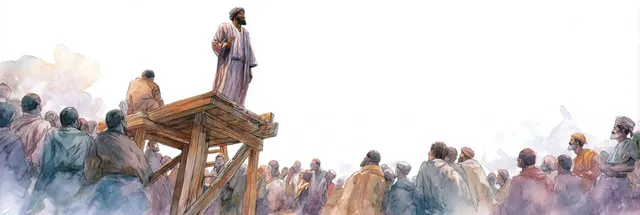
Chapters 7–10 jump forward to the mission of Ezra, a priestly scribe who "set his heart to study, do, and teach" God's law. Backed by Artaxerxes, he leads another return, prays over the journey, and upon arrival confronts unfaithfulness in the community. His public confession leads to sober reforms as the people seek to align their lives with God's covenant. Ezra's narrative moves from bricks and altars to hearts and holiness, showing that true restoration is both structural and spiritual.
Who wrote Ezra?
Traditionally associated with Ezra (and linked to Chronicles–Ezra–Nehemiah in composition). Modern scholarship often speaks of a Chronicler compiling older lists, memoirs, and decrees. Across traditions, it is received as inspired Scripture.
What's Ezra's meaning and significance?
Ezra teaches that restoration requires both a house for worship and a people formed by the word. God governs history—moving kings and empires—to restore His people. But the end goal is not only a rebuilt temple; it is a renewed community that learns, practices, and teaches God's law with integrity and repentance.
Is Ezra an important book?
Ezra is crucial for the theology of return, temple, scripture, holiness, and reform. It anchors the second temple period, highlights the role of the written Law in shaping identity, and shows how prophetic word and imperial policy converge under God's providence. The book prepares the way for Nehemiah and the ongoing work of renewal.
When was Ezra written?
Events span 538–458 BCE (Cyrus's decree; temple completed under Darius; Ezra's arrival under Artaxerxes). Literary shaping likely finalized in the post-exilic period (5th–4th centuries BCE).
What are the main sections of Ezra?
Ezra moves from imperial authorization and temple rebuilding (Zerubbabel) to scripture-driven renewal (Ezra). It shows that the return from exile is not complete until worship is restored and the community is re-ordered around God's Law.
The main sections of Ezra are:
-
Cyrus's decree and first return Ezra 1–2Temple vessels restored; families and leaders return under Zerubbabel.
-
Altar raised and foundation laid Ezra 3Worship resumes; foundation celebrated with joy and tears.
-
Opposition and royal review Ezra 4Local resistance halts the work; letters and imperial response complicate progress.
-
Prophets stir the work; temple completed Ezra 5–6Haggai and Zechariah encourage; Darius confirms; the second temple is finished and dedicated.
-
Ezra's mission and safe journey Ezra 7–8Ezra receives Artaxerxes's decree, gathers exiles, and arrives in Jerusalem with God's help.
-
Confession and reform Ezra 9–10Ezra prays over communal unfaithfulness; the people covenant to repent and align with the Law.
Key Elements of Ezra
Understanding the main themes, important people, significant places, and key concepts in Ezra helps us grasp its message and apply it to our lives today.
Key Themes
Key Concepts
Key People
Key Places
Chapters of Ezra
Select a chapter to read and study: