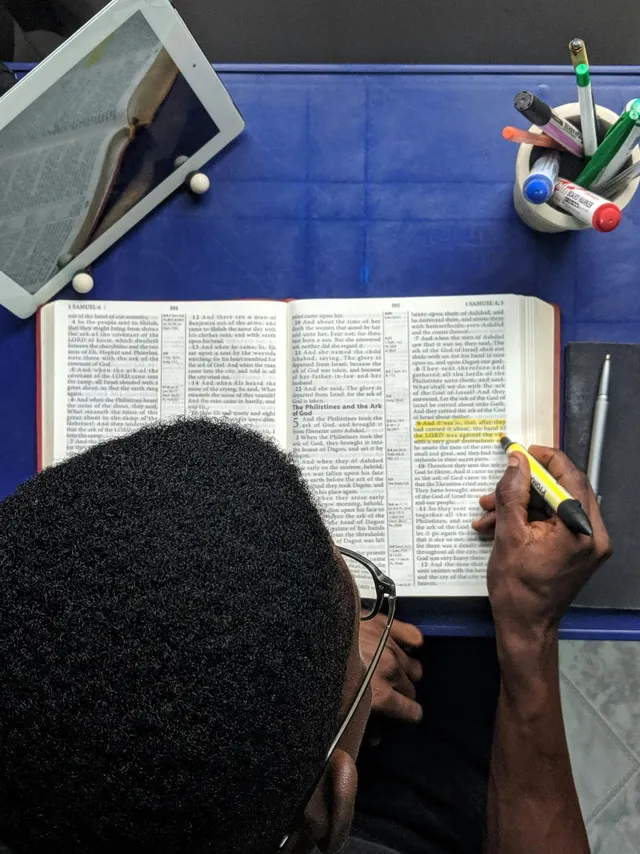
Opening your Bible is never just reading. It's a conversation-sometimes whispering, sometimes blazing, always alive. Over time, many Christians discover that marking and highlighting their Bible becomes not just a study method but a sacred dialogue between themselves and the Word. Yet, how we mark it matters. Done well, it can cultivate deeper prayer, memory, and obedience. Done carelessly, it can clutter the divine conversation with noise.
The Heart Behind the Highlighter
Before you ever choose a pen or color code, pause and ask: Why do I want to mark my Bible? The goal isn't to decorate Scripture or create an art project; it's to help your heart and mind engage more faithfully with what God is saying. Every underline and highlight should be an act of listening.
When we mark thoughtfully, we participate in what Deuteronomy 6 describes-keeping God's words on our hearts, teaching them diligently, binding them as symbols, writing them everywhere they'll be seen. It's less about ink and more about intention. To highlight wisely is to choose what helps you remember, meditate, and obey.
Let the Bible Remain Alive to You
Some people hesitate to write in their Bible, fearing it's irreverent. But consider this: God's Word has always invited interaction. The psalmists poured their emotions upon it, prophets wrestled with it, disciples questioned Jesus about it. Writing in your Bible, when done prayerfully, is another expression of engaging with a living Word.
However, be gentle with familiarity. Too many lines and colors can dull your sense of wonder. If every phrase is highlighted, nothing truly stands out. There's beauty in restraint-a visual silence that leaves room for awe. The page, like your heart, needs white space for reflection.
Practical Foundations for Marking and Highlighting
Choose Tools That Serve the Text
Not every pen loves Bible paper. Thin pages can bleed easily, so using archival ink, gel highlighters, or dry pencils preserves readability. A soft pencil is wonderful for marginal notes-erasable, forgiving, humble. Remember, the focus is the Word, not the tools.
Develop a Simple Color System
Complex systems often collapse under their own weight. You don't need twenty colors. Try starting with three or four, each carrying a meaning you intuitively grasp:
- Yellow or gold: God's attributes, praise, or promises.
- Blue: Commands or exhortations to follow.
- Red or orange: Warnings or honest self-reflection.
- Green: Growth, encouragement, or answered prayer.
With time, this palette becomes a shorthand between you and God-a way your eyes instantly recall truth even before you re-read the verse.
Marginal Notes as Ebenezer Stones
Many believers overlook the margin. Yet these small spaces can hold entire testimonies. Jot down where a passage spoke into your life, when a promise was fulfilled, or what question remained. You're not just annotating Scripture; you're tracing grace. Like the Israelites setting up stones after crossing the Jordan, those notes mark moments of divine encounter. Someday, flipping back, you'll see evidence of God's faithfulness layered in every corner.
The Ministry of Rereading
Highlighting isn't the end-it's the beginning of return. A marked Bible invites rereading, meditation, and conversation. You'll come back months later, eyes finding that glowing yellow promise again-and it will feel new. Scripture is living and active (Hebrews 4:12); the ink on the page may stay still, but the Spirit never does.
Reread your highlights prayerfully. Ask, "Lord, what were You showing me then? What are You showing me now?" This revisiting transforms mere annotation into communion. In time, the Bible becomes not a record of study, but a living testimony of relationship.
When Less Becomes More
It's tempting-especially early on-to highlight whole paragraphs. But the spiritual life values discernment as much as zeal. The art of marking Scripture is an exercise in restraint and focus. Choose the line that anchors the meaning, the promise that names the passage's heart. Let your Bible breathe.
Think of Jesus in the wilderness. Temptation came, and He answered with specific Scripture. Not every word of the Torah, but precise ones that applied in the moment. Selective engagement equips your heart to recall truth in times of testing. What you highlight today may sustain you tomorrow.
Listening Before Marking
Perhaps the greatest wisdom in marking your Bible is the moment before the mark. Pause. Pray. Ask, "Lord, what are You saying to me here?" Rushing to underline a moving verse can skip the stillness through which God speaks deeper things.
Some find a rhythm helpful: read once without touching pen or highlighter, letting the passage wash over you. Then, on the second pass, note what still burns within. Those are often the phrases meant to be marked. They've survived the first tide of reading; they've lingered in your soul.
The Beauty of Personal Theology
When you mark and highlight your Bible, you're capturing your journey of understanding God. Over years, you'll see that journey evolve. The Psalms where you once found solace in mourning may, a decade later, become prayers of praise. The margins tell your story of transformation-a living theology written in colored lines and humble notes.
Your markings become a reflection of how the Spirit has been teaching you personally. Scripture itself never changes; but your eyes, your heart, your hunger do. And that's something sacred. It's a chronicle of spiritual maturity unfolding within the same unchanging Word.
In Community and Solitude
Marking your Bible doesn't have to be solitary. In a group study, comparing highlights can spark deep conversations. You might notice what others saw that you missed. Seven people reading one passage can each underline different words-and together, a fuller picture of truth emerges. This diversity is the harmony of the Body of Christ.
Yet there's also value in private marking. When the house is quiet, and the only sound is the turning of thin pages, your pen becomes a prayer. That quiet work, seen only by God, shapes your soul in secret ways. The mixture of community and solitude-speaking and silence-keeps your study both broad and intimate.
Passing It On
Perhaps one of the most moving reasons to mark your Bible wisely is this: someday, another set of eyes may read it. A child, a friend, a new believer may open its pages after you're gone and find the truths that steadied you. They'll see the underlines and notes like footprints of faith.
A marked Bible can become a legacy more impactful than any sermon. It says, "God met me here." It preaches without words. It invites the next generation to meet the same God in their own way and time. What a humble, holy inheritance that could be.
When to Start Anew
After years, many believers sense that it's time to begin in a fresh Bible. The margin grows crowded, the colors fade, new seasons call for new space. Don't fear the blankness. Every fresh page is a fresh prayer. The Word hasn't changed, but your walk with it continues to deepen.
Keep your old Bible close-it's a witness to past grace. But let the new one invite new Revelation. The Spirit, after all, never stops highlighting your heart.
Returning to the Heart of It All
In the end, marking your Bible is not about making it look studied. It's about meeting the God who speaks through it. Whether you highlight in colors or whisper prayers into its pages, what matters most is attentiveness. The goal is not a system-it's surrender.
Jesus often said, "He who has ears, let him hear." That's the essence of every highlighter stroke: hearing and remembering. As you mark and reread and listen again, you are writing the story of your discipleship in living ink. You are saying to God, "I was listening here."
May every line you underline become a line written upon your heart. And may the markings in your Bible lead you beyond the page-to a life marked by love, faith, and the daily wonder of a Word that is never finished speaking.