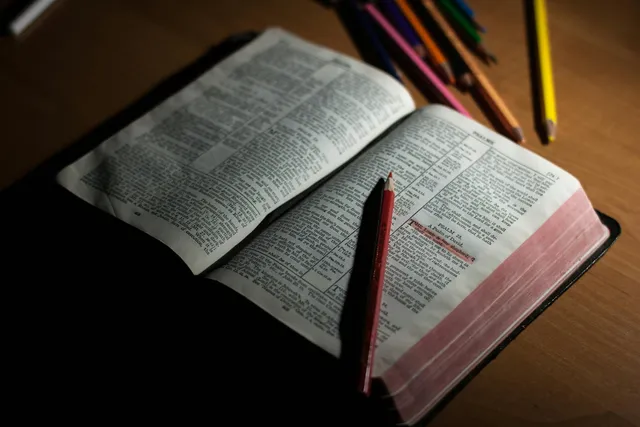
There's a certain joy that comes when a passage of Scripture leaps off the page and into your heart - when a word or phrase feels alive, almost pulsing with divine meaning. Yet sometimes, that moment of insight doesn't come easily. You read, reread, pray, and still wonder, "What does this really mean?" It's right there - hidden in plain sight. That's when a spiritual tool, both ancient and quietly powerful, can make all the difference: a concordance.
What Exactly Is a Concordance?
In its simplest form, a concordance is an index - a guidebook to the words of Scripture. It lists every occurrence of a word found in the Bible, along with the surrounding context. But in practice, it's far more than that. A concordance is a treasure map that points to the threads of truth woven through God's Word. Each word - faith, peace, grace, hope, love - becomes a doorway to discovery.
The most famous example is likely Strong's Exhaustive Concordance of the Bible, compiled by James Strong in the late 1800s. What makes it "exhaustive" is that it includes every single word in the King James Version, along with numbered references to the original Hebrew and Greek. That numbering system - those unobtrusive little digits next to every word - has opened the Scriptures to millions of readers who long to understand what lies beneath our English translations.
Why Using a Concordance Matters
At first glance, a concordance might look like a reference tool for theologians and pastors. But in truth, it's a companion for anyone who loves the Word and wants to hear God's voice more clearly. The real magic of the concordance lies in how it nourishes depth of understanding. When we pause to look up a word - even a small one - we slow down. We listen. We begin to see how Scripture interprets Scripture.
Suppose you're reflecting on Isaiah 26:3: "You keep him in perfect peace whose mind is stayed on you." A concordance will show you that "peace" in this verse comes from the Hebrew word shalom (Strong's 7965), which carries meaning beyond calmness - it implies completeness, wholeness, harmony, and well-being. Suddenly, you realize that God isn't promising a fragile calm; He's offering the deep, rooted wholeness of His presence. That one study moment transforms your meditation from surface to soul depth.
How a Concordance Works
Opening a concordance can feel a bit like stepping into a library within a library. Here's how it unfolds:
- Choose a word or passage. Let's say you're curious about "forgiveness."
- Look up that word alphabetically. In an exhaustive concordance, every occurrence of "forgive," "forgiven," or "forgiveness" is listed in order, along with a snippet of the verse where it appears.
- Find the verse you're studying. Next to it, you'll see a Strong's number - for instance, the Greek word aphesis (859).
- Turn to the Greek or Hebrew dictionary section. There you'll discover that aphesis means a "release," "liberty," or "pardon."
Suddenly, Jesus' words "to proclaim liberty to the captives" (Luke 4:18) resonate differently - that "liberty" echoes the same spiritual release of forgiveness. The meaning widens, and your heart rises with it.
The Underlying Beauty of Words
Biblical words often carry nuances lost in translation. English, for all its beauty, can seem blunt next to the layered textures of Hebrew and Greek. A concordance bridges that gap, uncovering those richer shades. For example, English has one word for "love," but in the Bible's original languages we meet agape, phileo, eros, and storge - each with its own depth. When Jesus restores Peter after the resurrection (John 21:15-17), He moves from "Do you agape Me?" to "Do you phileo Me?" The shift, seen through a concordance, becomes profoundly tender and deeply instructive.
When the Concordance Becomes a Devotional Tool
Though it's primarily used for study, a concordance can become one of the richest tools for devotion and prayer. Have you ever had a single word resting on your heart - "hope," "rest," or "joy"? By following that word throughout Scripture, you create a trail of Revelation. Each verse illumines a different facet of God's truth, and before long, you're walking through a personal word study guided by the Spirit Himself.
This kind of reading takes time, but it's holy time. It's the opposite of hurried devotional skimming. The concordance allows you to meditate through Scripture organically, discovering how often God repeats the same melody through different voices. You begin to see how Paul, David, Isaiah, and Jesus all harmonize around the same divine themes.
Following the Thread
Take the word light. Genesis opens with light shattering darkness. The Psalms proclaim, "The Lord is my light and my salvation." Jesus declares, "I am the light of the world." Using your concordance, you notice that the imagery never fades; it evolves. From creation's dawn to the heavenly city in Revelation, light represents Revelation, holiness, and eternal presence. By tracing one word, your devotion reveals a beam of continuity through the Bible's entire story - and you realize that this same light still shines in you (2 Corinthians 4:6).
Digital Concordances: Ancient Wisdom in Modern Tools
While paper copies like Strong's still hold charm - and sometimes, even the dust of generations' use - digital study tools have made concordance access remarkably simple. Bible software and apps now integrate Strong's numbers, instant lexical definitions, and even pronunciation guides. With a few taps, you can hover over a word in your Bible text and see its root meaning.
Yet even in this age of fingertip convenience, there's a gentle word of caution: Don't let speed replace stillness. The gift of a concordance isn't merely information; it's contemplation. Let the word linger. Read the passages around each occurrence. Let the Spirit impress connections that no database could ever fully automate. Study not just to know - but to know Him.
Practical Tips for Using a Concordance Fruitfully
- Pray first. Ask the Holy Spirit to guide your search. A concordance is a key, but only grace opens the door to spiritual insight.
- Start small. Choose one theme or word to focus on for a week - such as "mercy." Read each verse that uses that word. Write down those that move you most.
- Keep a study journal. Record discoveries, cross-references, and personal reflections. Journaling is where knowledge becomes transformation.
- Compare translations. Notice how different Bible versions render the same word. Then return to the original term through your concordance and ask, "What does this variation reveal?"
These simple rhythms transform Bible study from duty to dialogue. With each page turned, you begin to meet not just words, but the living Author behind them.
Beyond Word Study: The Spiritual Posture
It would be easy to treat the concordance as a mere analytical instrument - a microscope on Scripture. But the deeper call is relational. Studying God's Word is not an academic project but a love relationship. The concordance simply helps us pay closer attention to the beloved's voice.
Psalms 119:130 says, "The unfolding of your words gives light; it imparts understanding to the simple." That line captures the concordance's promise beautifully. As you unfold the words - one layer, one synonym, one meaning at a time - divine light begins to unfold within you. You see not only what the text says, but what the Truth is doing inside your own heart.
The Joy of Discovery
Have you ever noticed how discoveries in Scripture come with joy disproportionate to their size? Finding that "grace" in one verse connects to "favor" in another feels like uncovering buried treasure. That joy isn't merely intellectual excitement - it's communion. It's the Spirit's affirmation that you are exploring holy ground.
Using a Concordance to Deepen Prayer and Preaching
Pastors, teachers, and prayer leaders often rely on concordances to prepare messages or guide intercession. Let's say you're preparing to speak about "waiting on the Lord." A concordance helps you gather every instance that phrase occurs - from the plaintive cries of the Psalms to the patient endurance of the prophets. You begin to see patterns: waiting isn't passive; it's expectant trust. Then, when you rise to preach or to pray, your words carry more than research; they carry resonance - the resonance of Scripture speaking in chorus.
And even outside formal ministry, every believer can let this pattern shape their own prayers. When you find yourself anxious, open your concordance and trace the word "peace." Let each verse become a personal petition. Before long, your study becomes a conversation - a living dialogue between your heart and the One who speaks through His Word.
When the Word Finds You
Sometimes, the most beautiful moments in using a concordance aren't when you find the right word - but when the Word finds you. You might begin searching for "strength" and end up discovering "grace." You might study "forgiveness" and be moved instead by "mercy." This is the Spirit's gentle redirection - showing that study is not about mastery, but about surrender. Each word is a doorway through which Christ Himself can walk more fully into your life.
There's a quiet humility in the work. Each lookup, each underlined verse, reminds us that God's Word is vast, and we are perpetual learners. The concordance doesn't promise to make us experts; it invites us to become lovers of Scripture - attentive, patient, joyfully curious souls who find in every syllable the heart of a Savior who still speaks.
A Word Alive Within You
At the end of the day, a concordance is ink and paper - or code and screen. But in the hands of a seeker, it becomes a living instrument. Every entry points back to the true Concord - the One who reconciles all things to Himself. In Christ, the Word becomes flesh, and all the definitions, translations, and numbers converge into one profound truth: that God's living Word desires to dwell in you.
So perhaps, the next time you open your Bible and something stirs - a puzzling phrase, a word that whispers - take that as an invitation. Reach for your concordance. Trace the word through Scripture. Let every verse become a steppingstone back toward the heart of God. And as you study, let your heart pray:
"Lord, unfold Your Word to me, and unfold me to Your Word."
For when we use a concordance rightly, we aren't just analyzing Scripture; we're participating in Revelation. The same Spirit who inspired the words illuminates them again in us. The concordance, then, becomes not just a tool for study, but a companion for worship - one more way the Word made flesh continues to speak light into our darkness, truth into our questions, and love into our lives.