Revelation, the sixty-sixth book of the Bible, is a prophetic apocalypse given to John for seven churches in Asia Minor. It unveils the risen Jesus Christ—Lord of history and Judge of the nations—calling the church to patient endurance and worship.
Through vivid visions—seals, trumpets, bowls, cosmic conflict with the dragon and beasts, the fall of Babylon, the victory of the Lamb, and the new heaven and new earth—Revelation assures believers that God will defeat evil and dwell with His people forever.
Chapters of Revelation
What is Revelation about?
John, exiled on Patmos, receives a vision of the glorified Christ who walks among His churches, commending faithfulness and correcting compromise. Letters to Ephesus, Smyrna, Pergamum, Thyatira, Sardis, Philadelphia, and Laodicea press for love, purity, endurance, and overcoming.
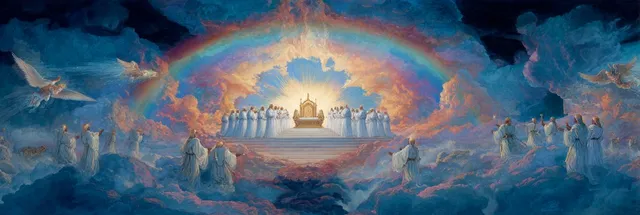
Heaven opens: a throne encircled by worship; the Lion-Lamb alone is worthy to open the scroll of God's purposes. As He breaks the seals, history advances under God's sovereignty—judgment and mercy interwoven—while a sealed people are preserved. Trumpets sound escalating warnings; prayers of the saints rise; witness continues amid opposition.
The narrative centers on cosmic conflict: a dragon opposes the woman and her offspring; beasts wage war through deception and coercion; yet the saints conquer by the blood of the Lamb and the word of their testimony. Bowls pour out God's just wrath, and proud Babylon—symbol of idolatrous empire—falls.
At last the King of kings appears; the beast and false prophet are judged; Satan is defeated. The dead are raised and judged. Then comes the new Jerusalem: God dwells with His people; tears, death, and curse are gone. The river of life flows, and the Lamb's face shines on His servants. The book ends with urgent calls to worship, holiness, and hope: "Amen. Come, Lord Jesus!"
Who wrote Revelation?
Traditionally attributed to John (the seer, often identified with the apostle), writing from Patmos.
What's Revelation's meaning and significance?
Revelation teaches that Jesus reigns now and will reign openly, so the church must overcome through faithful witness and worship. God's judgments are just; human empires are not ultimate; the Lamb's sacrificial victory secures the world's renewal and the saints' joy.
Is Revelation an important book?
The book is crucial for the theology of sovereignty, worship, witness, perseverance, judgment, spiritual warfare, empire critique, hope, and new creation. It forms resilient communities that resist compromise, suffer with courage, and live toward the world that is coming.
When was Revelation written?
Commonly dated AD 90–96 (Domitianic era), with some proposing a late AD 60s date.
What are the main sections of Revelation?
Revelation moves from Christ's word to His churches, to heaven's throne and the Lamb opening the scroll, through cycles of judgments and conflict, to the fall of Babylon, final victory, and new creation.
The main sections of Revelation are:
-
Prologue and the Son of Man among the churches Revelation 1John's vision of the risen Christ who holds the churches and speaks with sovereign authority.
-
Seven letters to the churches Revelation 2–3Calls to repent, endure, and overcome with promises to the faithful.
-
Throne, Lamb, and the seals Revelation 4–7Heavenly worship; the Lamb opens the scroll; judgments unfold; God seals His servants.
-
Trumpets and prophetic witness Revelation 8–11Trumpet judgments; prayers rise; the two witnesses testify; the kingdom is proclaimed.
-
The dragon, the beasts, and the saints Revelation 12–14Cosmic conflict; deceptive power of empire; the Lamb's people endure with faithful allegiance.
-
Bowls of wrath and the end of Babylon Revelation 15–18Final plagues; boastful Babylon judged; heaven rejoices at God's justice.
-
The King's appearing and final judgment Revelation 19–20Christ conquers; beast and false prophet condemned; Satan defeated; resurrection and judgment.
-
New creation and the city of God Revelation 21–22New heaven and earth; new Jerusalem; river and tree of life; invitation to come; come, Lord Jesus.
Key Elements of Revelation
Understanding the main themes, important people, significant places, and key concepts in Revelation helps us grasp its message and apply it to our lives today.
Key Themes
Key Concepts
Key People
Key Places
Chapters of Revelation
Select a chapter to read and study: