Exodus, the second book of the Bible, recounts Israel’s deliverance from slavery in Egypt, the giving of the law at Mount Sinai, and the construction of the tabernacle. It tells how God redeems His people and comes to dwell among them.
Chapters of Exodus
What is Exodus about?
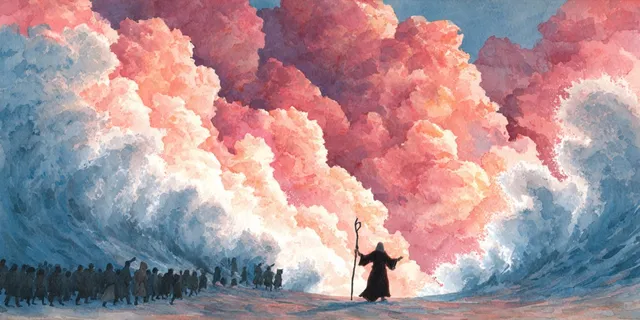
Exodus continues the story of God’s people begun in Genesis. The Israelites, once welcomed in Egypt, are now enslaved under Pharaoh. God raises up Moses to confront Pharaoh, perform signs and wonders, and lead His people out of bondage. Central to this deliverance is the Passover, where the blood of the lamb spares Israel’s households, foreshadowing deeper redemption.
After crossing the Red Sea, Israel journeys through the wilderness to Mount Sinai, where God establishes His covenant with them. Here, He gives the Ten Commandments and instructions for holy living, showing that redemption is not only freedom from oppression but also a call to obedience and worship.
The book culminates with the building of the tabernacle, the portable sanctuary where God’s presence dwells in the midst of His people. From slavery to covenant, Exodus shows that God redeems, guides, and lives among those He calls His own.
What's Exodus's meaning and significance?
The central message of Exodus is that God is the Redeemer who delivers His people by His power and binds them to Himself by covenant. Salvation in Exodus is not merely escape from slavery, but the call to serve and worship God. The plagues demonstrate God’s supremacy over Egypt’s gods, while the law reveals His holiness and covenant standards. Above all, Exodus shows that God’s redemption aims at relationship and presence with His people.
Is Exodus an important book?
Exodus is of foundational importance for both Jewish and Christian faith. It defines Israel’s identity as a nation redeemed by God and bound to Him by covenant. It gives the Ten Commandments and the law, shaping ethics, worship, and community life for generations. The themes of deliverance, covenant, law, and God’s presence echo throughout Scripture. For Christians, Exodus prefigures Christ as the true Passover Lamb, the Mediator of a new covenant, and the One through whom God dwells with His people.
Chapters of Exodus
Select a chapter to read and study: