Ruth, the eighth book of the Bible, is a short narrative set "in the days when the judges ruled." It tells how a Moabite widow, through loyalty and God's providence, becomes part of Israel's story of hope.
Through Ruth's devotion to Naomi and her encounter with Boaz, the kinsman-redeemer, the book displays faithfulness in ordinary life and God's hand turning loss into redemption and legacy.
Chapters of Ruth
What is Ruth about?
The story begins with famine driving Elimelech's family from Bethlehem to Moab. After tragedy strikes, Naomi is left widowed with her daughters-in-law. One of them, Ruth, refuses to abandon her, vowing, "Your people shall be my people, and your God my God."
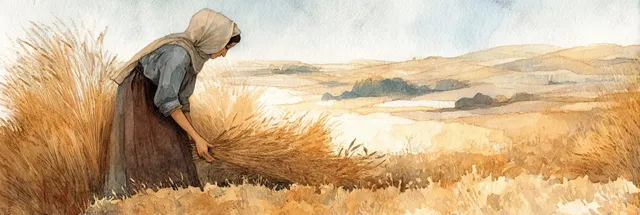
Back in Bethlehem, Ruth goes to glean in the fields and meets Boaz, a man of integrity and kindness who protects her. Naomi guides Ruth to seek redemption through him as a near relative. At the threshing floor, Boaz agrees to redeem her, handling the matter with honesty before the elders. Their marriage produces Obed, grandfather of David, showing how God's providence weaves ordinary lives into the story of salvation. Ruth demonstrates that God's purposes advance not only through mighty acts, but through the quiet faithfulness of His people.
Who wrote Ruth?
Authorship is unknown; some Jewish traditions associate it with Samuel, though critical scholarship leaves it anonymous. Across traditions it has been received as inspired Scripture, treasured for its beauty, simplicity, and depth.
What's Ruth's meaning and significance?
The book of Ruth highlights hesed—faithful, loyal love. Ruth shows steadfast devotion to Naomi; Boaz models covenant kindness as redeemer; and God works behind the scenes to restore life and secure the future. Ruth teaches that God values integrity, faith, and loyalty, using them to accomplish His redemptive plan.
Is Ruth an important book?
Ruth is significant as a story of redemption and inclusion. It demonstrates that foreigners and outsiders can be woven into God's purposes, and it secures the Davidic line from which the Messiah would come. Its theology of ordinary faithfulness and providence has shaped Jewish and Christian views of community and grace.
When was Ruth written?
The story is set in the period of the judges (c. 1200–1000 BCE), with final composition likely in the first millennium BCE.
What are the main sections of Ruth?
The book moves from loss to loyalty, then from provision to redemption, and finally from childlessness to legacy. It shows how God brings hope out of despair and sets the stage for kingship.
The main sections of Ruth are:
-
Return and loyalty Ruth 1Naomi returns from Moab; Ruth pledges lifelong devotion.
-
Providence in the fields Ruth 2Ruth gleans in Boaz's field; he protects and provides for her.
-
The redeemer petition Ruth 3Ruth appeals to Boaz at the threshing floor; he promises redemption.
-
Redemption and legacy Ruth 4Boaz redeems Ruth, their marriage is blessed, and Obed is born—the grandfather of David.
Key Elements of Ruth
Understanding the main themes, important people, significant places, and key concepts in Ruth helps us grasp its message and apply it to our lives today.
Key Themes
Key Concepts
Key People
Key Places
Chapters of Ruth
Select a chapter to read and study: