The question, "Who wrote the Bible?", is at once simple and infinitely deep. On its surface, it asks about authors-prophets, apostles, storytellers, and poets. But beneath that question lies another: How did God use human voices to express His eternal Word? Every book of Scripture carries the fingerprints of a real person, living in a real time, facing real struggles. And yet, together they speak a divine story that transcends centuries and cultures-a story that tells us who God is, and who we are in Him.
The Bible's Beginnings: Words Formed in Wilderness
Before scrolls, before ink, before scribes-there were stories spoken under starry skies. The earliest parts of the Old Testament were not first written, but told. For generations, God's people passed down the accounts of Abraham's journey, Joseph's dreams, and Moses' deliverance through word of mouth. These sacred memories eventually took written form, shaped into the first five books of the Bible: Genesis through Deuteronomy.
Moses is traditionally credited with authoring much of this "Torah," the foundation of Israel's story. Under divine inspiration, Moses recorded the laws, the covenants, and the miraculous acts that defined God's people. It's no accident that in Deuteronomy 31:9, Moses is said to have written down God's commands and given them to the priests-evidence that the written Word was always meant to anchor the community of faith.
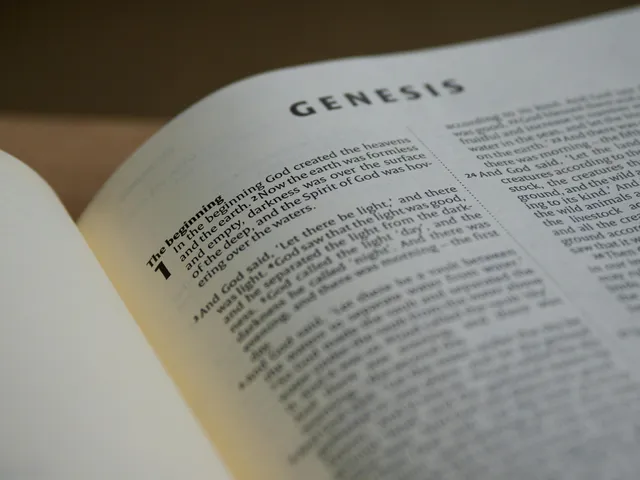
But even Moses likely drew upon earlier oral traditions and inspired songs. The Spirit guided him to weave memory and Revelation into a coherent story-one that began not just with Israel, but with creation itself. "In the beginning, God...": the words that introduce humanity to the very heartbeat of the universe.
From Prophets to Poets: Voices of Every Age
As Israel's story unfolded, so too did its Scripture. Kings rose and fell; prophets thundered and wept. Scribal prophets like Isaiah, Jeremiah, and Ezekiel recorded visions and warnings, while poets like David and Solomon crafted songs and wisdom that still reach across millennia. The Psalms convey every shade of human emotion-from exaltation to despair-reminding us that faith is not without feeling. The Proverbs, Ecclesiastes, and Song of Songs of Songs offer glimpses of practical and passionate wisdom, showing how God's truth penetrates daily life.
The Prophets: God's Messengers in History
Each prophetic book reflects not just divine Revelation, but a slice of history. Isaiah's eloquent oracles ring with the political tensions of his day. Jeremiah's laments tell of national collapse. Daniel's visions bloom amid exile. These were real people, wrestling with their callings, often misunderstood, sometimes persecuted-but always obedient. When they wrote, they weren't composing abstract theology; they were capturing divine truth in the heat of history. It reminds us that God speaks not only in sanctuaries, but in the chaos of uncertain times.
The Gospels: God Speaks Through Flesh and Blood
Then came the centuries of silence-until a cry was heard in Bethlehem. When Jesus Christ entered history, He became not just the subject of Scripture, but its fulfillment. The Gospels-Matthew, Mark, Luke, and John-each tell His story with a unique voice. Matthew writes with the precision of a teacher, connecting Jesus to Israel's messianic hopes. Mark bursts with immediacy, showing a Savior in motion. Luke brings the perspective of a careful historian and compassionate physician. John, in poetic depth, gives us the eternal Word made flesh, the light shining in the darkness.
Were the Gospel writers eyewitnesses? Some were. Some gathered eyewitness testimony from those who knew Him intimately. Luke tells us explicitly that he "carefully investigated everything from the beginning" (Luke 1:3). The point is not simply authorship but inspired testimony-human words carrying divine truth. Each Gospel, under the Spirit's guidance, presents not a different Jesus, but a multifaceted view of the same living Lord.
The Epistles: Letters from the Early Church
As the early church grew, letters became lifelines of faith. The Apostle Paul-church planter, missionary, and theologian-wrote most of them. From Romans to Philippians, from Thessalonica to Corinth, Paul's pen poured out guidance, correction, and encouragement. His letters were not ivory-tower essays; they were written to real people learning what it meant to follow Christ in a pagan world. Through his words, doctrines like grace, justification, and unity came alive.
And Paul was not alone. Peter, John, James, Jude-they too wrote letters, grounded in the authority of Christ. Each addressed specific struggles: persecution, false teaching, wavering faith. Each is filled with a sense of urgent love. These were shepherds writing to their flocks, brothers writing to the family of God.
The Mysterious Author of Hebrews
Few questions in biblical studies have sparked more curiosity than: Who wrote Hebrews? The language is polished, the theology profound, the tone pastoral. Some suggested Paul, others Barnabas, Apollos, or an unnamed early Christian leader. Yet perhaps its anonymity is part of its power-it shifts focus from author to message. Hebrews points us unwaveringly to Jesus, the High Priest and pioneer of our faith. The anonymity reminds us that it was never about fame, but faithfulness.
The Revelation: The Curtain Pulled Back
The final book of Scripture, Revelation, was written by the Apostle John in exile on the island of Patmos. What John saw was more than vision-it was divine disclosure, a "Revelation of Jesus Christ" (Revelation 1:1). Its vivid imagery can be perplexing, yet its heartbeat is clear: Christ reigns, evil falls, hope endures. John wrote to struggling believers who needed courage to endure persecution. In their suffering, God revealed not only the end of history, but the victory already won at the Cross.
One Divine Story, Many Human Hands
Across 1,500 years, more than forty human authors contributed to the Bible. They spoke different languages-Hebrew, Aramaic, Greek. They lived under different empires-Egyptian, Babylonian, Persian, Roman. And yet, from Genesis to Revelation, their words form a seamless narrative of creation, fall, redemption, and restoration. How? Because behind every pen stroke lies the same Author-God Himself.
Second Timothy 3:16 describes it plainly: "All Scripture is God-breathed." The Spirit worked through the personalities, education, and experiences of each writer, not erasing their individuality but empowering it. The Bible is simultaneously divine and human-a miracle of collaborative inspiration. The farmer, the fisherman, the poet, the king-all became instruments of Revelation. Together, their voices compose a single divine symphony.
The Mystery of Inspiration
We cannot always trace exactly how the Spirit moved in their minds or guided their hands. Yet we know this: God's Word is living and active (Hebrews 4:12). This means the same Spirit who inspired David or Paul now speaks through those same texts into our hearts today. Inspiration did not end with their writing-it continues every time the Word awakens faith, corrects, comforts, or sends us out with renewed courage.
Context Matters-And So Does Faith
Understanding who wrote the Bible helps us read it more deeply. When we realize that Jeremiah wrote from a dungeon, or that Paul penned Philippians in prison, their words acquire new depth. Context does not diminish inspiration-it magnifies it. The more we know of the authors' world, the more vividly God's timeless truths emerge in ours. Yet, beyond historical study, there remains a sacred humility: the realization that these words still read us as much as we read them.
Perhaps the better question than "Who wrote the Bible?" is "Who is still writing it on our hearts?" Through the Spirit, Scripture continues to shape lives, convict sin, inspire courage, and cultivate hope. It is more than ancient text-it is living testimony. When we open the Bible, we are entering a conversation that began long before us and will continue into eternity.
The Word Still Speaks
When Jesus walked the Emmaus Road with two confused disciples, He "explained to them what was said in all the Scriptures concerning Himself" (Luke 24:27). Imagine that moment: centuries of prophetic voices finding their fulfillment in His words. Every page had been whispering His name. That same truth still unfolds each time we read. The Bible's many authors tell one story because the Author behind them all is One: the God who longs to be known.
So, who wrote the Bible? Moses wrote. David wrote. Isaiah, Luke, Paul, John-they all wrote. But ultimately, God Himself wrote through them. And He continues to write, crafting our lives into living letters of grace (2 Corinthians 3:3). Scripture is not just His story-it becomes ours. As we open its pages, may we encounter not only ancient authors, but the eternal Author-still speaking, still creating, still redeeming.
The same God who once inspired words on parchment now inscribes faith on hearts of flesh. The Bible isn't merely a record of what God has said-it is a living witness that He still speaks, even now.