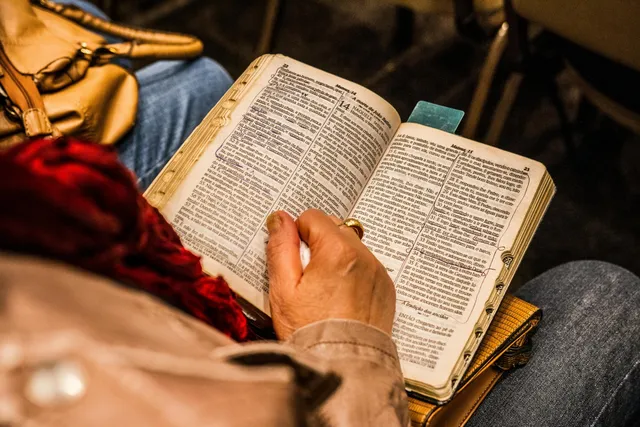
We open our Bibles to 1 and 2 Samuel, or 1 and 2 Kings, and it almost feels like we're stepping into a sequel-like two volumes of one sweeping story. Why is that? Did God intend them as separate books, or did something happen over time that divided what was once unified? Beneath the historical and practical reasons, there lies a deeper rhythm-one that echoes how God tells His story in seasons and continuations, in beginnings and follow-throughs, in promises unfolding through time.
The Ancient Scrolls and Their Limits
Before the Bible sat neatly bound in our hands, it lived among scrolls. These scrolls were precious, fragile, and limited. A single scroll could only hold so much text before becoming unwieldy-too large to roll, too heavy to handle. So, when a story like Samuel or Kings grew beyond the physical length of one scroll, the natural solution was to continue it on another.
What we see today as two books-1 and 2 Samuel, 1 and 2 Kings, 1 and 2 Chronicles-were originally one continuous narrative. The split wasn't theological or literary at first; it was practical. The division allowed the scrolls to be read, stored, and preserved properly. Over time, as the Hebrew Scriptures were translated into Greek (in what's known as the Septuagint), the two-part format remained because it had already shaped how readers interacted with the text.
But that's only part of the story. The physical limitation of scrolls explains how the books were divided-but it doesn't fully answer why God allowed them to remain that way. Scripture is often practical on the surface, yet profoundly intentional underneath.
God's Word in Movements: The Beauty of Continuation
God doesn't tell His story in flat lines; He tells it in movements. Just as life unfolds in chapters-childhood to adulthood, calling to fulfillment, promise to realization-so does His Word. The two-part structures of certain biblical books invite us into a rhythm of continuity and expectancy.
Consider 1 and 2 Samuel. The first volume ushers us into the story of a nation's formation under Samuel, Saul, and a young David just learning what it means to be chosen. The second volume brings that calling to full tension and maturity-David rises, reigns, fails, repents, and leads a nation toward God's covenant purposes. It's one continuous arc that mirrors the spiritual journey many of us live: the calling and then the refining, the beginning and then the becoming.
The Flow of Redemptive History
In this sense, the scroll's division is more than historical happenstance-it becomes a visible reminder that God's work is ongoing. 1 and 2 Kings move through a similar current: from Solomon's golden temple to the kingdom's fracture and, eventually, the exile. Sometimes, the story doesn't end where we expect; sometimes, God leaves the scroll open just long enough for the next chapter of His grace to be written.
One of the most profound truths hidden in these divided books is this: God works in continuity even when we see division. The physical break between two parts mirrors the spiritual breaks in Israel's own history-a nation repeatedly divided, yet preserved by grace. Just as 1 and 2 Kings tell of a divided kingdom sustained by divine mercy, the into-two storylines reflect our human tendency to fracture what God intends to unite-and His faithfulness to hold it together anyway.
The Scroll Splits and the Story of Us
Sometimes the Bible's structure becomes a mirror. The same way Israel's history stretched across two scrolls, our own spiritual journeys often unfold in "parts." We encounter God in one season, only to realize that another is yet to come-a deeper work, a harder test, a quieter grace.
The two-part format quietly preaches patience. It tells us that God's story unfolds over time, not all at once. 1 Samuel opens with a barren woman and closes with a barren throne. It feels unfinished-until you read 2 Samuel and see how God's promise takes root through David, leading toward a kingdom that points to Christ Himself.
When our own stories feel stuck between 1 and 2-between promise and fulfillment-it's often because God is not done yet. He may have closed one scroll, but He has already prepared the next. The space between them, that silent gap, is where His faithfulness waits to be discovered.
From Scrolls to Stories of Faith
We might say 1 and 2 Kings could have fit on one massive document if technology allowed. But perhaps God desired the pause. The division gives us time to reflect, to breathe, to register the movement of history before diving into the next act. It's as if God writes His message in rhythm, not in rush. He shapes His Revelation to match the way He shapes us: through deliberate, layered seasons of growth and grace.
Even the gap between the Old and New Testaments-the quiet centuries before Christ-resemble that same divine pacing. Between one scroll and the next, heaven seems silent, but God is still speaking through waiting. He is never late in continuing His story.
The Meaning of Continuity in Scripture
The continuity between these divided books also testifies to something central in biblical theology: God's story is one story. The books may have human authors, time-spanning generations, and physical divisions, but they beat with one divine heartbeat. The prophets, scribes, and kings are merely threads in a tapestry whose unbroken pattern leads us toward Christ.
1 and 2 Chronicles, for instance, revisit much of the same material as Samuel and Kings but from a different angle-written for a people returning from exile. What might appear to be repetitive is actually restorative: a new start, a retelling of identity for a people being rebuilt. Here again, two scrolls hold one purpose-to remind God's people that each return, each renewal, is part of His continuing grace.
God's Story Always Continues
Maybe that's what these numbered books whisper: continuation. Even when human history erupts in division, God continues His purposes. Between the tearing of kingdoms, the splitting of scrolls, or the brokenness of our own lives, His narrative thread never snaps. It just moves to another line, another scroll, another heart willing to receive His word.
Lessons from the Divided Yet United Text
When we read 1 and 2 Kings, or 1 and 2 Samuel, it's helpful to remember they are not independent stories to be compared, but linked chapters in one unfolding testimony. Treating them separately risks losing the continuity God wove through them; reading them together helps us see His hand through time-merciful, patient, consistent.
For instance, the fall of Jerusalem at the close of 2 Kings might feel like a tragic ending-but only if we forget that God's promises were never meant to stop there. Even in exile, the people carried the memory of covenant, the whisper of restoration. And that whisper carried forward to the new covenant in Christ, who came not as a separate story, but as the living continuation of all that came before.
There is always a 2 where we think the 1 has ended. Every time we turn a page from heartbreak to redemption, from struggle to surrender, God shows us He writes long stories-whole stories. He never abandons a promise halfway through.
Finding Ourselves Between Scrolls
How often have we found ourselves between parts-between what God began and what He has yet to finish? We are living in the space between promises made and promises seen. The first scroll, we might say, has been written: Christ came, lived, died, and rose. But we await the second-the full redemption, the restoration of all things when He returns.
Our faith sits in that beautiful, sometimes difficult, space between 1 and 2. It's the faith of the middle-of trusting continuity even when we can't see completion. And that's the spiritual rhythm that these divided books model for us. They remind us that God's story is never really divided; only paused long enough for us to catch our breath and prepare for what's next.
The Invitation to Keep Reading
Every believer stands at the edge of their own 1 and 2. The end of one scroll always invites the beginning of another. If God has brought you to the end of a chapter, it is not an ending-it is preparation for what follows. Samuel becomes Kings, Kings becomes Chronicles, and the testimonies continue through the people He redeems.
So, perhaps the best response to the question, "Why do some Bible books have two parts?" is not merely "because of scroll length" but "because God writes stories that demand continuation." The physical division becomes a spiritual metaphor-a pattern of faith and fulfillment, patience and promise.
Living in the Continuation
When we read the Bible's two-part narratives, we encounter more than ancient editorial history-we meet a God of ongoing stories. A God who writes redemption not as a single moment, but as a living movement through time. The numbering isn't about division-it's about invitation. An invitation to keep reading, keep trusting, keep waiting for what He will do next.
So, let's hold the Bible-and our lives-with that same understanding. God finishes what He starts. He completes the scrolls of our stories, even when one part closes before we see the next. What may seem divided in our sight is united in His purpose. What may feel like a pause is actually the turning of a page.
Because with God, every 1 leads to a 2-and every ending to a continuation. The Author never stops writing grace.