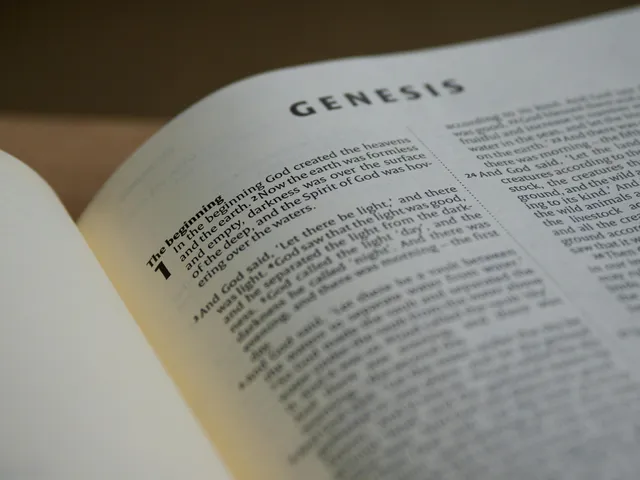
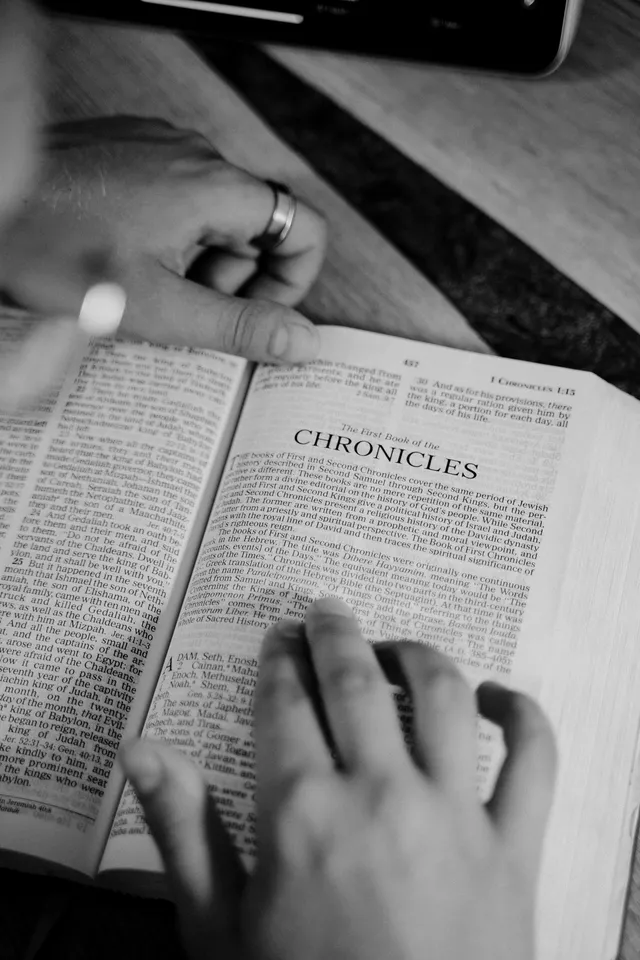
If you've ever begun a Bible reading plan full of enthusiasm in Genesis or Matthew, only to slow down when you reached long lists of names, you're not alone. For many of us, genealogies feel like speed bumps in Scripture-long passages of unfamiliar names that seem distant from our spiritual lives. Yet the very sections we're tempted to skim are woven with some of the deepest truths about God's faithfulness, identity, and redemption. The genealogies in the Bible are not filler. They are the quiet threads that hold the story of grace together.
The Family Story That Never Lost Its Plot
Every culture values story, and in the ancient world, a genealogy was a story in its purest form-a record of how one life connected to another. In Scripture, those cascading lines of names do more than trace ancestry; they declare that God's promises move through real people, with real lives, and real settings. When Genesis 5 outlines the line from Adam to Noah, or when Matthew begins his Gospel with the genealogy of Jesus, the message is both historical and theological: God's covenant plan doesn't hover abstractly in the heavens-it is embodied through generations.
Think of it this way: a genealogy is history with a heartbeat. It tells us that the God who brought light out of darkness is also the God who works through mothers, fathers, sons, and daughters-each with their own stories of faith, failure, and hope. The line of salvation threads through ordinary people whose names are sometimes all that's left to remember them by, yet each name whispers, "God was faithful in my time too."
Why the Details Matter
1. They Anchor the Promises
When God told Abraham that his descendants would be as numerous as the stars (Genesis 15:5), the genealogies gave those descendants faces and names. They proved that the promise did not evaporate; it continued. Genealogies keep covenant promises visible. Each generation listed in Scripture serves as a living testimony that God is true to His word, even when centuries have passed.
2. They Reveal God's Sovereignty
Human history may appear chaotic, filled with wars, exiles, and rulers who rise and fall. Yet genealogies show an order within the apparent disorder. From Adam to Noah, from Shem to Abraham, from David to Jesus, there's a divine hand guiding the flow of generations. These lists, often dry to the eye, silently proclaim that God is never absent from the story He authors.
3. They Connect the Old and the New
The Bible's genealogies bridge testaments, showing that the New Testament doesn't replace the Old-it fulfills it. Matthew's opening line, "The book of the genealogy of Jesus Christ, the son of David, the son of Abraham," (Matthew 1:1) anchors Jesus in both promise and prophecy. David's royal line and Abraham's covenant family find their completion in Christ. Without a genealogy, Jesus could appear as merely a random teacher or miracle worker; with it, He's revealed as the culmination of God's ancient plan.
Every Name Has a Story
Behind every name in those long lists is a story-some bright with faith, others marred by failure-and God uses both. Consider the women who appear in Matthew's genealogy, which was unusual in a patriarchal culture. Tamar, Rahab, Ruth, and Bathsheba are mothers in the lineage of Christ. Their lives were messy, complicated, and often misunderstood, yet through them we see a profound truth: God's redemptive work moves through imperfect people.
Rahab was a Canaanite and a prostitute, yet she's remembered for her faith (Hebrews 11:31). Ruth was a Moabite widow, yet she became the great-grandmother of King David. Bathsheba was known for scandal, yet her son Solomon built the temple. Each of these names tells a story of mercy. The genealogies are like a mosaic-each imperfect tile adding to the beauty of the whole image.
The Long View of God's Faithfulness
One of the most striking things about genealogies is the sheer span of time they cover. They remind us that God works patiently, generation by generation. We live in an age of instant results and quick answers, but genealogies invite us to think in God's timeframe, not ours. The promises that began in Eden, repeated to Abraham, echoed in David, and culminated in Christ show that delay does not mean denial. God's timing may be slow from our perspective, but His clock never slips.
When you trace the line of Christ from Adam onward, you see the long rhythm of divine persistence. Even after the flood, the exile, and centuries of silence, God's purposes kept moving forward. The lineage did not break; it simply waited. Reading a genealogy is like hearing the steady heartbeat of God's covenant: thump... thump... unhurried, constant, and sure.
Genealogies as Mirrors of Grace
We rarely think of our own family trees as sacred stories, but Scripture invites us to see them differently. Each of us stands within a history-of bloodlines, cultures, and communities-that God can also redeem. When you look at biblical genealogies, you see how grace rewrites family stories. Sin may run in families, but so can faithfulness.
King Manasseh was one of Judah's most evil kings, yet his grandson Josiah became one of the most faithful reformers in the Old Testament. God's mercy is capable of changing a lineage, not just an individual. In Christ, we gain a new spiritual genealogy; we are called sons and daughters of God. Through Him, we are grafted into a story that transcends biology-a family shaped by grace, not by genetics.
Our Place in the Lineage of Faith
Hebrews 11 gives us what some have called a "genealogy of faith." It lists the names of those who walked with God through uncertainty and suffering. And just a few verses later, Hebrews 12 continues, "Therefore, since we are surrounded by such a great cloud of witnesses..." In that sense, genealogies are not over. We stand in continuity with those who came before, and our faithful obedience extends the legacy of grace into future generations. The biblical genealogies are both heritage and invitation: they remind us who we came from and who we are becoming in Christ.
The Humanity of the Messiah
Perhaps the richest reason genealogies matter is this: they prove that Jesus truly entered our world. God didn't send a detached Savior descending from the clouds with no roots or relationships. He took on flesh within a family line-descended from kings and commoners, saints and sinners alike. The genealogy is proof that the eternal Word became truly human. It's heaven's fingerprint pressed into the soil of earth.
Luke's Gospel traces Jesus back all the way to Adam, calling Him "the son of God." What a beautiful symmetry: where Adam fell, Christ stood. Where humanity's story fractured, Christ's story restored. The names between those two genealogical points-Adam and Jesus-tell of God's determination to heal what was broken. They proclaim that the Incarnation didn't happen in isolation; it happened in a lineage of longing, promise, and hope.
Reading Genealogies with New Eyes
So how can we read these lists with fresh appreciation? First, slow down. Let the rhythm of the names remind you that faith is generational-that the work God begins in one life often continues long after that person is gone. As you read, notice unexpected grace: names that shouldn't be there based on the world's standards but are included because God delights to use the unlikely. And remember that each name is a testimony that God sees, remembers, and redeems.
It can also help to trace themes rather than only individuals. In Genesis, the genealogies connect creation to covenant. In Numbers, they organize the people for worship and service. In the Gospels, they root Christ in prophecy. Viewed this way, the genealogies become evidence of a living structure-like the bones of a body holding the story together. Without them, the narrative would collapse into myth; with them, Scripture stands as real history inhabited by God's grace.
What This Means for Us Today
When we come to faith in Jesus Christ, we are adopted into His family line. That means the promises given to Abraham now belong to us through Christ (Galatians 3:29). We inherit not only salvation but a purpose-to bear witness to the faithfulness of God for the generations yet to come. Our stories, like those of Rahab or Ruth, become part of the ongoing genealogy of grace.
Every act of faith you make today adds a line to that living story. When you trust God in hardship, when you teach your children the gospel, when you forgive, when you walk humbly-these are generational investments. Somewhere down the line, someone will be strengthened because of your faithfulness, just as we are strengthened by those whose names fill the pages of Scripture.
The Names That Never Fade
So the next time you encounter a list of names in the Bible, pause before you skim. Behind every syllable is a heartbeat of divine love, a thread in the tapestry of redemption. Genealogies remind us that God is not in a hurry, that He is both Author and Father, patiently weaving His story through time.
And just as those ancient names tell who begot whom, our lives testify to the God who gave us new birth. The genealogies in Scripture are more than records of who came before-they are invitations to step into God's continuing story. We belong to a family whose roots stretch into eternity, whose lineage ends not in a grave but in glory. Every believer is a name in that unending list of grace, written in the Lamb's book of life, where no one is forgotten and no promise ever fades.