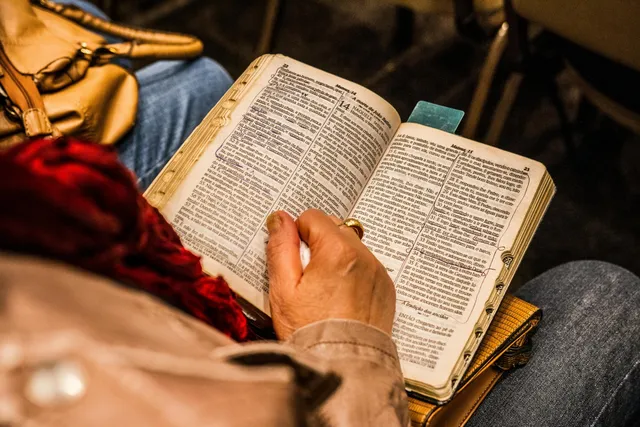
Open your Bible, and you'll soon notice a curious pattern: some books seem to come in pairs-or even trios. 1 Samuel and 2 Samuel. 1 Kings and 2 Kings. 1 Corinthians and 2 Corinthians. It's easy to pass over these numbers as simple labels, but behind them rests a story of Scripture's preservation, translation, and divine purpose. Those small numbers whisper something deeper about the nature of God's Word-and how He meets us through history, structure, and order.
More Than Just Counting: The Story Behind the Numbers
For most of us, the titles "First" and "Second" sound like sequels. We might picture 1 Kings as Part One and 2 Kings as the dramatic follow-up-two scrolls of royal drama and prophet-fire. But in truth, these divisions were not part of the original writings. The Hebrew manuscripts from ancient times were continuous works-long scrolls without chapters, verses, or numerical breaks. What we now call 1 Kings and 2 Kings once flowed as a single sweeping chronicle of Israel's monarchy.
The division came centuries later, not to alter God's message but to make it more readable. The ancient Hebrew Scriptures were eventually translated into Greek around the 3rd century B.C., becoming what we now call the Septuagint. Hebrew scrolls could stretch many feet long, and as translation and copying continued, the physical size of these writings became a challenge. The Greeks split many of the longer texts for convenience. Thus, Samuel and Kings became four separate works: 1-2 Samuel and 1-2 Kings. Interestingly, in that Greek translation, they were grouped together under a shared theme-the story of the kingdoms.
The Same Story, Two Scrolls
In the Hebrew Bible, there was simply Samuel and Kings. But as readers, scribes, and translators engaged with the text, practical wisdom prevailed. Dividing the scroll meant easier handling, reading aloud in gatherings, and referencing specific sections. Imagine a synagogue leader unrolling yards of parchment just to locate a passage! The solution was elegant: two scrolls, one story. And God-who ordered creation with precision and pattern-allowed that simple numbering to help His people cherish His Word more deeply.
The Human Hand and the Divine Mind
It's beautiful to remember that while these divisions came from human necessity, the Holy Spirit used them for divine clarity. The scribes and translators didn't tear apart God's message-they simply gave it room to breathe across scrolls. The numbering doesn't separate God's story; it frames it. In this way, 1 Kings and 2 Kings present not two episodes, but a single testimony to God's sovereignty over nations, kings, and centuries.
In our modern Bibles, the pattern continues. The New Testament letters to the Corinthians, Thessalonians, and Timothy also have numerical labels-1 and 2. But here, the reason is different. Rather than scroll length, these numbers trace distinct letters written at different moments in Paul's ministry. The early church preserved them both, labeling them for simplicity and continuity. One letter responded to the church's immediate problems; the next offered follow-up wisdom. Both spoke the heart of God through Paul's pen.
Unity Within Division
Every time you see a Bible book with a number, let it remind you: God's truth holds together even when divided across pages, scrolls, or years. Human hands may have added structure, but heaven's Author guarded meaning. There is profound unity in these numbered titles.
Consider how 1 and 2 Kings show both the glory and decay of human leadership. The first book opens with David's final days, Solomon's wisdom, and the temple's splendor. The second book descends into political chaos, prophetic warning, and finally exile. The numbering quietly mirrors the story's moral arc-from rise to fall. It's as though the break between 1 and 2 Kings invites a pause for reflection: how quickly favor turns when hearts stray from the Lord!
The Pattern of Pause
This rhythm of numbering can serve a devotional purpose today. Between 1 and 2 Chronicles lies a breath-a moment to consider all that has passed and all that is yet to be reconciled. Between 1 and 2 Corinthians, we can recognize how Paul's pastoral tone shifts from correction to comfort, from discipline to restoration. These divisions teach the patient pace of Scripture. They whisper: Stop and see what God has done before you rush to what happens next.
When Numbers Tell a Spiritual Story
The Bible is filled with God's love of order-seven days of creation, twelve tribes, forty years in the wilderness. Numbers in Scripture are rarely accidental. Though the "First" and "Second" in our Bible titles are human conventions, God often turns the world's practical choices into spiritual illustrations. Just as He used Roman roads to spread the gospel, He used translators and scroll-scribes to make His Word navigable to generations that would follow.
Think of the pairing of 1 and 2 Samuel. In those books, we watch Israel shift from a theocracy under Judges to a monarchy under Saul and David. It's a double movement-the heart of a people learning the cost of earthly kingship. How fitting, then, that their sacred history unfolds across two volumes: one showing the turbulent rise, the other guiding us toward a king who seeks after God's heart. The numbering is chronological, yes-but it's also emblematic of life's stages, of story's ebb and flow.
An Invitation to See Continuity
Whenever we flip from "First" to "Second" in our Bibles, we cross a threshold that still belongs to the same home. The God who spoke in 1 Kings continues through 2 Kings; the Spirit that moved Paul in 1 Corinthians speaks again in 2 Corinthians with no loss of urgency or kindness. This continuity should comfort us. We, too, live between numbered chapters of our own story-between beginnings and renewals, between first steps and second chances. The God of Scripture is faithful through every transition.
How We Read Because of the Numbers
There's something quietly pastoral in the structure of Scripture. The divisions-chapters, verses, numbers-help us find our place. They let us say, "Turn to 1 Kings chapter 18," and locate Elijah's showdown on Mount Carmel. They create a shared language for study and worship across thousands of years and dozens of cultures. Yet beyond convenience, they remind us of how God cares for details. He allowed His Word to be arranged in a way that always invites engagement. Though unnumbered at first, His message was never disordered.
Without those numbers, Bible study would be vastly different. Quoting, memorizing, or teaching would be less clear. The Spirit works through order, not in spite of it. Every numbered title and verse reference is part of the way truth becomes portable-so we can carry it from heart to heart, home to home.
When Numbering Meets Narrative
Imagine for a moment reading the books of Kings as one endless scroll. The sweep of history might blur. But in two parts, readers can rest between the peaks and valleys, reflecting on the divine thread running through power and downfall. The same mercy that raised Solomon with wisdom is the mercy that later preserved a remnant in Babylonian exile. Division in the pages often helps us perceive the unity of grace.
And this is what Scripture so often teaches us: when life feels divided-when we move from one era, one trial, one chapter to the next-God's story is still one story. His faithfulness runs from first to second, from beginning to end.
A Modern Reminder in Ancient Form
Even in the age of digital Bibles and instant searches, those numbered titles endure. They connect us to the ancient world of parchment and ink, where every letter was precious and space mattered. They link today's reader to Ezra the scribe, to early Christian copyists, to monks hunched over delicate vellum. We hold in our modern hands the fruit of centuries of faithfulness.
When you read 1 Samuel or 2 Chronicles, you're not just encountering ancient history-you're participating in the story of how God ensured His Word would never fade. The numbers, small as they seem, are fingerprints of preservation.
Living the Message of Numbered Books
So what might these numbers mean for us spiritually? They remind us to trust God in transition. Life often comes in numbered seasons: first jobs and second chances, first joys and second trials. Yet the God of both parts remains the same. The space between "First" and "Second" in Scripture mirrors the space between where we are and where God is leading us. There's continuity in His calling and consistency in His character.
When we move from one stage of faith to another-new challenges, new neighbors, new forms of service-He invites us to see that every division in life is simply a continuation of His one story of redemption. The same God who spoke on the first scroll still speaks on the second.
The Numbers That Bind the Story Together
Next time you turn a page from 1 Kings to 2 Kings, pause and breathe in the quiet artistry of divine continuity. What began as a practical split in a scroll has become a small symbol of the greater truth: God's Word endures across every break, every chapter, every change. The numbers don't divide the story-they help us follow it faithfully.
And isn't that just like our Lord? He meets us in our own divided lives-between what was and what comes next-and shows us that nothing in Him is ever truly separated. The promise of His presence runs straight through the numbered pages of Scripture and through the numbered seasons of our hearts. From first to second, from beginning to end, He is the same faithful God, guiding every line of the story He has written-for His people, and for you.