It's difficult to hold a Bible in your hands and not feel the weight of history resting between its pages. The words inside have journeyed through thousands of years, across deserts and kingdoms, through ink-stained fingers and fire-lit scriptoria, to reach the nightstands and church pews we know today. But how did this collection of divine words, whispered into the hearts of prophets, apostles, and poets, become the bound book we now read for comfort and guidance? The story of how the Bible was written is not just a tale of parchment and ink-it's a story of God's persistent voice speaking through human hands.
Words Breathed by God
The Bible doesn't begin as an academic text; it begins as divine inspiration. "All Scripture is God-breathed," Paul writes in 2 Timothy 3:16, capturing the mystery of how divine truth mingles with human language. When Moses first received the Ten Commandments, they were inscribed by the very hand of God onto stone tablets. Later, the prophets would take up pens of their own-ink on vellum, papyrus, animal hides-recording both their own words and the words God placed upon their hearts.
Yet even then, these weren't mere records. They were living testimonies. The Psalms sang, the prophets thundered, the writers of the Gospels remembered. Each word carried a heartbeat of Revelation. Human voices and divine message intertwined, one not diluting the other, but instead revealing the astonishing intimacy of a God who chooses to speak through His creation.
The Scrolls of the Ancients
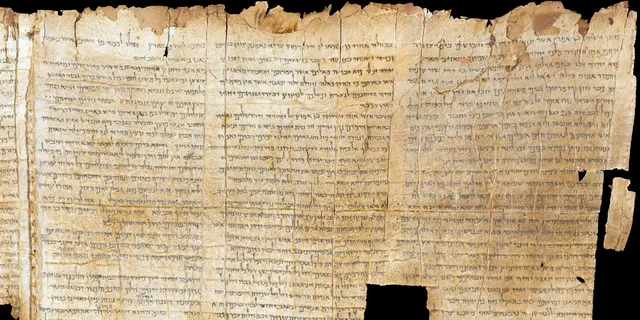
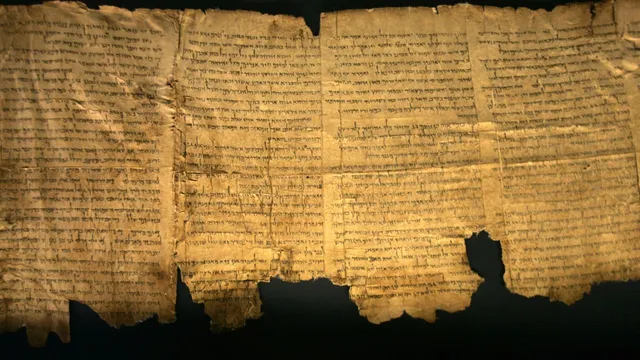
Before there were books, there were scrolls-long, carefully stitched rolls of parchment that could stretch several feet across. Ancient scribes copied with painstaking care, letter by letter, word by word, sometimes whispering aloud as they wrote so not a single syllable was misplaced. The Hebrew Scriptures-the Torah, the Prophets, the Writings-were preserved through this sacred labor.
One can imagine a scribe in the soft lamplight of a room in Jerusalem, his hand steady, his breath slow, tracing the very letters that told Israel's story. Each time a copy was made, reverence accompanied ink. So sacred was the divine name of God, YHWH, that a scribe would often stop, wash himself, and use a new quill before writing it. That act alone tells us something profound: God's Word has never been treated as common.
The Dead Sea Scrolls: Echoes Through Time
In 1947, in the arid cliffs near Qumran, shepherds discovered jars filled with scrolls wrapped in linen. These were the Dead Sea Scrolls-ancient copies of biblical texts, including parts of Isaiah and the Psalms, preserved for over two millennia. Their discovery confirmed what generations of believers already trusted: that though centuries and empires may pass, God preserves His Word. The scrolls were nearly identical in message to later manuscripts, a testament both to faithful transmission and divine safeguarding.
From Oral Tradition to Written Word
Before ink ever met parchment, the story of God was carried in memory. Fathers told sons of Abraham's journey, mothers recited Psalms and Proverbs to their children at night. The stories were sung, enacted, celebrated through festivals and worship. When finally these stories were written, it wasn't to replace the spoken word, but to reinforce it. Writing became a way to make memory tangible.
The New Testament carried this same spirit. The stories of Jesus were first told around tables, in marketplaces, and along dusty roads. Only later did Matthew, Mark, Luke, and John record the events, each guided by the Holy Spirit, offering perspectives unified by one truth: the living Word had walked among us. Every sentence became anchor to a moment when heaven touched earth.
Bound in a New Way: The Codex Revolution
Somewhere around the first few centuries after Christ, the world shifted. Scrolls gave way to codices-the early form of a book, bound on one side with pages stacked together. Christians were some of the first to embrace this new technology. A scroll could hold one large section of Scripture, perhaps Isaiah or Luke, but a codex could hold many writings between two covers. For a faith built on the whole story of redemption, this was revolutionary.
Imagine early believers gathering in secret, perhaps in a Roman house church, holding a codex that contained both the Gospels and the letters of Paul. The pages could turn quickly, the verses easily found. What began as scattered scrolls now became unified testimony. The story of God was becoming a single book.
The Work of the Early Church
As the Church grew, so did its sense of which writings truly bore the mark of divine inspiration. Prayerfully, faithfully, leaders discerned the collection we now call the canon. The Bible was never arbitrarily assembled-it was recognized, not invented. The same Spirit who inspired the words confirmed their truth across communities, languages, and generations.
Monks, Manuscripts, and the Glow of Candlelight
Centuries later, in monasteries tucked into hills and forests, monks devoted their lives to copying Scripture by hand. They worked in silence, illuminated only by flickering candles and the radiant words before them. The margins of their manuscripts often bloomed with intricate designs-flowers, birds, gold leaf-offering both beauty and reverence to the Word.
It's easy to romanticize these divine copyists, but their work was heavy, their posture stooped over tables for hours. Errors were rare because mistakes meant rewriting vast passages. Each completed manuscript took months, sometimes years. Their devotion ensured that God's Word would continue to reach new generations long before printing presses ever existed.
When the Word Met the Press
The invention of the printing press in the 15th century changed the world, and it changed Scripture's story. When Johannes Gutenberg printed the Bible around 1455, Scripture moved from monastery to marketplace. What was once read by priests was now read by people. The Bible went from being protected to being proclaimed.
Each page of the Gutenberg Bible still carried the artistry of scribes, but now multiplied into hundreds of exact copies. For the first time, the Word could reach families, students, and farmers. The Bible became a book for the people of God, not only the caretakers of it.
The Languages of Heaven
The story of the Bible is also the story of translation. From Hebrew and Greek and Aramaic, the Scriptures have been drawn into the languages of every tribe and tongue. Early pioneers like Jerome translated the Bible into Latin (the Vulgate), setting a standard for centuries. Later, reformers like Wycliffe, Tyndale, and Luther risked their lives to put Scripture into the hands and hearts of ordinary believers. Tyndale himself vowed that a plowboy would one day know as much of Scripture as any scholar-and indeed, through his sacrifice, that vow came true.
Today, translation continues. Teams of linguists and missionaries, working through cultures and dialects, are ensuring that the ancient Word speaks clearly in every tongue. Each translation, each phrase re-fitted to a new language, whispers the same truth: God's Word transcends time and culture.
From Leather Covers to Digital Screens
Now, the story stretches further still. Where once a single scroll required days to carry, now entire libraries of Scripture fit in our pockets. From printed pages to digital text, from study Bibles to audio readings echoing during a morning run-the form has changed, but the heart has not. Whether the text is illuminated in gold leaf or backlit by pixels, the message remains eternal.
In a way, this accessibility deepens our stewardship. Never in history has Scripture been so easy to access, and yet perhaps never has it been so easy to overlook. In a world of endless noise, God's still, steady words remain ready to speak to those who open them.
The Enduring Thread
The Bible's journey-from divine breath to human language, from scroll to screen-reveals a truth about God's nature: He is relentlessly communicative. He does not leave His children wandering without His voice. Each generation rediscovers this same miracle: the eternal Word wrapped in the language of its age.
To read the Bible, then, is to step into a lineage of faith stretching back millennia. We join the shepherds who listened by firelight, the monks who inked by candle, the reformers who risked all to translate, and the prophets who trembled at the sound of His voice. We are part of the story of preservation.
Living What Was Written
But the story does not end with the preservation of ink and paper-it continues in the preservation of hearts. Scripture lives most powerfully when it is written not just in books but upon our lives. "I have hidden Your Word in my heart," declared the psalmist (Psalms 119:11). That same call echoes today. The miracle of the Bible's history compels us to let it shape our present.
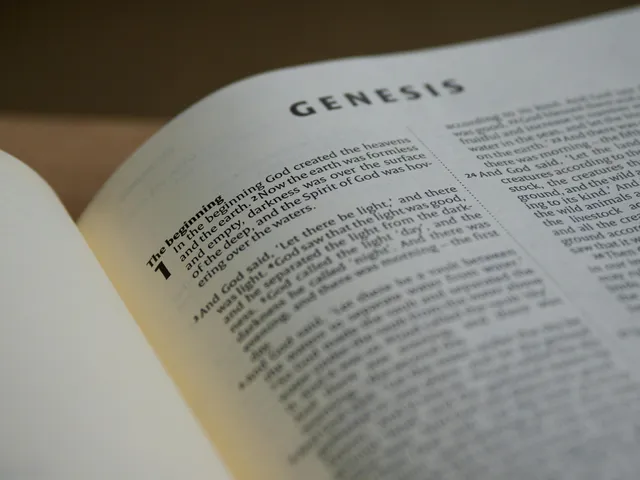
As we open our Bibles-whether worn leather covers or glowing screens-we participate in the same divine rhythm that began when God first said, "Let there be." The same Word that spoke creation into being now speaks love, correction, comfort, and purpose into every willing soul.
The pages may turn differently now, but the Voice remains unchanged. From scrolls to today's pages, the Bible continues to tell one truth: God still speaks. And because He speaks, we can live, trust, and hope anew with every word.