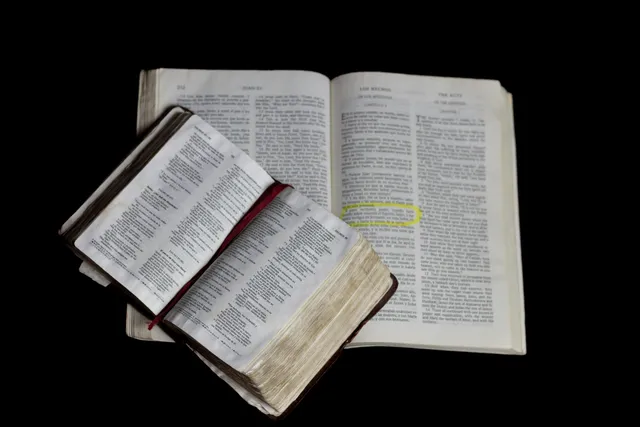
The Bible stands as the most read, translated, studied, and debated book in human history. For generations, it has shaped cultures, comforted hearts, and guided souls into deeper communion with God. Yet one question often stirs in minds both curious and skeptical: Has the Bible been changed over time? The question touches not only history and scholarship-it reaches into the very heart of faith. If Scripture has been altered, what does that mean for those who build their lives upon it? But if, through centuries of human frailty, God has preserved His Word, then we stand upon something far more enduring than parchment and ink. We stand on a living promise.
The Unbroken Thread of Divine Preservation
Throughout history, the story of the Bible's preservation is nothing short of miraculous. Long before printing presses or digital storage, every word of Scripture was copied by hand-line by line, letter by letter. Entire generations of scribes dedicated their lives to this work, often under the light of oil lamps, fully aware that what they held in their hands was holy.
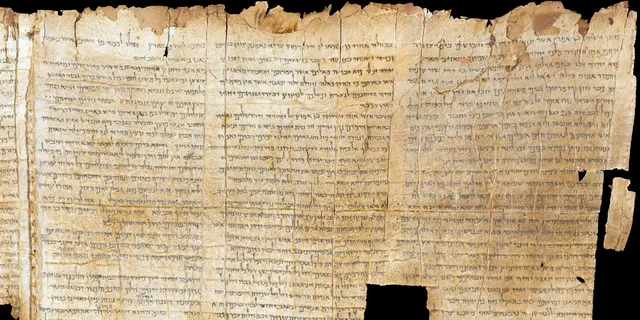
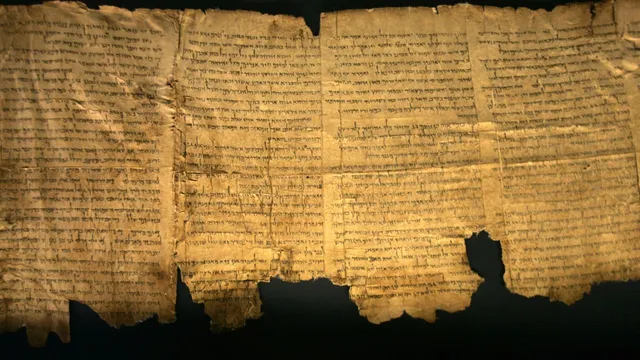
Despite the fragility of ancient materials, the message of Scripture endured with astonishing accuracy. When the Dead Sea Scrolls were discovered in the mid-20th century, scholars compared those Hebrew texts-over two thousand years old-to modern versions of the Old Testament. The result was a breathtaking confirmation: apart from minor spelling variations or wording differences, the message had remained intact. What the prophet Isaiah declared then is what we still read today: "The grass withers and the flowers fall, but the word of our God endures forever" (Isaiah 40:8).
Human Hands, Divine Oversight
Of course, human beings were deeply involved in transmitting Scripture. Mistakes did occur-an omitted word here, a misspelled phrase there. But when thousands of ancient manuscripts are compared, a pattern emerges: these small errors cancel each other out, rather than accumulate. The abundance of textual evidence-over 5,000 Greek manuscripts of the New Testament alone-allows researchers to identify and correct nearly every variation.
God Working Through Imperfect Vessels
This process itself reveals a profound truth: God does not require perfection from the vessels He uses-only faithfulness. Just as He entrusted frail fishermen to carry His gospel across the world, He also entrusted frail scribes to guard His Word. And through them, the Scripture's central message rings clear and unchanged: God's love redeems, and His truth stands forever.
Jesus Himself affirmed this divine preservation when He declared, "Heaven and earth will pass away, but my words will never pass away" (Matthew 24:35). Across empires, languages, and centuries, that promise has proven true. No persecution, no fire, no fading manuscript has erased God's Word from the hearts of His people.
A Story Written in Many Tongues
Some critics point to the many Bible translations as evidence that meaning has shifted over time. After all, hundreds of versions now circulate the globe. Yet this diversity often reflects not distortion, but devotion-the ongoing desire to make Scripture clear and accessible to every heart, in every language.
Translation is not corruption; it is continuation. From Hebrew to Greek, from Latin to English, each translation seeks to carry timeless truth into living language. When the Apostle Paul wrote his letters, he often quoted the Old Testament using its Greek translation-the Septuagint. That means even within the Bible itself, God's message flowed across linguistic lines without losing its power.
Faithful Translations, Living Words
Think of it like this: a sunrise seen through two different windows may appear from slightly different angles, but the same sun shines through both. Likewise, different Bible versions may use different phrasing, yet they carry the same radiant truth. Whether someone reads "The Lord is my shepherd, I lack nothing" (Psalms 23:1, NIV) or "The Lord is my shepherd; I shall not want" (KJV), the meaning remains: our Shepherd provides everything His children truly need.
Guarded Through History
Consider the fierce opposition the Bible has faced. Throughout history, rulers and regimes have tried to silence it. Ancient kings consigned scrolls to the fire; totalitarian governments sought to ban it. Yet every attempt only seemed to kindle the flame of faith more brightly. The 18th-century philosopher Voltaire predicted that within a hundred years, the Bible would be forgotten. Instead, less than fifty years after his death, the Geneva Bible Society used his very home to print Bibles.
The resilience of Scripture is unmatched. Like its Author, it does not merely survive-it transforms everything that tries to destroy it. When believers risked their lives smuggling Bibles into hostile lands, they did so with the conviction that no earthly power could silence the Word of God. And indeed, it has never been silenced.
Changes of Form, Not of Faith
What has changed over time is humanity's access to Scripture. What was once handwritten on sheep-hide scrolls is now available instantly on glowing screens. The Bible's outward form has shifted many times, but its message has never lost its pulse. Through every format-scribal, printed, digital-its core radiance burns the same: God reaches for His creation in love.
In every generation, God raises up new messengers to carry His Word forward. From monks who secretly copied Scripture in candlelight, to translators who gave their lives to render it in local tongues, to missionaries who smuggle flash drives filled with the Bible today-each one witnesses that the Word of God cannot be chained (2 Timothy 2:9).
The Heart of the Matter
When we ask whether the Bible has been changed, perhaps it's not only a question of manuscripts and history-it's a question of the heart. After all, the same Spirit who inspired the writing of Scripture also inspires its reading. That is the miracle of it all: God's Word is not static text-it's living Revelation.
Every time you open your Bible, you join a long, unbroken line of seekers who turned its pages (or scrolls, or screens) and heard the whisper of God's voice: "Be still, and know that I am God." And that voice remains as steady as it was when David wrote the Psalms or when Paul penned letters from prison. Changed? No-the Word changes us.
What Endures When Everything Else Fades
Imagine a tree standing across generations-storms whip it, seasons pass, nations rise and fall-but its roots remain. The Bible is that tree. Its roots go deep into the soil of divine truth, nourished by the unchanging character of God. Its branches stretch across time, bearing fruit in every culture and heart that welcomes its light.
People change, languages change, even the earth itself shifts and groans. But the voice that spoke, "Let there be light" (Genesis 1:3) still speaks through every verse today. The same breath that inspired Moses, Isaiah, and John is the breath that stirs your heart as you read. That continuity is not merely literary; it is personal. God has not allowed His Word to fade, because through it He continues to call His people home.
Anchored in a Living Word
Ultimately, every biblical question leads us back to the person of Jesus Christ, the Word made flesh. John's Gospel opens not with ink, but with incarnation: "In the beginning was the Word, and the Word was with God, and the Word was God." Jesus is the living proof that God's Word cannot be altered or destroyed-for even a sealed tomb could not contain Him. The written Scriptures are trustworthy because they point us to the faithful One.
So the question, "Was the Bible changed?" becomes something richer: Has God's truth ever failed? The answer, known deep in the heart of every believer, is a resounding no. Empires crumble; languages evolve; copying methods improve. But through every age, the Spirit has preserved the living testimony that "Your word, Lord, is eternal; it stands firm in the heavens" (Psalms 119:89).
A Word for You, Today
If you've ever doubted whether you can rely on Scripture, take heart. You are holding-or scrolling through-a book that has crossed oceans and millennia to reach your hands, unbroken in its essence and unyielding in its message. Its survival is no accident; it's evidence of divine intention. The God who began revealing His Word thousands of years ago has made sure it would still speak to you this very moment.
Let that truth draw you deeper. Read your Bible not as a relic rescued from time, but as a living conversation with a faithful God. Every page is a breath of His love, every promise still gleams with life. No matter what fades in this uncertain world, the Word of God remains the same yesterday, today, and forever. And because it stands, so can we.