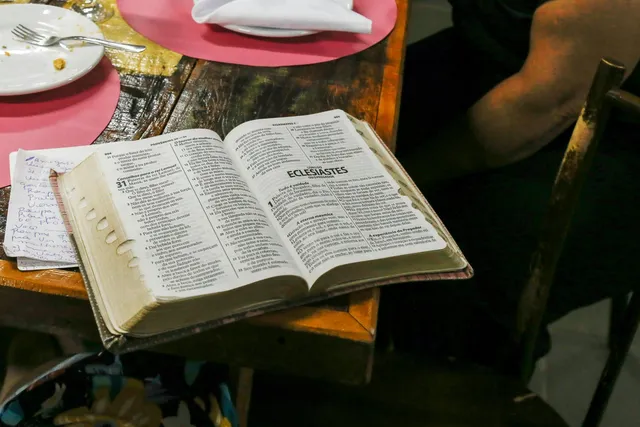
There's something quietly sacred about holding a Bible in your hands-the familiar rustle of thin pages, the way light catches gilt edges, the scent of old paper and faith. For many Christians, the Bible is not just a book; it's the anchor of life, the heart of prayer, and the voice of God whispering across centuries. But then someone asks a question that startles the casual believer: "Why are there different versions of the Bible? And what's the difference between the Catholic and Protestant ones?"
It's an honest question-and a deeply important one, too, because understanding it is not simply a matter of counting books. It is, in many ways, a window into how the Church has listened for God's Word throughout history, and how communities of faith have sought to keep that Word alive and accessible for souls who long to hear it.
The One Story-Told in Many Ways
Before we talk about what's different, it's worth remembering what's the same. Both Catholic and Protestant Bibles tell the same great story of salvation. In both traditions, God speaks from Genesis to Revelation, revealing His mercy, His justice, and His plan to redeem a fallen world. Whether one opens a Catholic or Protestant Bible, the central message-the love of God made known in Jesus Christ-stands unshaken.
So the heart of the matter isn't about competition or division, but about the faithful listening of God's people through history. When we trace how the Bible came to be, we discover a testimony not to human disagreement, but to the enduring grace of a God who still meets His people in their searching.
How We Got the Bible We Have
For centuries before the time of Christ, Israel's sacred writings were being formed, shaped, and cherished. The Law and the Prophets, the Psalms and the stories of kings and exiles-all carried the heartbeat of a people called to belong to God. When the early Church began to gather around the life and resurrection of Jesus, it was these very Scriptures-what we now call the Old Testament-that formed the bedrock of their faith.
The Jewish Roots of the Old Testament
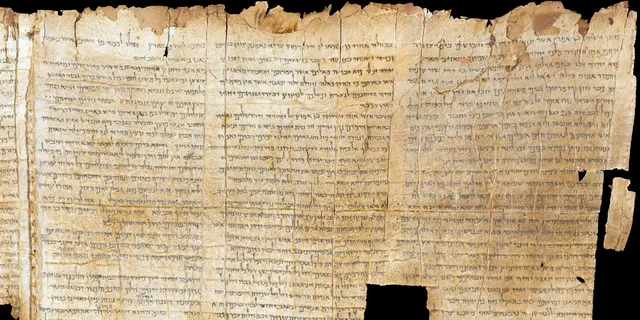
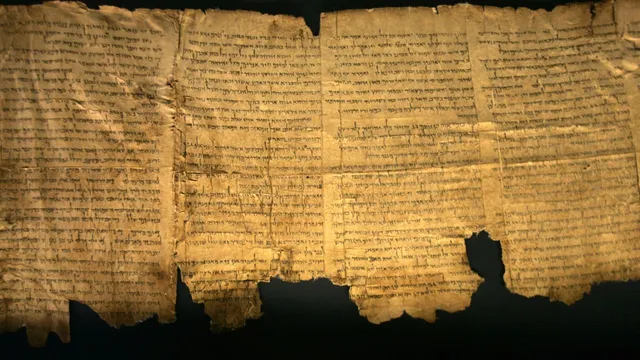
In ancient Israel, there wasn't a single, standardized list of sacred books. Different communities held slightly different collections-some broader, some narrower. Greek-speaking Jews, especially those living outside the Holy Land, used a Greek translation of the Hebrew Scriptures called the Septuagint. This translation included several books not found in the Hebrew texts preserved later by Rabbinic Judaism. These additional writings-such as Tobit, Judith, Wisdom, Sirach, Baruch, and the Maccabees-were deeply valued in the Greek-speaking Jewish world.
The early Christians, writing and preaching mostly in Greek, naturally drew on the Septuagint. When Matthew quoted the prophets or when Paul spoke of Scripture, many of their citations came from this Greek version. So, in the eyes of the early Church, those additional books were part of the sacred story that pointed to Christ.
The New Testament Takes Shape
As Christianity flourished, communities of believers began to preserve letters, Gospels, and writings that bore witness to Jesus. Over the first few centuries, through prayer, debate, and discernment, the Church recognized which writings bore the clear mark of apostolic authority. By the 4th century, councils such as those at Hippo (393) and Carthage (397) affirmed the list of books that both Catholics and Protestants still hold as the New Testament today-twenty-seven in total. On that, both groups fully agree.
The Divergence: Why the Book Lists Differ
So if the early Christians used the Septuagint, why do Protestant and Catholic Bibles look different today? The separation didn't happen all at once. It came slowly, shaped by language, theology, and history.
The Reformation and the Return to Hebrew Roots
When the Protestant Reformation began in the 16th century, reformers like Martin Luther sought a return to the sources-ad fontes. They wanted to read Scripture as close as possible to its earliest original languages. In the case of the Old Testament, that meant returning to the Hebrew texts rather than the Greek Septuagint.
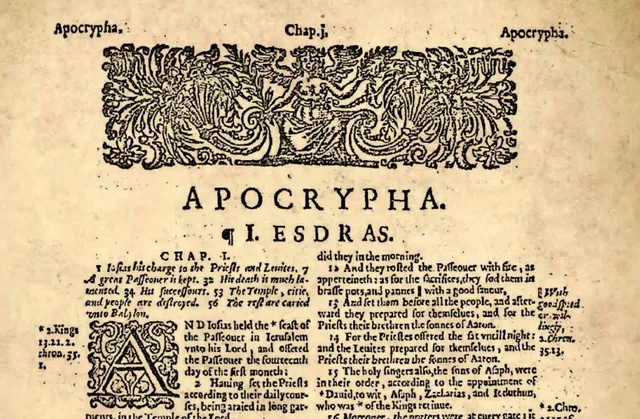
The Reformers noticed that Jews of their time did not include the additional Greek books in their canon. So, most Protestant Bibles chose to follow the shorter Hebrew collection-thirty-nine Old Testament books-leaving out the seven additional ones used by Catholics and Orthodox Christians. These writings became known as the Deuterocanonical books ("second canon") in the Catholic tradition and as the Apocrypha ("hidden writings") in Protestant circles.
Catholic Affirmation at the Council of Trent
In response to debates of the era, the Catholic Church formally confirmed its long-held list of sacred books at the Council of Trent in 1546. This was not a new canon but rather a reaffirmation of the list that had already served the Christian community for over a millennium. It included all forty-six Old Testament books-those in the Hebrew text plus the seven Deuterocanonical ones-and the twenty-seven books of the New Testament.
In short, both traditions share the same New Testament but differ about which Old Testament books are recognized as inspired and authoritative for doctrine. Catholics have 73 books in total; most Protestants have 66.
What's in Those "Extra" Books?
To those unfamiliar with the Deuterocanonical texts, it might seem like obscure historical appendices-but in reality, these writings hold deep spiritual power. The Book of Wisdom, for example, contains reflections that echo beautifully with the teachings of Jesus on righteousness and judgment. The story of Tobit offers a tale of family, providence, and faithfulness that mirrors the goodness of divine care. In 2 Maccabees, martyrs die confessing belief in the resurrection-a theme that resonates profoundly in the Gospels.
These books also fill historical gaps, illuminating the world that Jesus himself entered-a Jewish world aching for deliverance, wrestling with identity, and longing for God's kingdom. Reading them can deepen our understanding of what "fullness of time" (Galatians 4:4) truly means.
Language, Tradition, and the Heart of Scripture
Behind all these differences in canon lies a deeper question: What is Scripture for? Whether Protestant or Catholic, all Christians agree that the Bible is not a museum artifact to be studied only academically; it is the living Word of God, meant to shape the soul and lead one toward Christ.
The Catholic Church holds that the Word of God comes to us through both Sacred Scripture and Sacred Tradition-twin streams flowing from the same divine source. The Protestant Reformation, emphasizing Sola Scriptura ("Scripture alone"), raised the Bible as the supreme and self-sufficient authority for faith and practice. Both perspectives honor Scripture but approach it differently: one within the larger living tradition of the Church, the other as the direct and self-interpreting voice of God to the believer.
In practice, these differences influence how Christians read, interpret, and apply the Bible. Yet beneath them all lies the same hunger-to know God, to hear His truth, and to walk in His ways.
Why This Still Matters
Some might wonder: Does it really matter if there are 66 or 73 books? After all, we all follow Christ. That's true-and glorious. But exploring this difference can deepen, not divide, our understanding. It shows how profoundly God's Word has guided His people through cultures, languages, and centuries of faith.
It also invites humility. Every page of Scripture, however many we hold, calls us to listen. Whether we read from a Protestant or Catholic edition, the words of Paul still ring with equal power: "All Scripture is God-breathed and useful for teaching, for reproof, for correction, and for training in righteousness" (2 Timothy 3:16).
The Bible is not simply a book to defend but a conversation between God and His creation. The canon reminds us that the Word didn't fall from heaven as a finished volume; it grew in the soil of human history, guided by the Holy Spirit, nurtured by the prayers of generations. To understand the differences between the Catholic and Protestant Bibles is to appreciate God's mysterious faithfulness in guiding His people across time.
Finding Unity in the Word
In a world often marked by religious misunderstanding, it can be healing to return to the shared center. Whether reading from a Catholic Bible with Tobit and Judith or from a Protestant one that goes straight from Malachi to Matthew, the Word of God converges on the same mountaintop: the cross and resurrection of Jesus Christ.
When Jesus opened the Scriptures to His disciples on the road to Emmaus, "their hearts burned within them" (Luke 24:32). That burning doesn't depend on which translation or edition we hold-it comes from the living presence of Christ Himself. He continues to open the Scriptures for us, making them alive in our hearts.
Perhaps then, this difference in canons is not a barrier but an invitation. An invitation to read more deeply, to listen more attentively, to see in each page not an argument but an avenue toward the same Lord.
A Closing Word of Faith
So what is the difference between the Catholic and Protestant Bibles? On the surface, a list of books. In essence, a story of how God's people have received and transmitted His Word through time. Both point to the same Savior. Both proclaim the same Good News. And both, when opened in faith, become the meeting place between heaven and earth.
What matters most is not which version sits on our nightstand, but whether our hearts are open when we read it. The Holy Spirit who inspired the prophets and apostles is the same Spirit who speaks when we listen in prayer, when we wrestle with doubt, when we search for comfort, and when we stand in awe before the living Word of God.
May we all, whatever edition we hold, discover anew the voice behind the words-the God who still speaks, who still loves, and who still calls us to walk in the light of His truth.