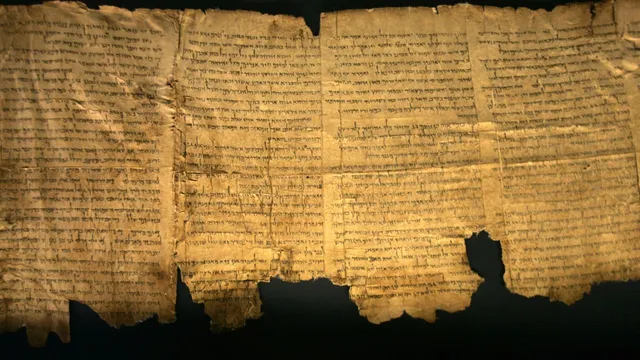
Few archaeological discoveries have captured the spiritual imagination of the modern world quite like the Dead Sea Scrolls. Found in the dusty caves near Qumran along the northwestern shore of the Dead Sea between 1947 and 1956, these fragile ancient manuscripts-written on parchment and papyrus and hidden for nearly two millennia-have profoundly reshaped our understanding of Scripture. But more than an archaeological marvel, the Scrolls offer believers today a stirring reminder: the Word of God endures, even through centuries of silence, conflict, and decay.
The Hidden Voices of the Desert
It began, according to many accounts, with a shepherd boy tossing a stone into a cave and hearing the sound of breaking pottery. Inside those clay jars were scrolls preserved through dry desert air-scrolls that would open an unexpected window into the ancient world of the Bible.
What archaeologists uncovered near Qumran was nothing short of astonishing: over 900 manuscripts, written mostly in Hebrew, Aramaic, and Greek, dating roughly from the third century B.C. to the first century A.D. Most remarkable were the biblical scrolls-fragments from every Old Testament book except Esther. Among them lay nearly complete copies of Isaiah, Psalms, and Deuteronomy.
For those who hold Scripture dear, it was as though God Himself had whispered from the desert, reminding humanity that His Word never fades. "The grass withers, the flower fades, but the word of our God will stand forever" (Isaiah 40:8).
Why the Discovery Mattered
Before the Dead Sea Scrolls came to light, the oldest known Hebrew manuscripts dated from around the 10th century A.D. Scholars relied on them to produce our Old Testament texts. Then suddenly, we had manuscripts that were more than a thousand years older. Would they differ dramatically? Would they challenge the reliability of Scripture? Would millennia of transmission reveal the erosion of truth?
The answer, remarkably, was no. When the Great Isaiah Scroll from Qumran was compared to the Masoretic Text used in most modern Bibles, the differences were minor-grammatical, stylistic, and rarely theological. The essential message was unchanged. This was no mere coincidence; it was a divine signature across the ages, reminding us of God's providential care over His Word.
The Faithfulness of Preservation
Imagine the generations of scribes-some anonymous, some known-who painstakingly copied Scripture letter by letter. Though human hands recorded it, the hand of God guided its preservation. The discovery of the Scrolls validated what faith already knew: that God guards His truth, not merely in manuscripts, but in the hearts of His people.
For modern believers, this lends a profound reassurance. Every time we open our Bibles, we touch words that have traversed the centuries almost untouched, a living testimony of divine faithfulness. The echo from Qumran is clear: the same God who watched over His Word then continues to speak through it now.
Windows into a Waiting World
Beyond textual preservation, the Dead Sea Scrolls opened another door-a glimpse into the spiritual longing of those waiting for the Messiah. The community that likely produced these scrolls, often associated with the Essenes, lived in deliberate separation from wider society. They studied Scripture, practiced ritual purity, and looked expectantly for God's deliverance. They believed they were living in the last days, preparing for the coming of the Kingdom.
Reading their writings, we encounter a people hungering for redemption, praying for God's light to break through their darkness. That longing reverberates deeply with followers of Christ today. We, too, live between promise and fulfillment, holding fast to the Word while anticipating His return.
A Mirror of Hope
When one reads their prayers for renewal and wholeness, one almost hears the voice of John the Baptist crying in the wilderness, "Prepare the way for the Lord" (Mark 1:3). It's as if these ancient communities were rehearsing for the Revelation of Christ-a rehearsal completed when the Word Himself became flesh (John 1:14).
The Scrolls and the New Testament World
Though none of the Dead Sea Scrolls are New Testament texts, they shine light on the spiritual climate of the first century. They help us understand the expectations, language, and symbolism that shaped the world of Jesus and His contemporaries. Terms like "Sons of Light" and "Sons of Darkness," frequent in Qumran writings, echo through the Gospel of John and Paul's letters.
The Scrolls reveal a community immersed in Scripture, living by covenant, and yearning for divine visitation. When Jesus stepped into that same land proclaiming, "The kingdom of God is at hand" (Mark 1:15), His words entered a soil already tilled with anticipation.
Bridging Old and New
Some references in the Scrolls mirror ideas later recognized in early Christianity-hope in resurrection, a new covenant, and an everlasting light. They remind us that God's story was weaving through history long before Bethlehem's manger. The Dead Sea Scrolls connect the dots between prophecy, expectation, and incarnation, forming a bridge between the Hebrew Scriptures and the Gospel message.
They reinforce that Christianity did not emerge in isolation; it blossomed from the fertile ground of Israel's Scripture, faith, and promise. The Word made flesh was the fulfillment of what the Qumran community longed to see-the dawn of salvation breaking upon those sitting in darkness.
What the Scrolls Teach the Church Today
Beyond historical and textual discoveries, the Dead Sea Scrolls invite personal reflection. They ask us a question: how do we guard and cherish the Word of God in our time?
Those ancient scribes and seekers risked their lives to preserve scrolls in clay jars. They copied, memorized, and lived the Word because it was their lifeblood. In an age of digital immediacy, with Bibles at our fingertips, it's easy to forget such reverence. The Scrolls remind us that the Word is not disposable-it is divine treasure.
Faith That Endures
Every fragment from Qumran tells a story of endurance. Torn, faded, and fragile, yet still legible, they mirror the human heart-worn by time, yet capable of holding truth. God's promises endure not because we keep them perfectly, but because He does. The men and women who hid these scrolls likely never knew we would read them; yet through their fidelity, their faith continues to speak.
In the same way, the small acts of faith we perform today-teaching Scripture to our children, writing Scripture in our hearts, standing for truth in love-may echo beyond our lifetimes. Perhaps centuries from now, someone will look back at the faithfulness of this generation and see traces of God's enduring work.
The Scrolls as a Call to Spiritual Renewal
Standing before the display cases of the Dead Sea Scrolls in a museum, one is struck not just by their age, but by their fragility. Thin sheets of parchment, curling at the edges, darkened with time. They remind us that human words fade, but God's Word never does. That paradox is the heart of the Christian story: treasure in jars of clay (2 Corinthians 4:7).
The Qumran community longed to see the fulfillment of promise; we live in its light. Yet both then and now, faith requires patience, devotion, and hope. The Scrolls invite us to hold Scripture not merely as history, but as living breath-God speaking still.
A Living Word for a Living Faith
When we open our Bibles, we do more than read ancient words; we engage with the same living Word that stretched across centuries and deserts to reach us. The Dead Sea Scrolls, coated in dust yet shimmering with holiness, reveal not simply the preservation of text but the persistence of God's voice.
His Word has journeyed through exile and empire, through fading ink and fragile parchment, to find its home in human hearts. That is the true miracle of Qumran-not that we uncovered old scrolls, but that they affirm a timeless truth: God's Revelation remains steadfast, unbroken by chaos or time.
The Whisper of God in the Ruins
Somewhere in the Judean wilderness, the quiet wind still moves through the caves where the scrolls once lay hidden. It carries, perhaps, a faint echo of the prayers that rose from that ancient community-prayers for deliverance, faith, and light. In our own deserts of doubt or distance, we, too, can listen for that same whisper.
The Dead Sea Scrolls remind us that though centuries pass, the voice of God endures. His truth waits to be rediscovered in every generation, not buried in stone or scripture alone, but alive in us. As we guard the Word in our hearts, may it guard us in return-anchoring our hope, shaping our faith, and calling us, again and again, to the everlasting faithfulness of God.
"Heaven and earth will pass away, but my words will never pass away." (Matthew 24:35)