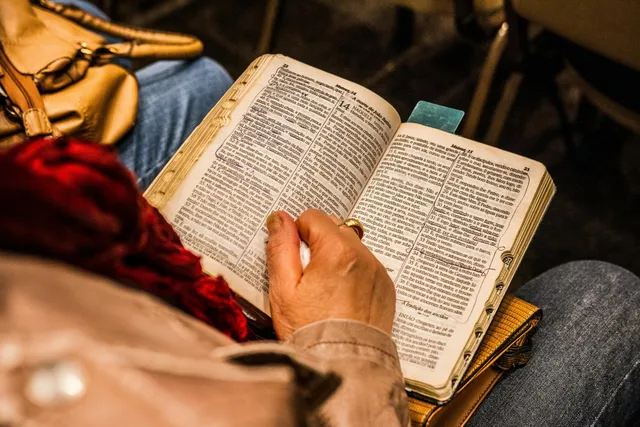
If you ask a Christian why they trust the Bible, the answers can vary widely: "Because I've seen its truth in my own life." "Because it has changed me." "Because I believe it's the Word of God." But underneath every one of those responses lies a conviction both ancient and world-shaking - that this collection of ancient texts, preserved across millennia, is not merely human literature. Christians believe the Bible is inspired by God - that through human authors, God has spoken His heart to the world.
The Breath of God in Human Words
The word "inspired" comes from the Greek term theopneustos, meaning "God-breathed." The Apostle Paul used that word when he wrote, "All Scripture is God-breathed and is useful for teaching, rebuking, correcting and training in righteousness" (2 Timothy 3:16). To be inspired, then, is not to be suggested or vaguely influenced. It is to be filled with the very life and breath of God. According to Christian belief, when we open the Bible, we're not merely reading about God - we're encountering His voice, expressed through the hands and hearts of human beings inspired by Him.
This truth, however, does not make the writers of Scripture mere pens in God's hand, robotic and unaware. In fact, one of the miracles of biblical inspiration is how the Lord shaped each writer's individual personality, culture, and voice into His divine message. The poetry of David feels different from the measured reasoning of Paul or the sweeping visions of Isaiah - yet together, they harmonize like instruments in one great symphony.
The Mystery of Divine-Human Partnership
Inspiration does not erase humanity - it redeems it. Christians believe that God chose to communicate His truth through frail, imperfect people, making their words carriers of eternal significance. Peter captured this beautifully when he wrote, "No prophecy ever came by the will of man, but men spoke from God as they were carried along by the Holy Spirit" (2 Peter 1:21). The phrase "carried along" paints a vivid picture - like a ship driven forward by the wind, guided but not overpowered.
This partnership between divine message and human instrument is part of what makes the Bible so compelling. It is not an impersonal decree carved in stone, but a living testimony of God working in, through, and sometimes in spite of human frailty. When Jeremiah wept, when David rejoiced, when Paul struggled and triumphed, the breath of God carried every word into Scripture - showing us that even our own lives can become vessels of divine truth.
Signs of a Living Word
Still, the claim that the Bible is inspired by God is not something accepted by faith alone - though faith is central. Christians also point to evidence of divine fingerprints woven throughout Scripture.
Unity Across Centuries
The Bible was written over a span of more than 1,500 years, across three continents, in multiple languages, by over 40 different authors - yet it tells one coherent story of redemption. From Genesis to Revelation, it unfolds God's plan to reconcile humanity to Himself through Jesus Christ. Such unity, across such diversity, astonishes even those who merely study the Bible as literature. To Christians, this coherence is no accident; it is evidence of one Author guiding history and human hearts alike.
Prophecy and Fulfillment
Throughout the Old Testament, prophetic words point ahead to a Messiah, describing His birthplace, His suffering, His victory. Centuries later, in the life of Jesus of Nazareth, those ancient promises come alive. The crucifixion reflects the suffering servant of Isaiah 53. The resurrection echoes the triumph David hinted at in Psalms 16. For believers, fulfilled prophecy is not coincidence but confirmation. It reveals that the same Spirit who inspired the prophets was already shaping the story of Christ.
Power to Transform
Beyond logic or evidence, perhaps the most compelling proof Christians experience is the Bible's power to change lives. Over centuries, countless people testify that its words pierced their hearts, convicted, comforted, and ultimately renewed them. Hebrews 4:12 describes Scripture as "living and active, sharper than any double-edged sword." It doesn't merely inform - it transforms. That transformative power is the living pulse of inspiration.
The Role of the Holy Spirit Today
If God inspired the Bible thousands of years ago, how does that inspiration touch us now? Christians believe the same Spirit who inspired Scripture also illuminates it today. When we read the Bible prayerfully, the Holy Spirit opens our understanding, brings conviction, and draws us closer to Christ. Inspiration, therefore, is not just a historical event but an ongoing relationship between God's Spirit and His people.
That's why followers of Jesus speak of "fresh Revelation" - not new Scripture, but new insight into eternal truth. We read ancient words, yet they meet our modern needs: a verse written in exile speaks courage into a lonely heart, or a Psalms of thanksgiving breaks open in a moment of joy. The same breath that once moved the prophets now breathes life into our reading, making the Word ever new.
When Doubt Whispers
Even for believers, confidence in inspiration may waver at times. Questions arise: How can we trust ancient manuscripts? What about apparent contradictions? Why did God choose such flawed people to write His Word? These are honest, even sacred questions - not signs of weak faith, but of an earnest heart seeking understanding.
In such moments, Christians return to both heart and experience. Faith does not ask us to ignore evidence, but to interpret it through trust in God's character. The same Lord who guided the writers also preserved their message through history. And remarkably, through centuries of translation, persecution, and debate, the essence of Scripture endures unbroken: its portrayal of a God who creates, redeems, and restores.
Human Imperfection, Divine Integrity
It's worth remembering that God has always chosen imperfect vessels - Noah, Moses, Peter, Paul. The Bible does not hide their flaws; it exposes them, underscoring that truth doesn't depend on the worthiness of its messengers. If God can redeem the brokenness of sinners, He can certainly speak through imperfect scribes. The miracle is not that God used human language, but that He filled it with eternal meaning.
Encountering God in the Pages
For millions around the world, reading the Bible is not an academic exercise but a sacred encounter. They approach it with expectation - not merely to learn about God, but to meet Him. Every page becomes an invitation to listen. The Psalms give language to emotions too deep for words; the Gospels reveal the face of grace itself; the letters of the apostles root faith in daily living. Through all of it, believers hear God's whisper: I am still speaking.
That sense of divine encounter is what elevates Scripture from history to communion. Unlike other ancient texts that belong to their age, the Bible speaks across centuries. Its counsel on forgiveness, justice, humility, and love feels startlingly relevant - as though written for this very hour. And for those who come seeking, the words sometimes seem to leap off the page, as if the Author Himself were leaning close.
Inspiration in Everyday Faith
Believing the Bible is inspired doesn't mean we never wrestle with its meaning. In fact, because it is inspired, we are invited to wrestle with it - to let its divine wisdom shape our daily choices, relationships, and perspectives. Inspiration calls us not just to read the Word, but to live it. It asks us to trust that when we forgive as Christ taught, serve as He served, and seek justice as He commanded, we are responding to the living voice of God.
In our noisy age, inspiration also calls us to quiet. To pause, open the Scriptures, and let the Spirit breathe through familiar texts. Many find that the more they read, the more they sense not only truth, but Presence - the same Presence that hovered over creation, that guided Israel by fire and cloud, that raised Jesus from the tomb. The Bible, in that sense, is not just an ancient book about what God did. It is an open door into what God is doing - here, now, and always.
The Echo of Eternity
Ultimately, to say that the Bible is inspired is to affirm that God still longs to communicate with His creation. The Scriptures stand as both history and heartbeat, the record of divine faithfulness and the rhythm of continuing grace. They reveal not only what God once said, but what He is still saying: that we are known, loved, and called into the grand story of redemption.
So why do Christians believe the Bible is inspired by God? Because generation after generation has found, within its pages, more than words - they have found a living voice that speaks into every season of the human experience. That voice convicts and comforts, commands and consoles. And perhaps most of all, it invites.
Each time we open the Bible, heaven leans near. The same breath that once stirred prophets and apostles moves gently through our hearts, whispering the timeless truth: "I am with you always." And in that whisper, faith awakens again - not in an ancient manuscript, but in a living God still speaking through His inspired Word.