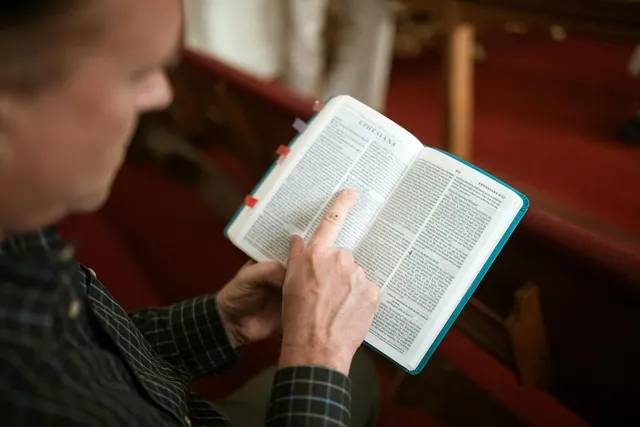
For believers and seekers alike, the Bible remains an endless source of wonder. Its beauty lies not only in its divine inspiration but also in its profound depth-layers of meaning that continue to unfold through prayer, study, and reflection. Yet throughout history, some verses have taken on lives of their own, often quoted out of context or used to support ideas far from their original intent. Misunderstood verses can stir confusion or even discourage believers, when in fact they were meant to encourage, comfort, and convict.
This reflection explores seven of the most misunderstood passages in Scripture-verses often loved but sometimes misapplied. Each one calls us back to the heart of God's message: His mercy, truth, and the transforming power of His promises.
1. "I Can Do All Things Through Christ Who Strengthens Me" (Philippians 4:13)
This verse adorns countless posters, gym walls, and social media profiles-all proclaiming confidence and victory. Yet, for the Apostle Paul, these words were not about winning or achieving. He wasn't standing on the podium of success; he was writing from a prison cell.
Paul's joy in Philippians 4:13 bursts forth despite his hardship. He discovered that strength in Christ isn't the power to accomplish whatever we will, but the grace to endure whatever God allows. Philippians 4:13 is not a rally cry for personal triumph but a confession of contentment. In both abundance and need, Paul found that Christ's presence was enough.
The Real Promise
When we claim this verse, it's not a declaration that every dream will succeed-it's a reminder that in Christ, we lack nothing. Our circumstances may not change, but our hearts can.
2. "Judge Not, That You Be Not Judged" (Matthew 7:1)
Few verses are quoted more often-especially when moral boundaries are challenged. "You can't judge me!" people say, invoking Jesus' words to silence correction. But when we read the full passage, Christ's meaning becomes clear.
Jesus warns against hypocrisy. He condemns self-righteous judgment, not moral discernment. In the verses that follow, He says, "First take the plank out of your own eye, and then you will see clearly to remove the speck from your brother's eye." In other words, we must first examine ourselves so we can help others rightly.
The heart of this teaching is mercy seasoned with truth. Christians are not called to abandon judgment altogether but to exercise it humbly, aware that we, too, stand in need of grace. When love-not pride-guides our discernment, our judgment restores rather than condemns.
3. "Where Two or Three Are Gathered in My Name, There Am I Among Them" (Matthew 18:20)
This verse often surfaces in small prayer meetings, especially when attendance falls short of expectation. But its context reveals something far more specific than the size of a group.
In Matthew 18, Jesus is teaching about church discipline and reconciliation. The promise of His presence is tied to believers who, in His name, seek to restore a wandering brother or sister. When two or three witnesses come together to mediate forgiveness and unity, Christ Himself stands in their midst.
Of course, God is always with us-whether alone or in a crowded gathering. But Matthew 18:20 speaks not primarily of fellowship, but of authority: the assurance that when His people act in alignment with His Word, Heaven endorses their call to reconciliation.
Presence in Purpose
So, yes, Jesus is present in every prayer group and family devotion-but this verse reminds us He is especially near when hearts unite to restore what sin has broken.
4. "For I Know the Plans I Have for You" (Jeremiah 29:11)
Few verses inspire hope like this one. Printed on graduation cards and shared in times of uncertainty, it reminds us that God's plans are good. But the original recipients of Jeremiah 29:11 were not about to start a new adventure-they were in exile, longing for home.
To the people of Israel, God spoke through Jeremiah that His purposes would unfold after seventy years in Babylon. This was no promise of quick rescue. It was a call to faithfulness in waiting. "Build houses and live in them," the Lord said earlier in the same chapter, "seek the welfare of the city." In essence, God was saying: Even in exile, I am at work.
For us today, this verse assures that God's ultimate plan-our redemption through Christ-is secure, even when our immediate situation feels foreign or painful. His timetable may be longer than ours, but His heart toward us never wavers.
5. "Money Is the Root of All Evil" (1 Timothy 6:10)
This common misquote has subtly distorted Paul's teaching. The apostle didn't say money itself is evil; he said, "the love of money is a root of all kinds of evil." There's a crucial difference.
Money can serve many godly purposes-it feeds families, supports ministries, and blesses neighbors. But when love for wealth eclipses devotion to God, it leads to ruin. It's the attachment, not the amount, that poisons the soul.
Paul warns Timothy that the desire to get rich leads some to "pierce themselves with many sorrows." The call, then, isn't to disdain money but to use it gratefully and generously, as stewards rather than servants of it.
The Freedom of Contentment
True wealth, Paul says elsewhere, is godliness with contentment. When we hold our resources loosely and love God deeply, we find a kind of abundance the world cannot measure.
6. "Ask, and It Will Be Given to You" (Matthew 7:7)
At first glance, these words sound like an open-ended promise: whatever we ask, we receive. But prayer is not a blank check-it's a relationship. Jesus' invitation to ask, seek, and knock flows from His teaching about the Father's faithful goodness.
God delights to answer prayer according to His wisdom and will. He gives "good gifts" to those who ask Him-not always what they want, but what they truly need. The deeper truth of Matthew 7:7 is not about leveraging God's power for our wishes; it's about trusting His heart even when His answer is different from ours.
To pray faithfully is to surrender to the Father's timing and purpose. Some prayers are answered immediately, others over years, and some in ways unseen this side of eternity. But every sincere prayer draws us nearer to God's heart, which is the ultimate gift itself.
7. "God Will Not Give You More Than You Can Handle" (Often Attributed to 1 Corinthians 10:13)
This phrase, often offered in comfort, doesn't appear in Scripture. The verse behind it-1 Corinthians 10:13-actually speaks about temptation, not suffering. Paul assures believers that God will not allow them to be tempted beyond what they can bear, but will provide a way to stand firm against sin.
Life, however, frequently gives us more than we can handle. Illness, loss, despair-these moments remind us of our insufficiency. But here lies the hidden grace: what we cannot handle, Christ can. When our strength fails, His power is perfected in weakness. We are not called to self-sufficiency, but to dependence on God's limitless strength.
The truth is comforting in a different way. God doesn't promise ease, but He promises His presence. We are never asked to endure alone.
Reading With Reverence and Relationship
Each of these verses reveals something profound when we slow down long enough to listen. The Bible was never meant to be wielded as a slogan or charm; it's a living Word meant to guide us into deeper relationship with the Living God. Context, humility, and the Holy Spirit's illumination turn familiar verses from clichés into lifelines.
The key to understanding Scripture is always Christ Himself. He is the Word made flesh, the fulfillment of every promise and prophecy. When we approach the Bible through His lens-seeking the Savior, not just a snippet-we find that even misunderstood verses become windows into His grace.
Bringing It Home
Perhaps the most beautiful discovery when revisiting these passages is how they draw us back to the steady, trustworthy heart of God. Life's misreadings, like life's storms, can leave us confused-but His Word patiently corrects and comforts. These passages remind us that faith is not about claiming isolated promises, but about knowing the Promiser.
So the next time a verse catches your attention, pause. Read the chapter around it. Pray over it. Ask what it reveals about God's nature, and what it invites you to become. The Scriptures are not there simply to be quoted; they are meant to be lived. And within every verse-whether clear or misunderstood-resides the whisper of a God who longs to be known.
His Word, rightly understood, doesn't just inform us-it transforms us.