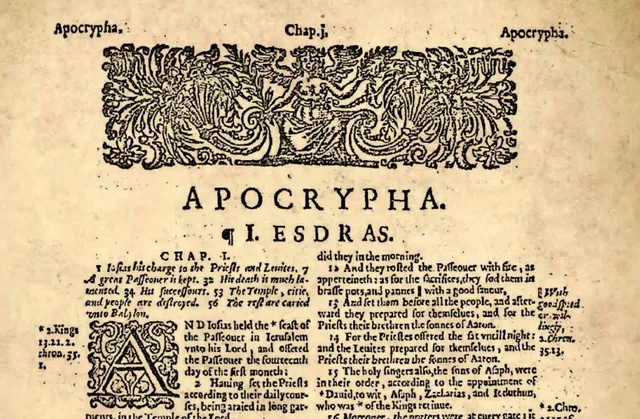
The Bible is the most widely read book in history-translated into thousands of languages, cherished by millions, and yet interpreted in countless ways. Step into any church, home group, or online discussion and you'll discover a fascinating diversity of perspectives. Some see the same passage as comforting, others as convicting. For one believer, a verse may speak about God's mercy; for another, His call to holiness. Why is this so? Why does one sacred text inspire such a variety of understanding?
The Living Word That Speaks in Many Voices
To begin exploring this, we must remember what the Bible itself claims to be. It is not a static textbook; it is "living and active" (Hebrews 4:12). When God's Spirit breathes through its pages, something dynamic happens. We don't just read it-it reads us. It searches our hearts, our seasons, our scars. The same Psalms or parable can pierce differently depending on where we stand in life's journey. One verse may comfort the grieving, another challenge the complacent, and yet another awaken the seeker. This divine dynamism naturally leads to an abundance of interpretations.
Think of it like light refracted through a prism. The light is one and the same, yet the prism's angles let varied colors emerge. The Spirit's illumination works similarly: one truth, revealed through countless hearts and contexts.
Language, Culture, and the Long Journey Through Time
The Bible didn't fall from heaven as an English translation. It was written across centuries, in different lands, by multiple authors-shepherds and kings, prophets and fishermen-and in languages most of us no longer speak. The Old Testament comes to us in Hebrew and Aramaic; the New in Greek. Each language carries nuances that are rarely captured perfectly in translation.
For example, the Greek word agape is richer than our English word "love." It carries a sacrificial depth that English speakers might easily miss. Multiply that by thousands of words and you can see why translation alone introduces interpretive variety. Even our cultural lenses-what we assume "honor," "family," or "justice" to mean-color what we see on the page.
Historical Context Matters
When Jesus spoke of a "camel passing through the eye of a needle," did He literally mean a sewing needle, or perhaps a narrow city gate known by that name? Both interpretations have been defended. Each leads us to meditate on different aspects of humility and surrender. Understanding the world of Scripture-its idioms, customs, and geography-helps, but we're still translating across time. That historical distance can create many faithful yet distinct readings.
Hearts That Read Differently
Even if two believers could read the same text in the original languages, their hearts and experiences would still shape their understanding. When we approach Scripture, we bring our stories, our wounds, our victories, our longings. The Word speaks into all of that. Interpretation, in many ways, is where divine truth meets human story.
One person, fighting discouragement, might hear in Philippians 4:13 an invitation to endure suffering. Another, starting a new venture, might receive it as confidence in God's empowerment. Both readings are sincere and anchored in the same verse-but seen through different seasons of life. That personal intersection helps explain Scripture's breadth of meaning, not its corruption.
The Role of the Holy Spirit
The Spirit of God illuminates Scripture (John 16:13). Yet even Spirit-filled readers sometimes see differently. It's not that the Spirit contradicts Himself, but that He's patiently shaping unique hearts in unique ways. The same truth, revealed from different angles, becomes deeply personal. The key is humility-recognizing that while the Spirit speaks to us, He also speaks beyond us. The goal isn't to prove our interpretation right, but to hear God rightly.
Denominations, Traditions, and the Family of Faith
Another reason for diverse interpretations is the rich tapestry of the global Church. From early church fathers to Reformation scholars to modern pastors in remote villages, each generation has wrestled with Scripture in light of its own challenges. Over time, theological streams-Catholic, Orthodox, Protestant, Pentecostal, and countless others-have developed distinctive emphases.
These are not always contradictions but often reflections of different priorities. One tradition might emphasize grace, another sanctification, another mission. When held in love and dialog, these nuances enrich the whole body of Christ. Together they paint a fuller picture of the kingdom. As Paul reminds us, "Now we see in a mirror dimly" (1 Corinthians 13:12). The Church's many viewpoints can be a mosaic of God's truth, not a fracture of it.
Human Limitations and the Mystery of God
There's another simple reason for differing interpretations: God's Word reflects the mind of an infinite God, and we are finite creatures trying to grasp it. The mystery of divine Revelation exceeds our capacity to master it fully. Like children wading in an ocean, we sense both the joy of what we understand and the depth of what lies beyond us.
Even Peter admitted that some of Paul's writings were "hard to understand" (2 Peter 3:16). If early apostles acknowledged this tension, it should humble us. Sometimes we differ because we are still growing. The same Spirit who inspired the Word is patiently teaching us generation by generation. Our task is not to flatten the mystery, but to walk together in its light.
When Interpretation Becomes Division
Of course, not all differences remain peaceful. History is marked by conflicts over Scripture-some tragic, some transformative. When interpretation hardens into pride, humility evaporates and love grows cold. Jesus prayed that His followers "may be one" (John 17:21). That unity doesn't mean uniformity but harmony in truth and love.
We are invited to interpret the Bible with the Church, not merely for ourselves. Community protects us from blind spots. Iron sharpens iron; conversation refines conviction. Even disagreement, handled in humility, can lead us nearer to the heart of God. The goal is not to win arguments but to behold Christ more clearly through each other's eyes.
The Beauty of Many Voices
Imagine a choir singing a hymn. No voice alone reveals the Song of Songs's full beauty, but together they create a harmony that fills the sanctuary. Scripture functions similarly. The diversity of interpretation, when rooted in reverence and love, can become a symphony rather than a struggle. In it, we hear echoes of God's wisdom and the breadth of His redemptive story.
It's the same Spirit who inspired the psalmists to sing, the prophets to cry out, and the apostles to write of the risen Christ. He continues to inspire believers today to see and live that Word anew. The diversity of biblical understanding is not a flaw; it is a testament to its living power.
Learning to Listen Deeper
So what do we do with all this diversity? We pray. We study. We listen. We lean into Scripture not as a puzzle to conquer but as a relationship to nurture. We hold our interpretations with conviction yet open hands, allowing the Spirit and community to refine them. We let Scripture interpret Scripture, letting its overarching story of redemption guide our reading. And, above all, we look for Christ on every page-for He is the Word made flesh (John 1:14).
When we approach the Bible with hearts bowed, the Spirit who authored it will guide us. Not into endless confusion, but into richer understanding, deeper faith, and greater love.
One Word, Many Hearers, One Lord
The reality of many interpretations shouldn't discourage us; it should remind us of the vastness of God's wisdom. The Bible is not a monologue-it is a divine dialogue with humanity. Each generation, culture, and person hears its truth afresh because God is still speaking through it today. When we encounter differences, we need not fear; we can see them as invitations to seek Him more earnestly.
So let's keep listening-to the Word, to the Spirit, and to one another. As we do, those many interpretations begin to form a living tapestry of grace and truth. The same Lord who spoke through prophets and apostles still speaks through His people, guiding us-not into division-but into the fullness of His love and light.
One Word. Many hearers. One Lord over all.