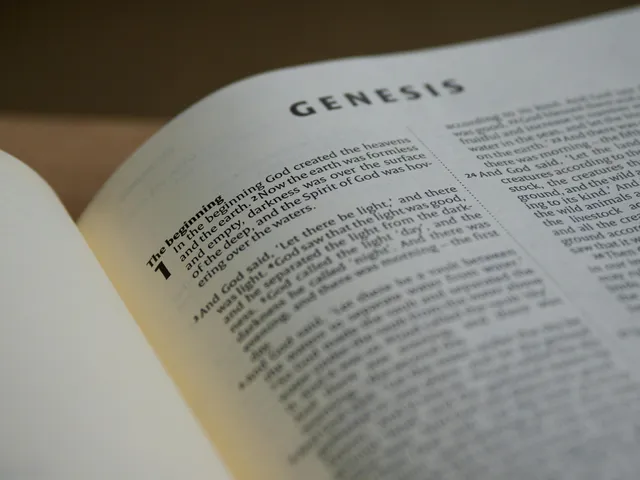
We open our Bibles, flip to a familiar passage, and our eyes glide effortlessly to John 3:16, Psalms 23, or Romans 8:28. We speak in chapters and verses as naturally as we breathe the language of faith. But have you ever paused to wonder-why does the Bible have chapters and verses at all? They are so embedded in our reading and worship that it's easy to assume they've always been part of the Scriptures. Yet, they are not ancient features of the text but relatively recent tools. And while they are human inventions, they have become sacred servants, meeting us at the intersection of divine Revelation and daily devotion.
The Bible Before Chapters and Verses
Imagine hearing Scripture without numbers or breaks. In its earliest form, the Bible existed as scrolls-carefully copied by scribes, read aloud in synagogues, and later in house gatherings of the early church. The Hebrew scrolls of the Torah had no chapters and no verse divisions as we know them today. The same was true of the Greek manuscripts of the New Testament. There were no bold verse numbers marking where one thought ended and another began, only flowing text.
Readers and hearers had to be deeply familiar with the rhythm of the words, the story's structure, and the meaning woven into each line. The Psalms, for example, were often sung or recited from memory. The rhythms and refrains served as their own "dividers." Scripture lived in hearts and voices long before it lived in organized columns.
How Divisions Found Their Way In
The desire to make Scripture easier to navigate grew naturally over time. Jewish scribes began to develop logical divisions-known as parashot-to distinguish sections of the Torah. Later, as Christianity spread, early scholars sought ways to locate and reference parts of Scripture quickly. But it wasn't until many centuries later that someone truly formalized the structure we rely on today.
Stephen Langton and the Chapter Revolution
The chapter divisions we know were largely the work of Stephen Langton, an English cardinal who later became Archbishop of Canterbury in the early 1200s. He wanted to help students at the University of Paris study the Bible more efficiently. So he divided the biblical text into chapters-a system so practical and widely adopted that it has remained with us ever since. Imagine trying to find the story of David and Goliath without 1 Samuel 17, or the Parable of the Prodigal Son without Luke 15. Langton's divisions were not inspired by God, but they were inspired by a deep desire to bring God's Word closer to the people.
Verses: The Finer Threads
Centuries later, a French printer named Robert Estienne (also known as Stephanus) took the next step. In 1551, while producing a Greek New Testament, he introduced the verse numbers we now use. Legend says he divided the text into verses while riding on horseback between Paris and Lyon, pen in hand, counting and marking as he went. Whether that's literally true or not, the image reminds us that the Bible's journey to our bookshelves was both historic and human. Estienne's verse divisions made it possible to pinpoint single sentences, phrases, or even words in the text-creating the rich vocabulary of references that shapes preaching, memorization, and devotion today.
The Hidden Gift of Structure
It's easy to criticize the artificial lines in Scripture. Sometimes they break a paragraph awkwardly or separate one thought from another. And yet, there is profound grace in these small numbers. Think about your own spiritual life. Those chapter and verse markers-tiny though they are-help you find comfort in crises, strength in sorrow, and clarity in confusion. You don't need to say, "Turn to the middle of Matthew's Gospel where Jesus calls the weary to rest." You say, "Matthew 11:28." That single reference carries a world of meaning.
The numbering gave the Church a common language for faith. Across centuries and continents, Christians can meet in a single verse. An Ethiopian believer, a Korean house-church member, and a family in a small-town American pew can all read Luke 10:27 and echo the same divine call to love God and neighbor.
When the Numbers Get in the Way
At the same time, what helps us can also hurt us if we forget its purpose. Chapters and verses are maps-they show us where to look-but they can never replace the journey itself. The danger comes when we cut the Scriptures into isolated pieces, quoting half a verse removed from its heartbeat or memorizing numbers instead of meaning.
In Scripture, context is not optional; it's sacred. Paul's letters were meant to be read aloud as whole messages, not tiny fragments. The Psalms unfold as songs with emotional arcs-lament to praise, longing to peace. The Gospels build their tension and tenderness chapter over chapter, revealing not random teachings but the living presence of Christ.
The numbering system was never meant to be walls between verses but windows into the Word.
Reading Without Numbers-Recovering Flow
One valuable spiritual exercise is to read a passage with the numbers removed. Many modern reading editions do this beautifully, returning the Bible to the flow of its narrative and poetry. Try reading Philippians as a single letter, or the Sermon on the Mount (Matthew 5-7) in one sitting. You'll notice rhythms, repetitions, and transitions that are easy to miss when you hop from verse to verse. The story breathes again, and your heart begins to move with it.
The Divine and the Human Together
There's something beautiful about the story behind these divisions: God entrusting His timeless Word to human care. The Scriptures were inspired by the Holy Spirit, yet God allowed-and even invited-His people to shape how we encounter them. The same Spirit that breathed out the Word still breathes through the systems and structures that help us receive it.
That's the paradox of faith: divine perfection expressed through imperfect vessels. Just as the prophets spoke in human language, and Jesus walked the earth in human flesh, the Bible reaches us through tangible tools-ink, paper, fonts, chapters, verses. None of these diminish its holiness; rather, they demonstrate how God delights in partnering with humanity to make His truth known.
Scripture as Conversation, Not Coordinates
Perhaps it helps to think of the Bible not as a map book, but as a conversation. The divisions make it easier to find your place when the Spirit calls you back to a familiar word. They are like bookmarks in a long correspondence between heaven and earth. Yet the heart of the Bible is not in its numbering but in its message-love, redemption, surrender, and hope.
Psalms 119:105 reminds us, "Your word is a lamp to my feet and a light to my path." Notice-it doesn't say "Your verse numbers" or "Your chapters"! The light and the guidance come from the Word itself. Still, in His providence, God uses every practical tool available to illuminate that path. The lamp shines not because of how it's labeled, but because it reveals the next step in the journey with Him.
A Personal Reflection: How We Read, How We Remember
Think of the verses that have anchored your soul. Maybe Isaiah 41:10 steadied your heart in fear, or Romans 8:38-39 reminded you that nothing can separate us from the love of God. These aren't just numbers or coordinates; they are divine addresses-places you have visited and met God Himself. Each one becomes a stone of remembrance in your faith journey.
At the same time, God invites us to go beyond the verses-to explore the wider landscape around them. Isaiah 41:10, for instance, comes in a section overflowing with reassurance to a weary people. Romans 8:38-39 is not an isolated promise; it's the crescendo of Paul's sweeping meditation on life in the Spirit. The verses are doorways, not destinations.
Letting Scripture Speak as a Whole
When you take time to read longer sections, you begin to hear the heartbeat of God more clearly. His mercy flows continuously, not intermittently. His promises unfold across pages, not isolated lines. Reading the Bible holistically brings balance between devotion and understanding, between intimacy and awe. The numbers then become tools of navigation rather than boundaries of Revelation.
The Gift Beyond the Grid
So, why does the Bible have chapters and verses? Because God, in His tenderness, allowed human ingenuity to meet divine truth. He let His people draw lines that would guide future generations back to His heart. It is a reminder that He is not afraid to work through structure; He sanctifies it. The chapter and the verse are small miracles of accessibility, quietly serving the grand miracle of grace.
The next time you open your Bible, glance at those little numbers with gratitude. They are humble signposts pointing toward the same vast horizon-the living Word of God. But then, look past them. Read wide. Read deep. Let the story sweep you beyond the coordinates into communion. There, behind every printed number, waits the unnumbered mercy of God.
His Word remains whole, eternal, and alive-whether numbered or not.