The Story of the Canon: Why Some Books Didn’t Make It

Understanding the books left out

9 min read
1 Feb 2026

The Weight of Words

The Bible sits on millions of nightstands, coffee tables, and church pews-a collection of sacred writings loved, memorized, and lived by. But have you ever paused to wonder why those particular books are there? Or why others, sometimes with the same ancient pedigree, aren't? The story of the canon-the process by which Scripture took the form we now hold-is both marvelous and mysterious. It's a tale woven through centuries of faith, debate, and divine guidance. And at its core, it's not just about history-it's about trust. The canon reminds us of something essential: that God has not only spoken, but preserved His Word. The process wasn't tidy or easy, but it was purposeful. Every step of it, from the first parchments to the councils and controversies, bears witness to a God who guarded His truth across generations.

The Ancient Echo: A People and Their Texts

Before there was a bound Bible, there were voices-prophets, poets, and shepherds, each inspired by God to speak to their time and yet beyond it. Israel carried these words, copying, reading, and reciting them in homes and synagogues. The Law of Moses, the Psalms of David, the prophecies of Isaiah - these weren't just literature; they were life. When Jesus read from Isaiah in the synagogue (Luke 4:16-21), He stood in a long line of reverence for those scrolls. By His time, much of what we now call the Old Testament was already recognized by the Jewish people as authoritative. Yet even then, there were discussions: Which books were divinely inspired? Which writings should shape the faith and moral life of the community? The same questions would echo centuries later when Christians asked them anew.

The Birth of the New

The earliest followers of Jesus didn't set out to write a new Bible. They were testifying-to a resurrection that had changed everything. Letters were exchanged, stories told, gospels written. Communities collected these writings, reading them aloud in worship alongside the Psalms and Torah. The canon of the New Testament wasn't invented in a moment-it grew organically out of devotion and need. As eyewitnesses passed away, the early church treasured these documents as anchor points of faith. Paul's letters circulated early and widely. The Gospels-Matthew, Mark, Luke, and John-became the narrative heart of the faith. And yet, even in the early centuries, questions lingered about certain writings.

Why Some Books Were Questioned

Some texts, like Hebrews and Revelation, were debated because of uncertain authorship or subject matter. Others, like the Shepherd of Hermas or the Didache, were admired for their spiritual wisdom but eventually set aside as non-canonical. The issue wasn't whether they were valuable-it was whether they carried the same divine authority as the apostolic writings. The early church looked for three marks in particular: When a writing met all three, the church gradually embraced it. This wasn't bureaucracy; it was discernment. The canon wasn't chosen so much as discovered-recognized as already bearing the mark of God's breath.

The Lost and the Left Behind

Of course, plenty of writings didn't make it. Some are names we know-the Gospel of Thomas, the Gospel of Mary, the Acts of Peter. Many emerged in the second century or later, often colored by movements like Gnosticism. They carried philosophical flair or mystical imagination but lacked the grounded, incarnational truth at the center of apostolic teaching. These writings invite fascination but also remind us why boundaries matter. Truth doesn't need embellishment. The Jesus of the canonical Gospels is enough: fully God, fully man, living, dying, and rising in history. The apocryphal tales may intrigue, but they often distort that balance with fanciful legends or secret knowledge. The canon preserved the heart of the gospel: salvation is revealed openly, not hidden in whispers.

What About the Old Testament Apocrypha?

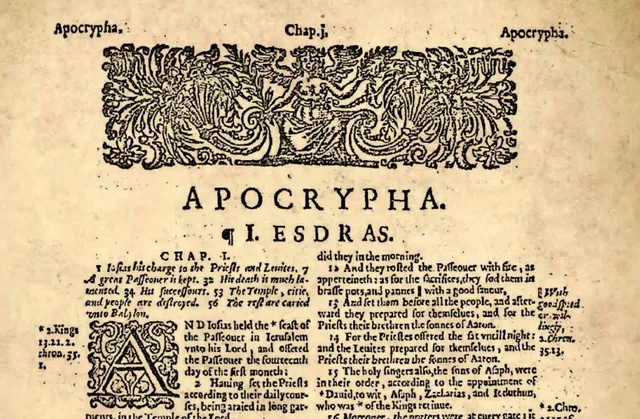
Between the Testaments, Jewish writers produced many revered texts-Tobit, Maccabees, Wisdom of Solomon, and others. Some early Christians read and valued them deeply. The early Greek translation of the Old Testament, the Septuagint, included many of these writings, and for centuries they were part of the church's spiritual library. But not all Jewish communities viewed them as inspired Scripture. When the Hebrew canon solidified and when later Christian leaders reflected on it, many of these texts were seen as useful but not authoritative. The Protestant Reformation later echoed this distinction, returning to the thirty-nine books recognized in the Hebrew Bible. The result wasn't a dismissal of the apocryphal writings but a clarification of what bears the full weight of inspiration.

The Guiding Hand of Providence

To read the story of canon formation is to trace the quiet fingerprints of God's providence. Empires rose and fell. Languages changed. Manuscripts decayed. Yet through all this, the Word endured. When Paul declared that "All Scripture is God-breathed and useful" (2 Timothy 3:16), he was referring first to the Hebrew Scriptures-but the principle stretched forward, anticipating that God would continue to guide His people to recognize His voice. The same Spirit who inspired Scripture also preserved it. Not perfectly through human order, but faithfully through divine oversight. The process wasn't about control-it was about care. From Jewish scribes who painstakingly copied each letter to early Christians who risked persecution to guard a parchment, a single theme shines through: the God who speaks also sustains.

Why It Still Matters

For many believers today, the canon question can feel distant-almost academic. But it's profoundly personal. Every time you open your Bible, you're standing in the stream of that sacred story. The reason you can trust its words isn't because councils decreed it but because God has proven faithful through time. Understanding how the canon formed deepens gratitude. It shows us that faith isn't built on chance but on intention. The collection of books we now call Scripture is not a random anthology-it's the Spirit's library for the life of the church.

Living by the Canon in a Chaotic World

In an age of infinite information and endless opinions, the idea of a canon-something measured, tested, and true-feels countercultural. But that's exactly why we need it. The canon doesn't confine faith; it anchors it. It calls us back from the noise of speculation to the clarity of Revelation. When Christians turn again and again to the written Word, they are returning not to old ink but to living truth. "The grass withers, the flower fades, but the word of our God will stand forever" (Isaiah 40:8). Every generation must decide whether it will trust that Word or chase new gospels that come and go like the tides. The church's story of discernment centuries ago is still our story today-the task of recognizing the voice of the Shepherd amid the clamor of other voices.

Reading What Wasn't Chosen

Some may wonder: Should we read the books that didn't make it? There's value in understanding them. They illuminate the world of early faith, the hopes and confusions of those first centuries. But read them with discernment, not devotion. Let them add historical color, not spiritual authority. The early believers themselves did something similar. They may have read the Shepherd of Hermas as moral encouragement, but they didn't shape their creed around it. They let the center stay where it belonged-in the gospel of Christ crucified and risen. The church has always known the difference between words about God and the Word from God.

The Canon and the Heart

Ultimately, the canon's story isn't just about texts-it's about trust. We can marvel at the historical path, but what makes it holy is the faith underneath it. The same Spirit who guided the early church continues to guide the believer's heart today. We're invited not merely to defend the canon but to dwell in it, to let the living Word dwell in us richly (Colossians 3:16). Every page of Scripture carries the heart of a God who wanted to be known. That is the miracle. We don't have to go searching for secret revelations or hidden truths. The treasure is already before us. The canon is not a locked gate-it's an open door.

The Word That Endures

So why did some books not make it? Because God, in His wisdom, drew a line around the words that most clearly revealed His heart. Not to exclude, but to preserve. Not to silence, but to speak even more clearly. When we open our Bibles, we're stepping onto holy ground shaped by centuries of faithfulness-God's faithfulness, and the faithfulness of those who listened for His voice. As we trace the fingerprints of that story, may we be led not just to historical curiosity but to deeper confidence. The canon is a testimony that God still speaks, still guards, and still guides His people through His Word. And every time we open its pages, we join the great chorus that has, from age to age, whispered the same truth: "Your word is a lamp to my feet and a light to my path" (Psalms 119:105). May we walk in that light with humble joy, trusting the God whose Word endures forever.
canon bible books apocrypha early church orthodoxy apostolicity history