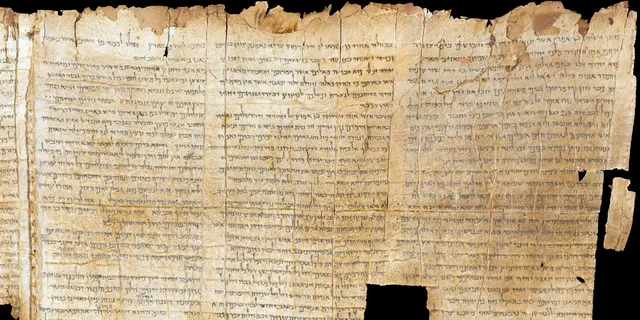
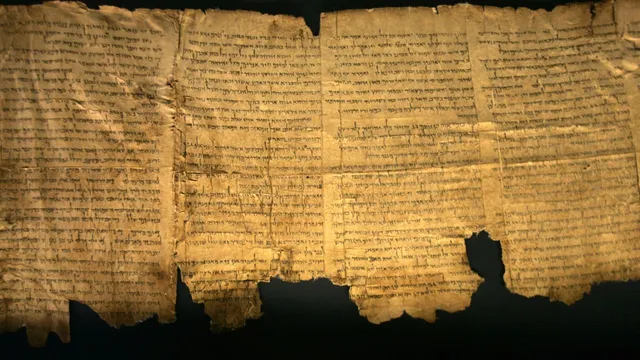
In the barren beauty of the Judean wilderness, near the shores of the Dead Sea, lies one of the most extraordinary archaeological discoveries in human history-the Dead Sea Scrolls. Found by a young Bedouin shepherd in 1947, these ancient fragments would soon ignite a firestorm of excitement among historians, theologians, and believers alike. But beyond the headlines and documentaries, the scrolls hold a quiet, humbling truth: they remind us of God's faithfulness to preserve His Word across millennia.
The Discovery That Changed Everything
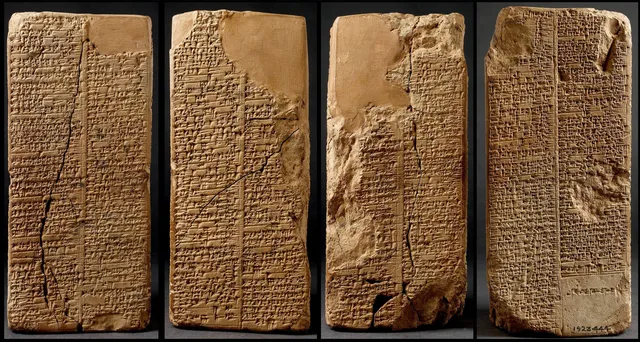
Imagine the scene-scraggly cliffs, the sun beating down on limestone caves, and a lost goat leading to a simple clay jar. Inside that jar: scrolls wrapped in linen, untouched for nearly two thousand years. What the shepherd stumbled upon was nothing less than a time capsule of biblical history. Over the next decade, thousands of fragments-some complete scrolls, many in pieces-were uncovered in eleven caves around Qumran. These texts included portions of every Old Testament book except Esther, as well as other ancient writings from a Jewish community devoted to Scripture.
For centuries, scholars had relied on copies of the Old Testament made around the 9th and 10th centuries A.D., part of what's known as the Masoretic Text. The Dead Sea Scrolls suddenly moved that timeline back a thousand years. Here lay copies of Scripture dating from before the time of Christ-texts that carried an uncanny resemblance to the Hebrew Bible Christians hold today.
Faithful Through the Ages
The scrolls don't merely fascinate historians; they strengthen faith. Before their discovery, skeptics often claimed that the Bible's text had been hopelessly changed over centuries of copying. But the scrolls told a different story. When scholars compared the Isaiah Scroll from Qumran (dating to around 125 B.C.) with the modern Hebrew text used for translations today, they found astonishing accuracy-word for word, line for line, almost identical across a thousand-year span.
This wasn't a dry academic detail-it was a miracle of preservation. The words of Isaiah 40:8 suddenly took on new vibrancy: "The grass withers, the flower fades, but the word of our God will stand forever." God had indeed watched over His Word through fragile parchment, silent caves, and centuries of turmoil. The Dead Sea Scrolls remind us that God's promises are not lost to time; they endure, just as He said they would.
What the Scrolls Reveal
The Dead Sea Scrolls include a wide range of writings-some are biblical manuscripts, others community rules or hymns used by the Jewish sect that likely lived near Qumran. Yet even in their diversity, the scrolls underscore a deep devotion to Scripture and prophecy. They provide a vivid window into Jewish thought and longing just before the birth of Jesus.
The Anticipation of a Messiah
Among the fragments, there are reflections on a coming Deliverer-one who would reign in righteousness and restore God's people. These references echo the hopes we see in Old Testament prophets like Isaiah, Jeremiah, and Micah. In a sense, the community of Qumran was holding its breath for redemption, much like Simeon in the temple centuries later (Luke 2:25-32). The scrolls show us that the messianic expectation was alive and vibrant, forming the spiritual backdrop into which Christ was born.
Understanding Scripture's Context
The scrolls also shed light on how Scripture was used and cherished. The men of Qumran copied Scripture by hand, line after line, often marking places where they paused for prayer. Their meticulous care speaks volumes about their reverence for God's Word. It calls us today to the same devotion-to not only read Scripture but to let it shape our hearts with patience and joy. The Dead Sea Scrolls whisper across the centuries: treasure what you hold.
God's Word, Proven True
In discovering the scrolls, we didn't find a Bible that contradicted what we already knew-we found confirmation. The same Hebrew Psalms, the same prophecies of Isaiah, the same timeless truth of Genesis. Each scroll reinforces what Jesus Himself declared in Matthew 24:35: "Heaven and earth will pass away, but My words will never pass away."
Take, for example, the Great Isaiah Scroll-almost completely preserved. It contains prophecies that Christians recognize as pointing directly to Christ: the virgin birth (Isaiah 7:14), the suffering servant (Isaiah 53), and the promise of everlasting peace (Isaiah 9:6-7). These were written hundreds of years before Jesus walked the earth, and yet here they were, discovered in pristine form, unchanged. The same words that inspired faith in ancient Israel still inspire faith today.
The Faithfulness of God in Fragile Clay
What moves the heart most deeply about the Dead Sea Scrolls isn't just their age or accuracy-it's the symbol they represent. They were hidden away in clay jars, seemingly forgotten, while empires rose and fell. And yet when the time was right, they were revealed once more, testifying to the reliability of God's promises. It is as though the Lord Himself had preserved them, waiting until a skeptical generation would need the reminder that His Word still stands.
The jars that held those scrolls were ordinary, but their contents were eternal. And in many ways, the same is true for us. We are earthen vessels (2 Corinthians 4:7), frail and limited, yet God chooses to preserve His truth within us-to make His Word come alive through our lives, our stories, and our faithfulness.
Lessons for Today's Believer
The discovery at Qumran isn't an academic relic-it's a living testimony. It tells us that even when the world forgets, God remembers. When human voices grow silent, His Word still speaks. It reminds us not to take Scripture for granted. Many of us own multiple Bibles, yet how often do we pause to recognize the miracle of what we hold in our hands? These ancient scrolls were copied with trembling devotion. Every stroke of ink was an act of worship. And because of that faithfulness, we can read with confidence today.
Cherishing the Word
Think about Psalms 119:105-"Your word is a lamp to my feet and a light to my path." The men of Qumran clung to that truth even in their isolation. They lived in a world of uncertainty, empire, and change-yet they found stability in God's unchanging voice. So do we. When life feels unstable or chaotic, we can rest in the same assurance: God's Word does not shift with culture or crumble with time. It is a lamp that never burns out.
A Tangible Reminder of the Invisible Hand
Sometimes God leaves traces of His faithfulness in unlikely places-a desert cave, a piece of parchment, a forgotten jar. The Dead Sea Scrolls are one of those divine fingerprints on history. They remind us that truth is not fragile. They stand against the modern tide of skepticism, shining as silent witnesses that what God says, He preserves, and what He promises, He fulfills.
It's easy to view the Bible as a book among books, but the Dead Sea Scrolls confront that idea. They show us that Scripture is not the accidental survival of human effort-it is the deliberate preservation of divine truth. From Sinai's thunder to Bethlehem's whisper, from the prophets' scrolls to today's printed Bible, there runs a single golden thread of continuity: God's Word endures.
The Word That Will Not Fade
As you close your Bible tonight, think of those caves near the Dead Sea-the dry air, the winds from the desert hills, the jars of clay waiting in silence. Inside them rested the very promises that now rest in your hands. When you open the Scriptures, you are touching history, yes-but far more, you are touching eternity. The same Spirit who inspired those ancient writers speaks still, illuminating hearts one reader at a time.
The Dead Sea Scrolls matter for the Bible because they remind us that no force of time, decay, or doubt can erase what God has spoken. They call us back to reverence-to read with awe, to study with gratitude, and to live with conviction. For the Word that was faithfully copied in the desert is the same Word that today brings life to the soul, hope to the weary, and light to every dark place. And as the sun sets over the Judean hills, one truth remains unshaken: "The word of the Lord endures forever."