For those who love Scripture, archaeology can feel like a window into sacred history-a way to glimpse the stories of faith not only through the written Word but also through the dust of the earth itself. Over the last century, spades in the soil have uncovered remarkable confirmations of names, places, and events that echo the pages of the Bible. Each discovery whispers a simple truth: God's Word stands firm, even when centuries have buried its traces beneath layers of time.
1. The Dead Sea Scrolls - The Word Preserved
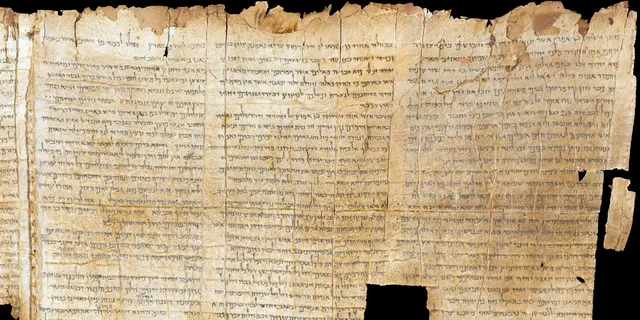
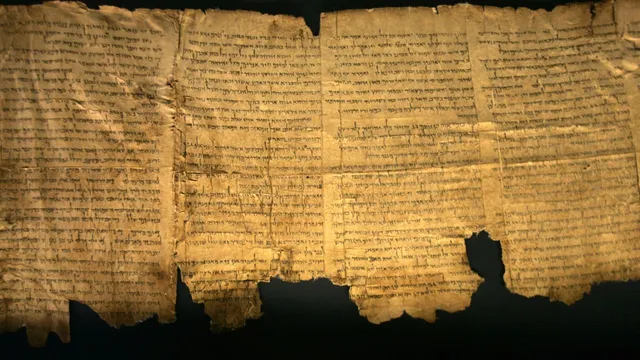
Few discoveries have electrified both archaeology and faith like the finding of the Dead Sea Scrolls in the caves near Qumran in 1947. Containing portions of nearly every book of the Old Testament, these ancient manuscripts-some dating back to the second century B.C.-proved that the Scriptures we hold today remain astonishingly consistent with their ancient origins. The reliability of God's Word was affirmed in the very caves where silent scrolls had waited millennia to speak again.
Reading Isaiah's words in scroll form, virtually unchanged from those found in modern Bibles, has brought countless believers to tears. As Jesus Himself said, "Heaven and earth will pass away, but my words will never pass away" (Matthew 24:35). The desert had kept its promise, preserving God's testimony in fragile parchment.
2. The Tel Dan Stele - David Steps Out of Legend
For years, skeptics suggested that King David might be a myth-a poetic invention of later generations. Then, in northern Israel, archaeologists unearthed a victory monument from the 9th century B.C. bearing the inscription "House of David." The Tel Dan Stele was the first extra-biblical reference to David ever found, carved by an Aramean king boasting of defeating a ruler from that dynasty.
There, etched in stone, was the name of Israel's shepherd-king. The Psalms came to life not as folklore but as history grounded in a name known by neighboring empires. The discovery reminds us that when God raises up leaders, their impact reverberates through time, no matter how fiercely critics try to erase it.
3. The Pool of Bethesda - Healing Waters Rediscovered
In John 5, the apostle records Jesus healing a man at the Pool of Bethesda, describing it as having "five covered colonnades." For centuries, scholars dismissed this as literary symbolism-until excavations in Jerusalem uncovered precisely such a structure north of the Temple Mount. The five porticoes and deep pools align exactly with John's description.
Standing amid those stones today, one almost hears the gentle ripple of water and the echoing footsteps of mercy approaching. Archaeology here doesn't merely confirm a place; it affirms the compassion of Christ in tangible form.
4. The Cyrus Cylinder - God's Promise Through a Pagan King
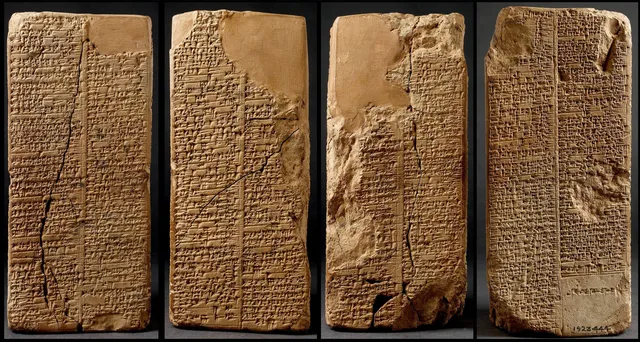
The Book of Ezra opens with the astonishing decree of Cyrus, king of Persia, permitting the exiled Jews to return home and rebuild the Temple. Skeptics once doubted that such tolerance had historical precedent-until the discovery of the Cyrus Cylinder in Babylon. Inscribed in Akkadian cuneiform, it records Cyrus's policy of allowing captive peoples to return to their homelands and restore their sanctuaries.
The Cylinder shines as a small clay echo of divine sovereignty. God had called Cyrus His "anointed" (Isaiah 45:1) centuries in advance. Even pagan rulers can become instruments of providence; archaeology simply provides the human footnotes to a divine narrative already written.
5. The House of Pilate - A Roman Governor Unveiled
Pontius Pilate-the man who questioned, condemned, and symbolically washed his hands of the decision-was long known only from the Gospels. Then in 1961, a stone inscription was unearthed in Caesarea Maritima bearing his name and title: "Pontius Pilatus, Prefect of Judea."
This tangible artifact bridges faith and history. It reminds us that the trial of Jesus occurred in a real place under a real ruler. Pilate was not a ghost of tradition but a person who stood in the shadow of history's greatest moment: the crucifixion and resurrection of Christ. The Gospel writers did not invent their settings; they recorded reality with inspired precision.
6. Jericho's Fallen Walls - Echoes of Trumpets in the Dust
The Book of Joshua recounts the miraculous fall of Jericho's walls as Israel entered the Promised Land. Excavations at Jericho have revealed collapsed walls and evidence of sudden destruction by fire around the traditional time period of Joshua's conquest. Some archaeological debates continue, but the physical signs-mud-brick walls toppled outward, food stores untouched-beautifully reflect the biblical description.
Jericho reminds us that archaeological confirmation is not always simple-but faith and evidence often meet like two rivers joining a single stream. The ruins still testify to divine intervention: a people who marched in obedience found that the Lord fought for them.
7. The Sennacherib Prism - God's Deliverance of Jerusalem
The Assyrian king Sennacherib recorded his conquest of Judah in 701 B.C. on a clay prism now preserved in the British Museum. It boasts of capturing forty-six cities and trapping Hezekiah in Jerusalem "like a bird in a cage." Strikingly, it never claims the city was taken-a silent admission that aligns perfectly with 2 Kings 19, where God miraculously spares Jerusalem from destruction.
When a pagan artifact agrees with biblical humility, its silence speaks volumes. The Assyrian army boasted, but the Bible tells how God sent His angel to deliver His people. History and faith clasp hands beneath the same prism light.
8. The Hezekiah Tunnel - Water From Faithful Foresight
An Underground Testimony of Faith
Deep beneath the City of David lies the Hezekiah Tunnel, a 1,750-foot engineering marvel carved through solid rock. According to 2 Chronicles 32:30, King Hezekiah had the tunnel constructed to secure Jerusalem's water supply during the Assyrian siege. Discovered and explored in the 19th century, the tunnel still carries cool water from the Gihon Spring to the Pool of Siloam.
Carved inside its walls is an ancient Hebrew inscription describing the day the two groups of diggers met, an awe-inspiring detail preserved in stone. Faith does not only pray-it also prepares. Archaeology here preserves a record of wisdom and trust under pressure, a timeless reminder that spiritual foresight builds resilience.
9. Nazareth and the Bethlehem Church - Grounds of Humble Beginnings
For many years, critics mocked the idea that Jesus of Nazareth truly hailed from a small Galilean village-claiming the town didn't even exist in the first century. Yet excavations have revealed precisely such a settlement: first-century dwellings, wine presses, and burial caves consistent with a modest, rural community. Nearby, the Church of the Nativity in Bethlehem, one of Christianity's oldest worship sites, sits atop layers that archeologists have dated back to the early centuries of faith.
Christ's story is grounded not only in heaven but in humble earth. Stones and soil confirm what Scripture proclaims: the Messiah came from ordinary places to redeem ordinary people.
10. The Ossuary of Caiaphas - A Priest from the Passion
In 1990, workers accidentally uncovered a first-century tomb containing ornate ossuaries-boxes holding the bones of the dead. One bore the inscription "Joseph son of Caiaphas," believed to be the high priest who presided over Jesus' trial. The discovery matched both historical and biblical records of Caiaphas's lineage and time period.
This single artifact brings texture to the events leading to the Cross. It reminds us that the figures surrounding Christ's Passion lived, breathed, and made their choices in history. The tomb that held Caiaphas's remains contrasts starkly with another tomb-empty, triumphant, uncontainable.
A Faith Confirmed-And Transcending Evidence
Together, these discoveries strengthen our confidence that the Bible is not a collection of myths, but a tapestry woven through space and time. Yet archaeology's greatest gift is not merely proof-it is perspective. Every pottery shard and inscription whispers that the God of Scripture acts within real history and still moves within ours. Faith that rests on truth becomes courage sustained by presence.
As believers, we trust not only because stones cry out, but because the Spirit confirms in our hearts what the earth occasionally uncovers: that the Author of history keeps His promises. When we read the Bible, we don't simply study an ancient document-we encounter the living Word that has walked the dusty roads of its own testimony.
These archaeological echoes invite us to look around our own lives and ask: Where do the traces of God's faithfulness lie buried, waiting to be uncovered? Just as archaeologists patiently dig layer by layer, so too we uncover deeper gratitude, trust, and conviction with every step of obedience. And in doing so, we become living evidence ourselves-that God's Word endures, unbroken through time and alive in the hearts of His people today.