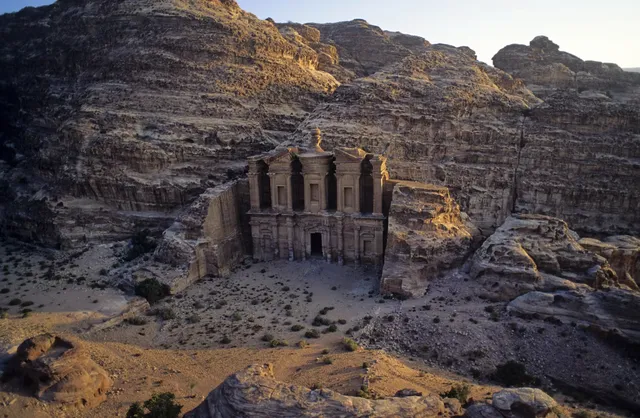
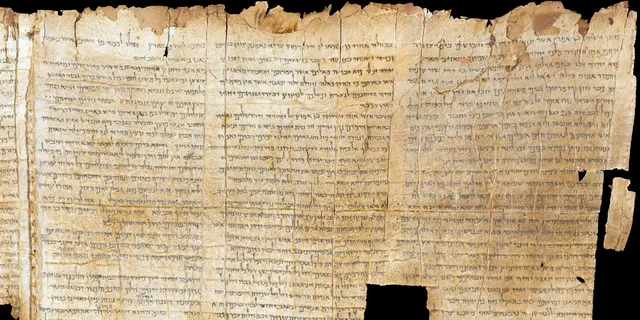
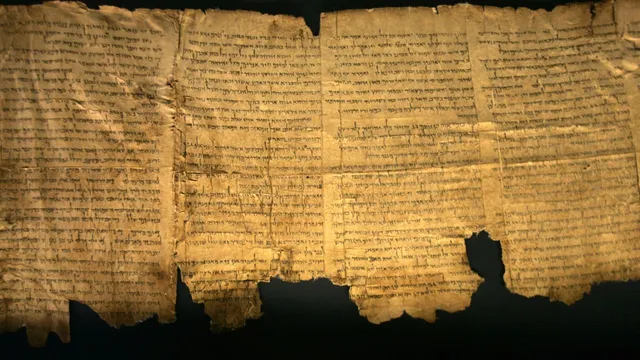
Every time a shovel dips into the ancient soil of the Near East, the question flickers anew in people's minds and hearts: Does archaeology support the Bible? The answer, as with most profound questions, is layered and rich. For some, archaeology serves as a thrilling affirmation of the Scriptures' historical reliability. For others, it stirs deeper wonder about how God's story intertwines with human history - how dusty ruins and ancient inscriptions can whisper truth across millennia. Yet no spade of earth, however eloquent, can replace faith itself. But what archaeology can do is invite us to lean closer, to listen, and perhaps to marvel afresh at a God who anchors His redemption story not in myth, but in time and place.
The Bible and the Landscape of History
Unlike mythic literature that floats free from verifiable geography, the Bible situates itself squarely within real places - towns, valleys, rivers, and empires. Its pages pulse with names, dates, trade routes, and rulers. That is a bold claim for any ancient text. If it were all poetic invention, archaeology would have long since put that illusion to rest. Yet over the last century and a half, spade after spade of evidence has confirmed the Bible's geographical and cultural context.
From the once-lost city of Nineveh to the pool of Bethesda in Jerusalem, discoveries have matched scriptural references with remarkable precision. Archaeology doesn't prove the Bible in a mathematical sense - faith has always been more than data - but it does show the Bible's stories rise from a bedrock of real-world history.
Unearthing Echoes of the Patriarchs
Genesis, for many skeptics, once seemed an impossible blend of legend and faith. Abraham's journey from Ur to Canaan felt too ancient, too distant to verify. But in the early 20th century, excavations at Ur revealed a thriving city with intricate social structures, ziggurats, and administrative tablets describing life much as Genesis records - a world where caravan trade and household deities mingled in complex interplay.
Ur, Haran, and the trail of faith
Archaeologists discovered that Ur of the Chaldees was indeed a center of advanced civilization, replete with wealth, writing, and governance - the kind of place one would need great courage to leave behind. So Abraham's obedience to God's call (Genesis 12:1-4) becomes even more poignant when seen in light of the sophistication of his hometown. He left not a barren village, but a prosperous metropolis - trusting a promise rather than a plan.
And in Haran, another ancient site mentioned in Genesis, records and ruins speak of strong trade links stretching from Mesopotamia through Syria into Canaan - the same route Abraham would have taken. These discoveries remind us that our faith story is rooted not in abstractions but in landscapes threaded with human footprints.
When Stones Speak: Israel in Egypt and Beyond
The Exodus story has stirred both devotion and debate for centuries. While direct archaeological confirmation of the event remains elusive - as one might expect for a nomadic people traversing a desert - there are intriguing historical echoes that align with the biblical narrative. Egyptian inscriptions mention groups of Semitic laborers; tomb paintings depict foreign workers making bricks under overseers' whips. There's even mention of a people called the "Habiru," possibly connected to the Hebrews.
Then there's the Merneptah Stele, an Egyptian inscription dated around 1208 BC, which mentions "Israel" by name - the earliest known extrabiblical reference to the nation. Carved during the reign of Pharaoh Merneptah, it boasts that "Israel is laid waste; his seed is not." Of course, Israel was very much alive, and that prideful inscription ironically becomes one of archaeology's confirmations that by that date, Israel was already an identifiable people in Canaan. The Bible's own historical outline fits seamlessly into this ancient backdrop.
Jericho and the Sound of Trumpets
Perhaps no archaeological site has sparked more imagination than Jericho, the first city toppled under Joshua's leadership. For decades, its ruins were fiercely debated. Some argued that its walls had fallen long before Joshua's time; others, that they weren't there at all. Yet a reexamination of the evidence revealed collapsed walls and layers of ash suggesting a violent destruction at precisely the period corresponding to Israel's entry into the land. Pottery and carbon dating have been reinterpreted multiple times, but one thing remains steady: Jericho's ruins speak of sudden judgment and abandonment - remarkably consistent with the book of Joshua's account (Joshua 6).
Faith and the evidence dance together
Does that mean we can prove a miracle? Of course not. Archaeology cannot measure the supernatural, only the material. But what it can do - and has done - is affirm that the setting, timing, and details fit perfectly within the Scripture's narrative zones of possibility. Where many had once dismissed the conquest stories as later fiction, the dust of Jericho still murmurs that the Bible belongs in the arena of real human history, not mythic invention.
The Kings and the Chronicles
When the spade turns from early Canaan to the period of monarchy - David, Solomon, and their successors - the discoveries grow even more specific. Once, critics claimed David was merely a literary invention, a mythical founder invented centuries after the fact. That view began to crumble in 1993 when a basalt fragment known as the Tel Dan Stele was unearthed in northern Israel. It clearly mentions the "House of David," a phrase used to denote the ruling dynasty of Israel's famous king. The stone's inscription, carved by an enemy of Israel, serves as powerful extrabiblical acknowledgment that David was no myth but a remembered ruler.
In Jerusalem, excavations have revealed monumental structures dating to the 10th century BC, the very timeframe the Bible attributes to Solomon's reign. Inscriptions from Assyria and Babylon confirm the interactions - often hostile - between those empires and the kings of Judah. Hezekiah's preparations for the Assyrian siege, including his famous water tunnel (2 Kings 20:20), can still be walked through today. The pool it fed, the Pool of Siloam, would one day become part of Jesus' miracles (John 9:7), seamlessly linking Israel's ancient and New Testament legacies.
Prophets, Exiles, and the Return Home
The prophets' words often overlap with the grand sweep of ancient world history - Babylon, Persia, Nineveh, and beyond. Archaeology gives these prophecies a dramatic backdrop. Excavations at Nineveh have revealed the splendor and cruelty of the Assyrian Empire that oppressed Israel and deported its people. Tablets record their campaigns, including King Sennacherib's boast about shutting up Hezekiah "like a bird in a cage." The Bible reports the same siege with chilling accuracy (2 Kings 18-19), and yet it also describes God's miraculous deliverance - a portion archaeology cannot measure, but faith can.
The Persian connection
Then came the Persians. The famed Cyrus Cylinder, often called the first charter of human rights, describes how King Cyrus allowed conquered peoples to return to their homelands and rebuild their temples - precisely what the Bible records in Ezra 1:1-3. Archaeology thus gives weight to the prophets' proclamations of restoration and hope. What once seemed improbable - exiles returning to rebuild Jerusalem - becomes an historically attested act of imperial policy.
Walking the Streets of Jesus
No field of archaeology has stirred Christian hearts more deeply than the discoveries related to Jesus and the early church. Streets beneath today's Jerusalem have revealed the pavement where Roman soldiers may have mocked Him. The Pontius Pilate inscription, found in Caesarea, confirms the existence of the very Roman governor who presided over Jesus' trial (Luke 23). These discoveries do not create faith, but they tangibly connect us to the story's reality: the Word became flesh in a world of stone, dust, and empire.
In Galilee, archaeologists have uncovered the remains of first-century fishing villages like Capernaum, with stone houses and synagogues matching the Gospels' descriptions. At one site, a boat dredged from the mud of the Sea of Galilee - dated to the time of Christ - provides a haunting reminder of storms stilled by His word. Peter's home, early meeting places for believers, baptismal pools - each layer testifies that Christian faith arose in the heart of history, not on the edges of imagination.
The Early Church and the Expanding Witness
From the catacombs of Rome to the ruins of ancient Philippi and Ephesus, archaeology keeps confirming the reach and vitality of the first believers. Inscriptions mention early followers of Christ; symbols of the fish and the cross appear carved into walls and lamps. Acts 18 mentions the Roman official Gallio, and an inscription found at Delphi records his name and title during the exact timeframe Luke describes - aligning the book of Acts with concrete political chronology. The New Testament, it turns out, is no vague parable collection - it is a record of events rooted in administrative archives and civic life.
Even where no artifact exists, the cultural precision of Scripture - its customs, coin names, laws, and language - stands confirmed by archaeology's ever-growing catalogue. The Bible fits into its world with uncanny exactness, never the other way around.
Faith Beyond the Evidence
And yet, a wise humility guides us here. Archaeology is not faith's foundation but one of its companions. There are questions still unanswered - sites yet unexcavated, data yet debated. But rather than shaking faith, these gaps invite us into wonder. As Deuteronomy 29:29 reminds us, "The secret things belong to the Lord our God, but the things revealed belong to us and to our children forever." The stones speak, but God Himself still speaks louder - through His Word, through His Spirit, and through the quiet assurance that truth stands the test of time.
Archaeology does not replace faith - it enriches it. When we walk among the ruins of Jericho, or gaze upon the faint letters spelling "Pontius Pilate," we feel a tremor of connection across centuries. We see that what we believe in is not an abstract philosophy, but a narrative anchored in real time and space. God entered into history, and He still does.
Living Between the Stones and the Spirit
So, does archaeology support the Bible? Yes - but in a way deeper than mere verification. It supports it the way a lamp supports vision: by shedding light, revealing texture, drawing us into awe. The survival of these ancient traces across time is a testament not only to the durability of stone, but to the enduring reliability of the God who speaks through history. The Bible, again and again, proves trustworthy where people once doubted it. But beyond artifacts and dates lies the greater truth - the story continues, and our lives are now part of that ongoing record of faith.
When we hold Scripture in our hands, we are holding not just inspired words, but the living pulse of God's dealings with humanity. The stones cry out, yes - but so should we. Each time archaeology confirms yet another whisper of the biblical story, it's an invitation to trust that same unshakable Author in our own lives today. The God who worked in Abraham's journey, Joshua's courage, and Mary's humble obedience is the same God at work beneath the layers of our own daily rhythms - still writing history, still faithful, and still real.