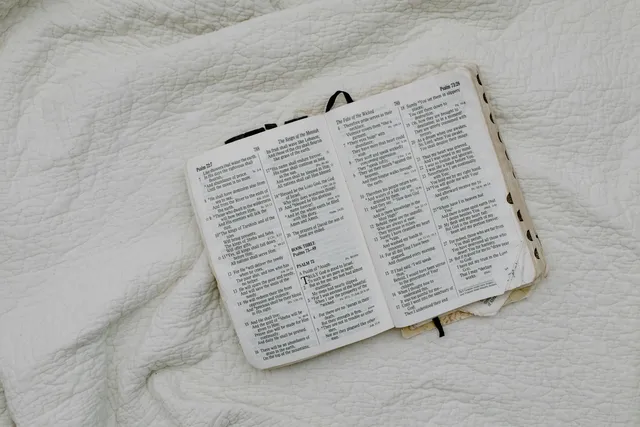
When you open the pages of Scripture, do you ever feel as though you're staring at a deep ocean, unsure where to start swimming? You long to know God's Word-not just read it, but truly hear His voice through it. That's where the Inductive Bible Study method shines. It's not a quick or formulaic approach, but a journey of discovery that invites heart, mind, and Spirit to walk together. It slows you down-helps you wonder, notice, and respond-and before long, you find yourself not simply reading the Bible, but being transformed by it.
What Is Inductive Bible Study?
The word "inductive" might sound academic, but its heart is practical. To study the Bible inductively means to let Scripture itself speak-to draw conclusions from the text, rather than bringing our own assumptions to it. Instead of relying on commentaries first or chasing topical themes, you begin with the Bible, reading closely, prayerfully, and attentively. The goal is simple yet profound: to know what God is saying, understand what it means, and live accordingly.
In short, Inductive Bible Study involves three main steps: Observation, Interpretation, and Application. These steps are not a rigid formula; they flow naturally together, like breaths of spiritual attention-seeing, understanding, and obeying. Let's explore each step in depth.
Step One: Observation - Learning to See
Before we can understand Scripture, we must first see it. Observation is about slowing down enough to notice what's actually there. In our fast-scrolling world, this may be the hardest part. But the Bible reveals its treasures to those who linger.
Ask, Don't Assume
Start by reading a passage several times. Each reading peels back a new layer. Ask questions: Who is speaking? To whom? What's happening? When and where is this taking place? Why is this being said? The more questions you ask, the more alive the text becomes.
For example, when reading Mark 4-the parable of the sower-don't rush to interpret. Simply note what you see: the different types of soil, the result of each, the repetition of hearing. You might jot down that the word "hear" appears multiple times. Small details like these become the seeds of deeper understanding.
Notice Patterns and Repetition
The Holy Spirit often highlights truth through repetition. When you see words or themes recur, take note. In Philippians, Paul repeatedly speaks of joy and contentment despite suffering. That repetition tells you something vital about the power of Christ-centered perspective.
Let Scripture unfold before you rather than collapsing it into what you already think you know. Observation cultivates humility-it trains you to listen before speaking, to see before judging. It's in this quiet seeing that relationship with God deepens.
Step Two: Interpretation - Seeking Understanding
Once you've observed the text carefully, the next question naturally arises: What does this mean? Interpretation moves you from what the text says to what it means. It's not about private opinion but about discerning the original intent under the guidance of the Holy Spirit.
Context Is King
Every verse lives within a neighborhood-within a chapter, a book, a cultural moment, and the grand story of redemption. To interpret well, pay attention to context. For instance, when Philippians 4:13 says, "I can do all things through Christ who strengthens me," the context reveals Paul is referring to endurance, not limitless achievement. Context protects us from misusing God's Word; it anchors interpretation in truth rather than wishful thinking.
Let Scripture Interpret Scripture
This principle may be the most beautiful safeguard in all of Bible study. The Bible is one living, unified story. When a passage is hard to understand, look for others that shed light. For example, to understand God's covenantal faithfulness in the Old Testament, you might read Hebrews or Romans and see how those promises find fulfillment in Christ. Over time, cross-references illuminate the tapestry of Scripture's consistency and grace.
Listen for God's Character
Interpretation is not merely about decoding ancient text-it's about discovering divine heart. Ask: What does this reveal about who God is? About humanity? About what He loves and what He desires for His people? In every story, law, and prophecy, God's character glows through-His patience with Jonah, His mercy toward David, His restoring grace in Peter's failure. The better you know His heart, the more clearly the text sings.
Step Three: Application - Living the Word
Observation and interpretation are incomplete until they lead to transformation. The Bible was never meant to end in mental note-taking. Jesus said, "Blessed are those who hear the word of God and keep it." (Luke 11:28). Application brings Scripture from the page into your hands, feet, and heart.
Application asks: How does this truth shape me-how I think, speak, serve, forgive, endure? It may lead to repentance, encouragement, or a new act of obedience. Sometimes it's a quiet heart shift; other times, a bold outward change. Through application, the Word becomes flesh in us once again.
Take Psalms 23, for instance. After observing its shepherd imagery and interpreting its assurance of God's provision, application might sound like this: "Today, I will rest in the reality that God leads me, even through uncertainty. I choose to trust His goodness instead of my fears." In this moment, the Psalms is not merely poetry-it becomes your prayer.
Taking Time with the Text
Inductive study resists hurry. It invites you to linger over a single passage for days, even weeks, allowing it to soak into your spirit. Some of the richest growth happens in silence, after the study is done, as the Holy Spirit continues to bring insight and conviction. You may find yourself recalling a verse midweek or sensing its truth in a surprising moment-that's the living Word doing its work.
Don't rush the process. Just as crops need time to mature, spiritual understanding unfolds with patience. The farmer doesn't dig up seeds to check their progress; he simply waters and waits. In the same way, when God plants His Word in us, He is faithful to bring fruit in season.
Practical Tips for the Journey
While the Inductive Bible Study is beautifully simple, certain habits can make it more fruitful:
- Pray before you begin - Ask the Holy Spirit to open your eyes and soften your heart. Approach the text ready to be changed, not just informed.
- Use a notebook - Writing down what you see, think, and feel deepens your engagement and helps you trace your growth over time.
- Mark keywords - Circle repeated phrases, underline commands, or highlight contrasts. Visual cues help unlock structure and meaning.
- Be consistent - Ten focused minutes daily can shape more than an hour once a week. The goal is a rhythm of encounter, not a checklist.
- Study in community - Share discoveries with friends or small groups. Hearing others' insights sharpens your understanding and strengthens fellowship.
When Studies Feel Dry
Not every time in the Word feels heart-thrilling. Sometimes pages blur, and our minds wander. That's okay. Faithfulness matters more than fireworks. Even when the Bible feels silent, God is sowing truth into your soul. Keep coming back. Tell Him your dryness. A sincere, weary prayer-"Lord, meet me here"-is often the start of fresh renewal.
Remember: The goal of Bible study is encounter, not performance. You're not mastering the text; you're letting the truth master you. Every study, thrilling or quiet, is an act of relationship-a meeting place between a seeking soul and a faithful God.
Beyond the Page-Becoming a Living Testimony
The beauty of the inductive approach is that it doesn't end with comprehension. It issues an invitation: Live what you learn. Each passage calls for transformation in character and mission. James writes, "Be doers of the word, and not hearers only." (James 1:22) The difference between a life that merely collects spiritual facts and one that shines with the presence of Christ is obedience.
Imagine a church where believers study this way-careful observers, humble interpreters, eager doers. Such a community would radiate both wisdom and compassion. Each person would come to Scripture not looking for ammunition, but for alignment with God's heart. That's what the inductive method fosters: a posture of listening discipleship.
A Final Word of Encouragement
When you sit with Scripture tomorrow morning-coffee in hand, perhaps a notebook nearby-remember this: You are not studying alone. The same Spirit who inspired these words dwells within you, ready to teach, convict, and comfort. The God of Abraham, Ruth, and Paul meets you in those pages. He delights to reveal Himself to those who seek Him sincerely.
Let each session be more than a study; let it become worship. The more you observe, interpret, and apply, the more the Word becomes a mirror, a lamp, and a home. Over time, you'll see that this isn't just a method-it's a way of abiding. And in that abiding, lives are transformed, one prayerful reading at a time.
"Your word is a lamp to my feet and a light to my path." (Psalms 119:105) May the inductive path lead you not merely to information, but to illumination-to the living presence of the One who still speaks through every line.