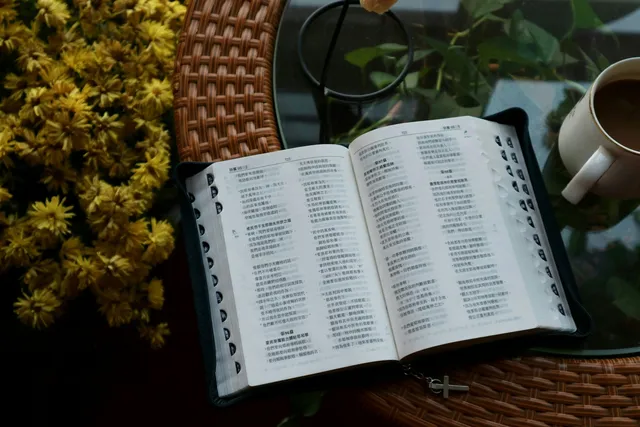
When a new believer walks into a bookstore or browses a Bible app, they're often surprised-and sometimes a bit confused-by how many versions of the Bible exist. There's the NIV, ESV, KJV, NKJV, NLT, NASB, and dozens more. Each one promises clarity, accuracy, or faithfulness. So which one is right? Why so many? And what does that mean for us who simply want to hear God's voice clearly?
The truth is, the story behind the different versions of the Bible is not one of confusion, but of God's enduring desire to speak to every heart in every language and generation. The variety of translations is not a sign of disorder, but a witness to the living Word at work through the centuries.
The Bible's Journey Through Time
The Bible did not arrive in a single bound volume from heaven. It is, rather, a sacred collection spanning centuries-written in Hebrew, Aramaic, and Greek, across deserts and cities, by prophets, poets, shepherds, kings, fishermen, and apostles. Every page was inspired by the Spirit of God, but recorded through human hands and languages rooted in specific times and places.
Early followers of Jesus read the Hebrew Scriptures (the Old Testament) in their original form or in the Greek translation known as the Septuagint. The New Testament letters and Gospels were written in Greek-the common language of the first-century world. Over time, as Christianity spread beyond the Mediterranean, the Bible was translated into Latin, Coptic, Syriac, and countless other tongues. By doing so, the divine message traveled into new cultures without losing its essence.
From Ancient Scrolls to Modern Books
Many centuries later, as the world shifted from parchment to print, new opportunities-and questions-emerged. Translators worked tirelessly to make Scripture accessible to ordinary people, even when doing so could cost them their lives. One such man, William Tyndale, devoted himself to translating the Bible into English during a time when only clergy had that privilege. His words shaped much of what we now know through the King James Version (1611), and his vision opened the door for ordinary believers to encounter God's Word personally.
From the Reformation onward, the Bible became a book for the people-no longer locked behind Latin walls or ecclesial authority. Every new version since has been part of that same mission: to make the Word of God understandable to those who need it most.
Why So Many Versions?
Behind the wide variety of modern translations lie two major goals-accuracy and clarity. All translators want to remain faithful to what God originally said. Yet translation is never mechanical; every language balances precision with readability.
Word-for-Word and Thought-for-Thought
Most English Bibles fall somewhere along a spectrum between two main translation philosophies:
- Formal equivalence (or "word-for-word"): Translations such as the ESV, NASB, and KJV strive to preserve the exact wording and structure of the original text as much as possible. This can result in a slightly more formal or traditional tone but offers close alignment to the ancient phrasing.
- Dynamic equivalence (or "thought-for-thought"): Versions like the NIV and NLT aim to communicate the meaning of a phrase or paragraph as naturally as possible in today's language, even if that means rephrasing certain expressions for clarity.
Neither approach is inherently better. Together, they allow the Word of God to resonate across a spectrum of readers-from those who love the poetic cadence of the King James to those drawn to the warmth and plain speech of the New Living Translation.
The Art and Challenge of Translation
Translating Scripture is both a linguistic and spiritual calling. Some Hebrew or Greek words have no exact English equivalents. For example, the Hebrew word hesed conveys a mixture of love, covenant faithfulness, mercy, and loyalty-all in one. How can a single English word capture that? Like a diamond turned toward the light, different translations reveal fresh facets of God's heart.
Another challenge lies in cultural distance. Expressions that made perfect sense in ancient Israel or first-century Greece may sound puzzling or even strange in modern English. Translators must discern how to convey eternal truth through temporary idiom-how to bring the heart of God across thousands of years of vocabulary and worldview without distortion. This is holy work.
Unity in Diversity
It's tempting to see the variety of Bible versions as dividing lines, but in truth, they testify to the vibrancy of God's living Word. Psalms 119:105 tells us, "Your word is a lamp to my feet and a light to my path." Lamps come in many designs, but the light they cast is the same. Likewise, each faithful translation brings that same divine light to people in their own words and rhythms.
Consider the way believers worship worldwide: different languages, instruments, and melodies-yet we all lift praise to the same Savior. So it is with Scripture. The diversity of translations is a mirror of the global Body of Christ: one faith, many voices.
When Different Versions Seem to Vary
Sometimes readers notice that verses are worded differently-or even numbered differently-between translations. This usually reflects variations in the ancient manuscripts used by translators. Through the centuries, thousands of handwritten copies of the Bible were preserved. They are remarkably consistent, but minor differences do exist. Modern scholars compare and study these manuscripts closely to produce the most reliable text possible. Far from undermining faith, this careful process actually strengthens it. It shows how seriously the Church treats the integrity of God's Word.
Choosing a Bible That Speaks to You
For personal reading, the right version is often the one that helps you read with joy, clarity, and understanding. Some prefer the timeless beauty of the King James Version; others appreciate the smooth flow of the NIV or the clarity of the NLT. Study Bibles like the ESV or NASB can help with deeper word analysis, while paraphrases such as The Message can refresh familiar passages and stir devotion.
Many believers find value in reading more than one translation. Doing so can reveal shades of meaning otherwise missed, much like viewing a single landscape through different seasons. Try comparing passages side by side-say, Psalms 23 or Romans 8-and notice what each conveys. You'll hear the same Shepherd calling your name in every version.
The Role of the Holy Spirit
No translation, however excellent, can replace the living voice of the Holy Spirit. Jesus promised that the Spirit would "guide you into all truth" (John 16:13). Whether you're reading in English, Spanish, Swahili, or Chinese, the same Spirit who inspired the original authors dwells within you, illuminating the words on the page. The power of Scripture does not depend on wording alone-it springs from the living breath of God within it.
When you open your Bible, no matter the version, pause to pray: "Lord, speak through Your Word." That simple moment invites the Spirit to turn ink and paper into communion. After all, the ultimate goal of reading Scripture is not information but transformation.
The Bible for Every Heart
Each translation, from ancient manuscripts to digital apps, is part of one unbroken story: God reaching out to humanity. Through empires and reformations, persecutions and revivals, He has ensured that His voice is never silenced. The countless versions we see today are proof of His faithfulness. Every age, every tongue, every reader can hear Him say, "I am with you."
So when you pick up your Bible, don't be discouraged by the variety-rejoice in it. Each version bears witness to generations who longed to see the Word alive in their own language. They remind us that God's message transcends dialect and time: Christ, the Word made flesh, speaks still.
Living the Word Today
As you read Scripture-whether the poetic resonance of the KJV or the clear conversation of the NLT-let its truth sink from your mind into your living. Let its words form your prayers, inform your choices, and anchor your hope. The Word of God was never meant to stay on the page; it is meant to be lived and shared.
In a world of constant noise, the voice of God calls us back to what is steady and sure. However it reaches us-by parchment or phone screen, ancient cadence or modern tone-it carries the same divine heartbeat: "For the word of God is alive and active" (Hebrews 4:12). May we listen, may we trust, and may we live it out daily, confident that no matter the version, the Author never changes.