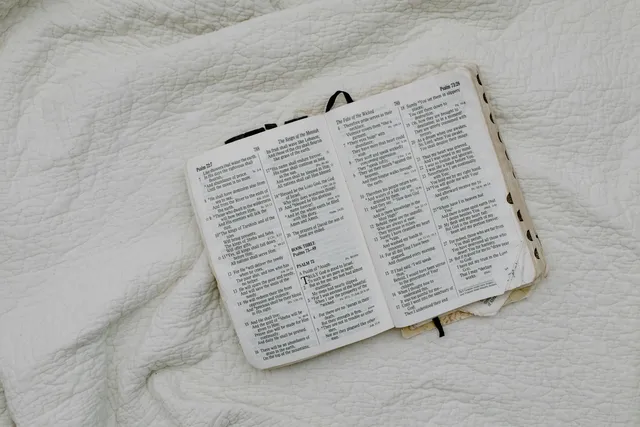
For many Christians, opening the Bible for the first time feels like stepping into sacred territory - full of mystery, promise, and awe. The words within those thin pages have transformed hearts for centuries, yet the sheer number of translations available today can make that first step a little daunting. Which one truly helps a beginner hear the heartbeat of God? Which lets Scripture breathe simply, beautifully, yet faithfully?
The Beauty and Challenge of Choosing a Translation
The Bible wasn't written in English. The Old Testament comes mostly from Hebrew, with some Aramaic, and the New Testament from Greek. Every translation is, in a sense, a bridge - a careful crossing between ancient words and modern understanding. Translators labor prayerfully over phrasing, nuance, and clarity, trying to maintain the sacred tension between accuracy and accessibility.
That's why we have so many options. Some translations preserve almost every word's form and order, staying close to the original structure (these are called formal equivalence translations). Others focus on readability and natural flow, conveying meaning thought-by-thought (known as dynamic equivalence). Still others take a more artistic, paraphrased approach that captures tone and emotion over strict wording.
Why Translation Style Matters for New Readers
When you're new to Scripture, your main need isn't an academic exercise in grammatical precision; it's connection. You're looking to hear God's voice clearly, to understand the story of His redemption, and to begin a rhythm of listening and responding. A translation that is too dense or archaic can make a new believer feel lost before the words even sink in. Conversely, a translation that oversimplifies can flatten the rich texture of Scripture.
The right translation for beginners is one that sings in the heart and speaks to the mind. It should be accurate enough to trust, yet clear enough to love.
Popular and Trusted Options for Beginners
New Living Translation (NLT)
The NLT has become one of the most beloved translations for first-time readers. It was designed with clarity and warmth in mind. The translators aimed to combine scholarly accuracy with the kind of language that feels like a conversation. This translation breathes life into familiar passages and helps readers not just understand but feel the narrative.
For instance, when you read Psalms 23 in the NLT, it flows in simple, poetic imagery - the kind of language that draws the heart, not just the intellect. It's ideal for devotional reading, small groups, or daily meditation. The NLT helps you feel that God's Word is truly living and active (Hebrews 4:12).
New International Version (NIV)
The NIV remains one of the most widely used translations in the world. Striking a careful balance between readability and accuracy, it's both approachable for beginners and deep enough for long-term study. Many churches and Bible studies use the NIV as a shared language, which means it's easy to follow along in sermons, devotionals, and online resources.
If you're looking for a version you can grow with - one that will meet you as a beginner and still be reliable as your knowledge deepens - the NIV is a wise and steady choice.
Christian Standard Bible (CSB)
The CSB is a more recent translation, designed around the concept of "optimal equivalence," meaning it tries to balance literal translation with modern phrasing. The result is remarkably smooth. For example, when Jesus says in Matthew 11:28, "Come to me, all of you who are weary and burdened, and I will give you rest," the CSB delivers it with clarity and warmth - lyrical without being lofty.
Readers who want a translation that feels both modern and trustworthy will enjoy the CSB's flow. Its accuracy makes it strong for study, while its tone makes it suitable for prayerful reflection.
Good News Translation (GNT)
Sometimes overlooked in serious study circles, the GNT (also known as Today's English Version) remains a charming entry point. Its clear and simple structure helps you encounter biblical stories as they are - without linguistic obstacles. It's especially good for young readers or those new to English, and it holds a kind honesty that lets the message shine plainly.
What About the King James Version?
The King James Version (KJV) has shaped Christian imagination for centuries. Its majestic cadences and poetic phrasing are woven into hymns, prayers, and literature. However, its 17th-century English can make it difficult for modern readers to understand. Words like "thee," "thou," and "verily" carry charm but also distance.
Still, the KJV holds spiritual and historical beauty. Some beginners fall in love with its solemn music - others find it hard to follow. If you do choose it, you might pair it with a modern translation for clarity, allowing the ancient phrasing to inspire your heart while a newer version grounds your understanding.
Beyond Words: Listening with the Heart
Finding your translation is only one part of the journey. The deeper step is learning to listen. The Bible is not meant to be merely read; it's meant to be encountered. It's a living conversation between God and His people. The prophet Samuel, when he first heard the Lord calling him in the night, simply said, "Speak, Lord, for your servant is listening" (1 Samuel 3:10). That posture transforms reading into communion.
So whether your Bible says "Yahweh," "The LORD," or "God Almighty," what matters most is allowing those words to lead you into His presence. A translation becomes powerful when it nurtures that personal dialogue.
Choosing What Fits Your Soul
Here's a freeing truth: There isn't a single "perfect" translation. God has worked through all of them to draw people to Himself. One person's heart may awaken through the lyrical voice of the NLT; another might find strength in the crisp precision of the CSB. What matters is that the Word becomes accessible - that it draws you back to God, again and again.
Consider Your Purpose
Are you reading for devotion? For study? For story? For prayer? Different purposes may call for different voices. Many Christians find it helpful to own more than one translation - one for daily reading and another for deeper study. The diversity of modern Bibles is itself a gift, a reminder that God speaks every language, every heart.
Practical Tips for Beginning Well
1. Start with the Gospels. Whether you're reading the account of Matthew's fulfillment of prophecy, Mark's rapid storytelling, or John's radiant focus on love, the Gospels center you on Jesus - the living Word in flesh. Begin where love began.
2. Read small portions deeply. Don't measure success by pages read but by truth absorbed. Let a single verse dwell richly in your heart. As Psalms 119:105 says, "Your word is a lamp to my feet and a light to my path." Lamps shine close; they guide step by step.
3. Pray before and after reading. Ask the Holy Spirit to open your eyes. A simple prayer - "Lord, help me see You here" - invites the author Himself to interpret His Word.
4. Use helpful resources. A study Bible or app can offer notes, maps, and context without overwhelming you. Just make sure your reading remains prayerful, not merely informational.
5. Don't read alone. The Bible was formed within and for a community. Join a small group, find a reading partner, or share insights with a friend. Scripture often comes alive in conversation.
When the Words Begin to Change You
In time, you may notice something quiet yet astonishing. Those once unfamiliar pages start shaping the tone of your days. The stories echo in your prayers. The rhythms of grace you read begin to appear in how you speak, how you forgive, how you see. Suddenly, the translation matters less than the transformation. The written Word becomes a living one within you.
The apostle Paul described Scripture as "breathed out by God" (2 Timothy 3:16). That breath doesn't just inform; it revives. Every translation - when read with humility and love - carries that same holy breath. It may whisper differently in English or Spanish, in poetic or simple phrasing, but the life behind it is eternal.
The Living Word in Everyday Life
So, what is a good Bible translation for beginners? The best one is the one you will actually read - the one that invites you to linger, to listen, to respond. Whether you open the NLT for its warmth, the NIV for its balance, or the CSB for its clarity, let it become your daily companion. God's voice doesn't depend on the version in your hands; it depends on the openness of your heart.
Each sunrise offers a new invitation to meet Him in His Word. Lay aside anxiety over choosing "the perfect translation" and choose, instead, to begin. Once you begin, the journey will unfold beautifully - line upon line, verse upon verse, grace upon grace. And before long, you'll find yourself echoing Samuel's ancient prayer in your own way: "Speak, Lord... I'm listening."