Somewhere around mid-February, many well-intentioned believers find themselves staring at a long line of names and numbers in Leviticus, realizing their grand New Year's plan to read the Bible in a year is quietly unraveling. Perhaps you've been there too-your heart was genuine, your notebook was ready, but the excitement faded as the pages multiplied. Yet what if reading the Bible in a year wasn't about chasing a finish line but walking a sacred journey, one page at a time, hand-in-hand with the Author Himself?
Rediscovering the Why
Before opening to Genesis 1:1, pause and ask yourself why you want to read the entire Bible. Is it out of duty? Curiosity? Desire for spiritual depth? Your motivation matters, because when the schedule feels heavy and the stories become difficult, your "why" will carry you through.
The Bible isn't a textbook to be conquered-it's a living story that reshapes us as we move through it. When Jesus said, "Man shall not live on bread alone, but on every word that comes from the mouth of God" (Matthew 4:4), He reminded us that Scripture nourishes the soul. To commit to reading it through in a year is to say: Lord, I want to live on Your words.
Grace Over Guilt: Let Go of Perfection
Perhaps the most common reason people give up is an unspoken pressure to do it perfectly. Miss a day or two, and suddenly you're "behind." You try to catch up by reading ten chapters in a rush, but the joy is gone by chapter three. Eventually, many simply stop.
Refuse to let guilt define your reading. The goal isn't perfect completion-it's consistent communion. If you fall behind, just begin again from where you left off. Grace flows here too. God isn't measuring your pace; He's meeting you in your process.
Finding a Plan That Fits Your Life
There's no one-size-fits-all way to read the Bible in a year. Some thrive with chronological plans, which weave the narrative from creation to the early Church in historical order. Others prefer a "four-stream" method, with daily readings from the Old Testament, Psalms, Proverbs, and New Testament. Still others read one book deeply at a time, using the calendar as a gentle guide rather than a strict schedule.
Experiment, Don't Just Endure
You may need to try several approaches before discovering what works best for your heart and rhythm of life. A mother of three may prefer an audio Bible while driving to school drop-off. A night owl may find the quiet hours before bed their most sacred moments. The key is making Scripture fit into your life's flow rather than trying to bend your life around an unrealistic plan.
The Habit That Transforms Routine into Relationship
Like any discipline, daily Scripture reading requires both commitment and creativity. But when you treat your time in the Word as relational rather than mechanical, something more lasting takes root. Before you read, take a deep breath and pray: "Holy Spirit, open my eyes to see what You are saying." That simple habit reorients your reading from self-driven achievement to Spirit-led encounter.
Over time, you'll notice subtle changes. You'll start recognizing echoes between passages-how the mercy shown to Jonah mirrors Christ's compassion for sinners, or how the laments in the Psalms echo your own prayers in times of worry. Scripture begins to interpret Scripture, and your own life becomes more deeply intertwined with God's story.
When the Reading Gets Tough
Every reader hits tough terrain: long genealogies, ancient laws, prophecies that feel distant. It helps to remember that even the seemingly obscure parts belong to the grand design of God's Revelation. Rather than skimming mindlessly, look for glimpses of God's character. His justice in Leviticus. His patience through Israel's wandering. His persistence in pursuing imperfect people.
Practical Ways to Stay Engaged
- Use a Study Bible or Commentary: Brief notes or introductions can turn confusion into context.
- Listen while you walk or drive: Hearing Scripture read aloud reconnects you to its storytelling roots.
- Summarize what you read in one sentence: Clarity grows through reflection.
- Ask one question every day: "What does this reveal about who God is?"
Building a Sacred Rhythm
Routines are powerful-but they must remain personal. Some find mornings ideal, when the mind is clear and the world still quiet. Others carve out sacred minutes at lunch or before sleep. The "perfect time" doesn't exist; what matters is faithfulness over formality.
Pair your reading with something tangible: a favorite cup of coffee, a candle lit before dawn, a familiar chair by the window. Small rituals remind your body that this time is set apart. Over weeks and months, it becomes less a task and more a homecoming.
Community: The Hidden Ingredient
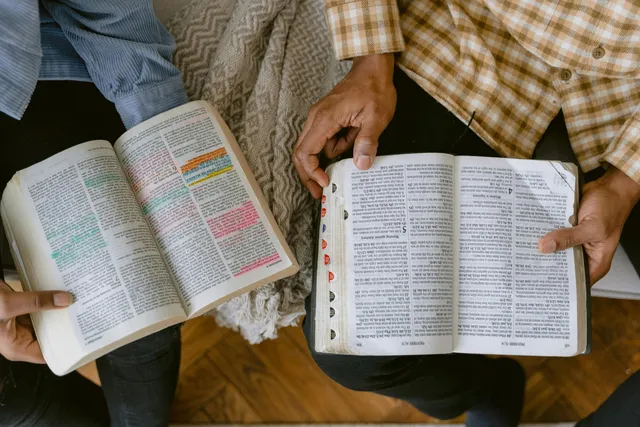
Though Bible reading is a personal act, it was never meant to be entirely private. Early believers heard Scripture read aloud in community. There's power in walking through God's Word with others-whether that's a small group, a reading partner, or a church plan that journeys together over a year.
When you share what stood out or what confused you, you invite fresh insight. Someone else's Revelation often reignites your own faith. Accountability becomes encouragement rather than pressure. It reminds you that this isn't a solitary marathon but a family pilgrimage.
Taking Notes That Nurture the Heart
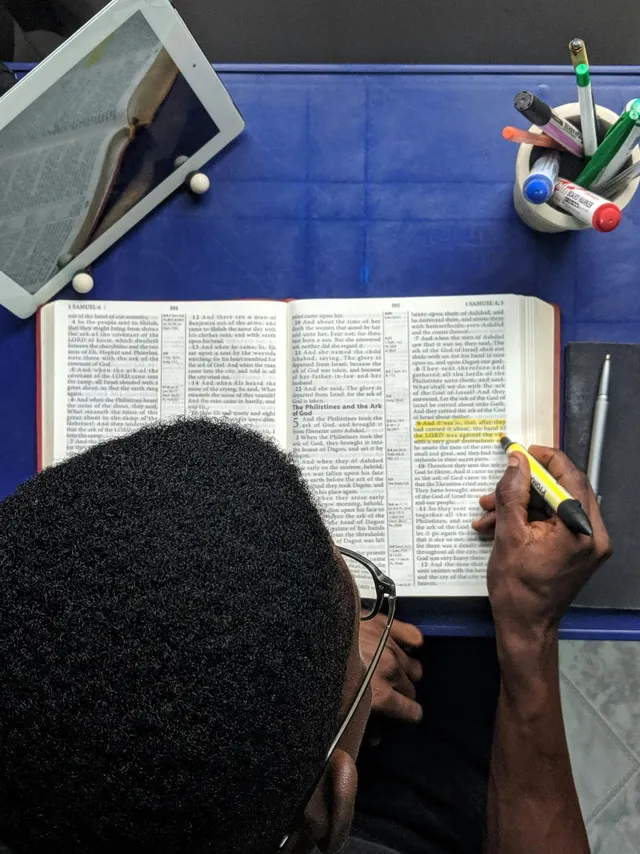
Journaling your reflections can turn reading into prayer. Write down verses that capture your attention, or scenes where God's tenderness surprises you. Over time, those notes become a record of your own transformation. You'll look back a year later and realize not just how much you've read, but how much you've grown.
Moments to Revisit
Mark verses you want to revisit at year's end-passages that stirred you, convicted you, or comforted you. These become spiritual landmarks, guiding you into deeper gratitude. Scripture shouldn't just fill your head; it should settle into the heart and reshape the way you live.
Embracing the Long View
When Paul told Timothy, "All Scripture is God-breathed and is useful for teaching, rebuking, correcting and training in righteousness" (2 Timothy 3:16), he affirmed the deep and lasting value of every word. Reading the Bible in a year is less about speed and more about seeing the entire landscape of God's redemption. Genesis whispers the beginnings of grace. Revelation shouts the triumph of the Lamb. Everything in between tells the story of a relentless God rescuing and renewing His people.
This is a year-long adventure, but also a lifelong habit. Once you've walked through Scripture from cover to cover, you'll discover it's not a box to check but a door to reopen again and again. Each reading reveals fresh truth, as if Scripture itself breathes with the seasons of your soul.
When You Reach December
Imagine reaching the final verse of Revelation. You might close your Bible slowly, your heart full. Not of pride in what you've finished, but of awe in what you've witnessed-creation, covenant, kings, prophets, the Savior who came, the Spirit who remains, and the promise that He will make all things new.
Celebrate the journey. Thank God not just for the discipline to finish, but for the companionship along the way. You've walked the same ancient paths trod by countless believers before you. You've listened to God's voice through deserts and waterfalls, through wilderness and promise.
A Year That Changes Everything
Reading the Bible in a year is possible. But even more, it's powerful. It reframes your days around divine perspective, grounds your heart in eternal truth, and trains your soul to recognize the voice of your Shepherd. It teaches perseverance, humility, and hunger for God's presence.
So start again today-whether in January or July, from Genesis or Psalms. Open the Book. Let the words read you as much as you read them. Because ultimately, the goal isn't to finish the Bible-it's to be formed by it. And when the Word takes root, you'll find that a year of reading becomes a lifetime of transformation.