1 Kings, the eleventh book of the Bible, opens with the transfer of power from David to Solomon. Blessed with extraordinary wisdom, Solomon administers justice, builds the temple in Jerusalem, and leads Israel into an age of splendor.
Yet the king's heart turns, and his love for foreign wives draws him into idolatry. After Solomon, the kingdom splits: Rehoboam rules Judah, Jeroboam leads the northern tribes and establishes rival shrines at Bethel and Dan. Prophets enter the scene to confront kings and call the people back to covenant faithfulness.
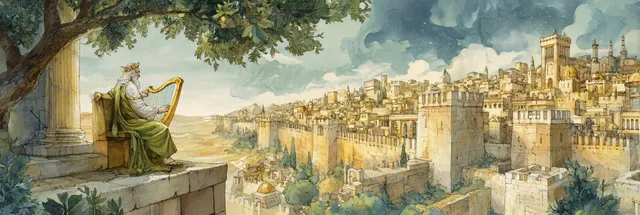
Chapters of 1 Kings
What is 1 Kings about?
1 Kings traces Israel's descent from united glory to divided fragility. The book begins with palace intrigue over succession (Adonijah vs. Solomon), then celebrates Solomon's God-given wisdom, international renown, and the dedication of the temple with a prayer that centers God's presence and forgiveness. But Solomon's compromises sow the seeds of judgment.
The kingdom fractures under Rehoboam, and the northern ruler Jeroboam institutionalizes idolatry, setting the trajectory for Israel's decline. In the midst of royal failure, God raises prophets, most notably Elijah, whose confrontations with Ahab and Jezebel climax on Mount Carmel. Through fire from heaven and a whisper at Horeb, the narrative insists that the LORD alone is God. 1 Kings ends with wars, prophetic warnings, and a sobering verdict on kings who lead the people astray.
Who wrote 1 Kings?
Traditionally included within writings associated with the Deuteronomistic History, compiled from royal annals and prophetic records. Received across Jewish and Christian traditions as inspired Scripture.
What's 1 Kings's meaning and significance?
The message of 1 Kings is that wisdom without wholehearted loyalty collapses. God delights to dwell with His people and bless through righteous rule, but idolatry erodes kingdoms from within. When kings fail, God sends prophets to recall the covenant. True stability comes not from splendor but from faithful hearts aligned with God's word.
Is 1 Kings an important book?
1 Kings is crucial for understanding kingship, temple theology, prophecy, and the divided kingdom. It shows that God's presence is not a talisman—obedience matters—and that prophetic voices are God's mercy to wayward rulers. The book frames later hopes for a faithful son of David who will keep covenant and shepherd the people.
When was 1 Kings written?
Events span the tenth–ninth centuries BCE (late Davidic era through Ahab); literary shaping reached its final form in the first millennium BCE.
What are the main sections of 1 Kings?
1 Kings moves from wise splendor (Solomon) to spiritual compromise, then to political division and prophetic confrontation (Elijah). It introduces the rhythm that will dominate Kings: the fate of rulers measured by their covenant fidelity.
The main sections of 1 Kings are:
-
Succession and Solomon's rise 1 Kings 1–2Adonijah's bid for the throne fails; Solomon secures the kingdom.
-
Solomon's wisdom and the temple 1 Kings 3–10Divine wisdom granted, justice displayed, temple built and dedicated; international renown.
-
Solomon's decline and coming division 1 Kings 11Foreign alliances and idolatry; judgment announced—kingdom to be torn.
-
A kingdom divided 1 Kings 12–16Rehoboam in Judah; Jeroboam's calves at Bethel and Dan; early kings and prophetic warnings.
-
Elijah vs. Ahab 1 Kings 17–19Drought, provision, Carmel showdown, and the LORD's whisper at Horeb; Elisha called.
-
War, justice, and prophetic verdicts 1 Kings 20–22Conflicts with Aram; Naboth's vineyard; Ahab judged; Jehoshaphat entangled.
Key Elements of 1 Kings
Understanding the main themes, important people, significant places, and key concepts in 1 Kings helps us grasp its message and apply it to our lives today.
Key Themes
Key Concepts
Key People
Key Places
Chapters of 1 Kings
Select a chapter to read and study: