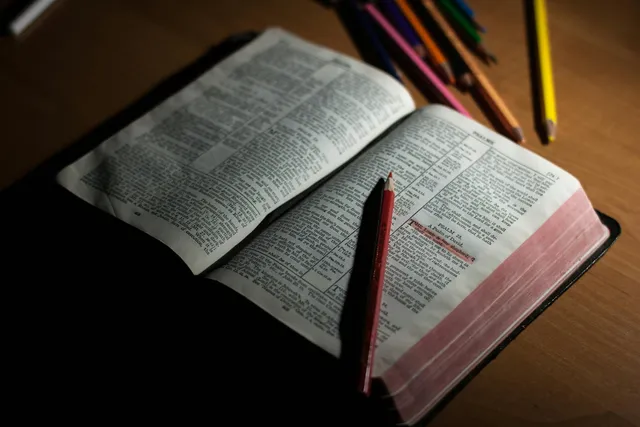
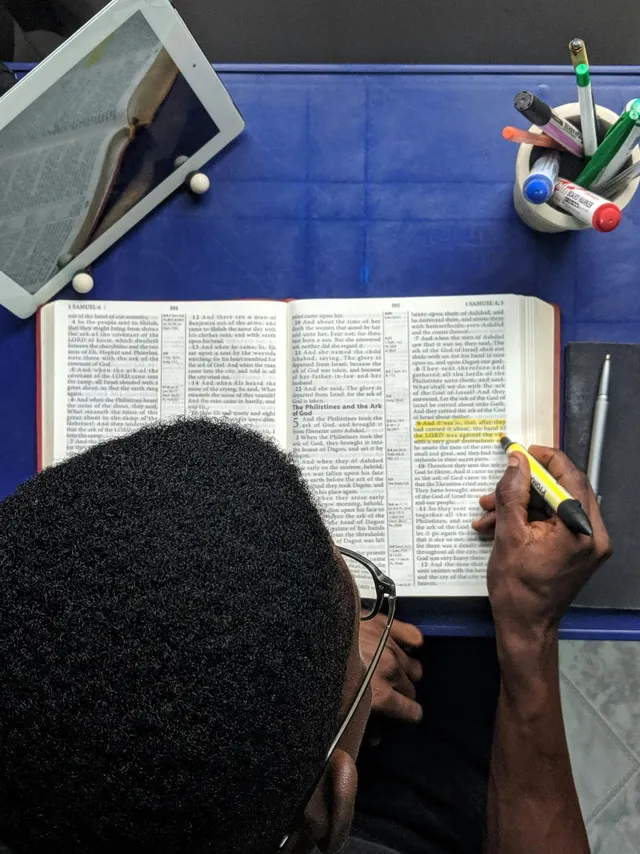
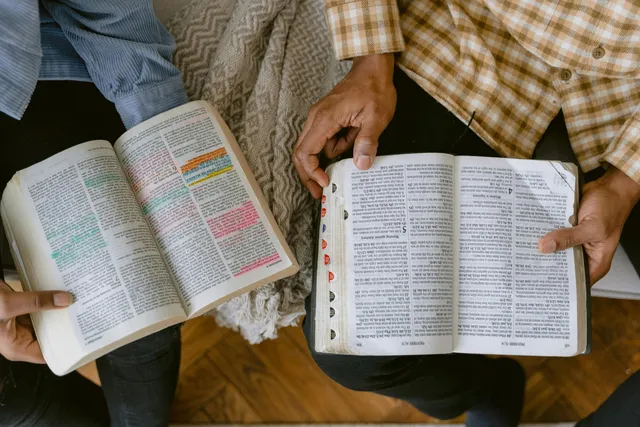
There's a moment in almost every serious Christian's faith journey when the Bible ceases to be a book we simply read-and becomes a world we explore. We find ourselves searching for meaning beyond the surface, curious about what exactly that one Greek or Hebrew word meant, eager to see where else a certain idea appears. That's often when we discover a tool quietly waiting for us on the shelf beside our Bibles: the concordance.
A Map Hidden Inside the Bible's Language
At first glance, a concordance looks like little more than an index. But in truth, it's far more than that. A concordance is a map of words, guiding us through Scripture's terrain toward deeper understanding. While the Bible records God's story among His people, a concordance helps us trace the pulse of that story through every name, phrase, and recurring theme.
In simple terms, a concordance lists every significant word in the Bible-along with every verse where that word appears. Some editions even connect those English words back to their original Hebrew or Greek roots, offering rich insight into how meaning flows and shifts across context. So when you wonder, "Where else does the Bible talk about mercy?" or "What does that word really mean in the original language?"-the concordance becomes your companion.
More Than a Tool: A Devotional Companion
There's something deeply spiritual about this kind of study. To use a concordance well is to come to Scripture not as a casual reader, but as a seeker. It's as though you're sitting across from the Author Himself, saying, "Tell me more about this word You chose. Why here? Why now?" It invites a posture of humility, patience, and awe.
For example, consider the word "light." A concordance will show you an entire thread running from Genesis-"Let there be light" (Genesis 1:3)-to the Psalms, where the psalmist declares, "The Lord is my light and my salvation" (Psalms 27:1), and onward into John's opening chapter, where Jesus is revealed as "the true light that gives light to everyone." Each reference builds on the other; the story unfolds not as a series of disconnected verses, but as a single, glowing theme revealing the nature of God Himself.
How a Concordance Actually Works
You can think of a concordance in two primary ways: a general concordance and an exhaustive concordance.
General Concordances
A general concordance appears in many printed Bibles. It's the few pages at the back listing key words-"faith," "hope," "love," "sin"-followed by a handful of major verse references. This form is helpful for quick study or devotional reflection, giving you an overview rather than an in-depth list.
Exhaustive Concordances
An exhaustive concordance, by contrast, is a major resource-sometimes weighing as much as an old study Bible itself! It includes every single occurrence of every significant word in Scripture. These volumes often come keyed to specific Bible translations, such as the "Strong's Exhaustive Concordance of the Bible," first compiled by James Strong in the 19th century. Strong not only cataloged each word but also provided a numbering system linking English words to their original Hebrew or Greek terms, allowing even non-scholars to explore the original language meanings.
That's why you might hear terms like "Strong's 5483" or "G5483"-these refer to a specific Greek term for "forgive" or "grace," for example. Suddenly, a word you've read for years opens into fresh color as you realize all the places it appears and all the nuances it carries.
Tracing God's Patterns Through Words
As you begin to use a concordance, something remarkable happens: you start seeing patterns in God's Revelation. Perhaps you trace the word "covenant" from God's promise to Noah, through Abraham, through Moses, all the way to Jesus at the Last Supper. It's not merely Bible study-it's immersion in the heartbeat of divine faithfulness. Or maybe you follow "fear not," discovering how God repeats that assurance to Abraham, to Mary, to shepherds on a hillside, and even to John on the island of Patmos. Suddenly it's not just ancient history-it's comfort whispering into your present.
In this way, the concordance trains our spiritual sight. We begin to see the Bible's unity, its depth, and its living voice. We realize that every word God breathed into Scripture was chosen with precision and love.
When the Word Meets the Heart
There's a wonderful paradox here: the concordance, which seems so methodical, actually serves the deeply personal. When you use it prayerfully, it leads you not into complexity for complexity's sake, but into intimacy. You start connecting dots God Himself wants you to see.
Maybe you've been praying about patience, asking God to help you wait with faith. You open your concordance, search "patience," and begin reading through each verse. You discover Romans 5:3-4, which connects patience to hope through suffering, and James 5:7, which paints patience as a farmer waiting for the rains. You might stumble upon Galatians 5:22, recognizing patience as a fruit of the Spirit. These aren't random discoveries-they're divine appointments. The concordance, when guided by the Holy Spirit, becomes less of a textbook and more of a prayer catalyst.
The Role of Reflection
Many believers find that using a concordance transforms how they journal, pray, and meditate on Scripture. Highlighting themes, writing down connected verses, and noting what God emphasizes again and again-it all deepens trust. The Bible becomes less of a distant document and more of a living dialogue.
Modern Tools, Ancient Purposes
While the concordance began as a massive printed index, today it's found in digital form almost everywhere: Bible apps, online platforms, even integrated into search functions in study software. These tools allow us to find words and phrases instantly, sometimes across multiple translations and languages. Yet the purpose remains the same-to help us listen with greater care.
Of course, the danger of instant access is that we might lose the meditative slowness that earlier generations experienced thumbing through the pages. The beauty of the printed concordance isn't just in its information, but in the way it slows us down, inviting contemplation. Whether on a screen or paper, the key is to approach it as an act of devotion, not just data gathering.
Learning to Hear God Between the Lines
There's a subtle grace that comes from studying this way. When you trace a single word through the Bible, you begin hearing God's voice not just in the message itself, but in the music of repetition, in the divine rhythm of promise and fulfillment. The Word begins to live in you.
For instance, when you look up the word "rest," you might move from the sabbath of Genesis to the Psalms that says, "Be still and know that I am God" (Psalms 46:10). Then into the words of Jesus: "Come to Me, and I will give you rest." A concordance doesn't just link verses-it links experiences, generations, and hearts. It turns scattered glimpses into a single Revelation of God's unchanging love.
For the Seeker and the Seasoned Saint
Sometimes people assume a concordance is only for scholars, pastors, or seminary students. But that couldn't be further from the truth. The true power of the concordance isn't in having all the definitions memorized-it's in the discovery itself. Anyone who opens their Bible with wonder can use it. It's the humble student's tool, not the expert's trophy.
Every believer can benefit from the discipline of looking deeper. The twelve-year-old discovering Scripture's patterns, the retiree journaling after morning prayer, the working mother seeking comfort in God's promises-all can use a concordance to draw closer to the Author of the Word. It's one of the simplest yet most profound ways to keep Scripture from growing stale, transforming familiar verses into fresh encounters with grace.
When Understanding Becomes Worship
Ultimately, a concordance doesn't exist to make us more knowledgeable-it exists to make us more worshipful. As we trace words like "redeem," "grace," or "glory," we see God's fingerprints all over history and our own hearts. Understanding turns into thanksgiving; discovery becomes devotion.
Think of the two disciples on the road to Emmaus. As Jesus explained the Scriptures to them, their hearts burned within them. A concordance can be like that moment-it helps the truth unfold until our hearts ignite with recognition. We realize again that every thread, every theme, and every whisper of the written Word points us to the Living Word, Jesus Christ Himself.
Walking the Living Map
In the end, a concordance is not merely a reference-it's a tracing of footprints. It shows us where the Spirit has walked through time, how grace flows through pages and promises. When you next open your Bible, perhaps you'll pause before rushing ahead and instead use a concordance to follow one word's journey. You may find that its trail leads not just through verses, but straight into prayer, peace, and praise.
So take this ancient tool in hand or on-screen, and let it accompany your faith. Search the words, and listen for the Word. Because when you use a concordance with a heart that longs to know God better, you don't just find verses-you find Him.