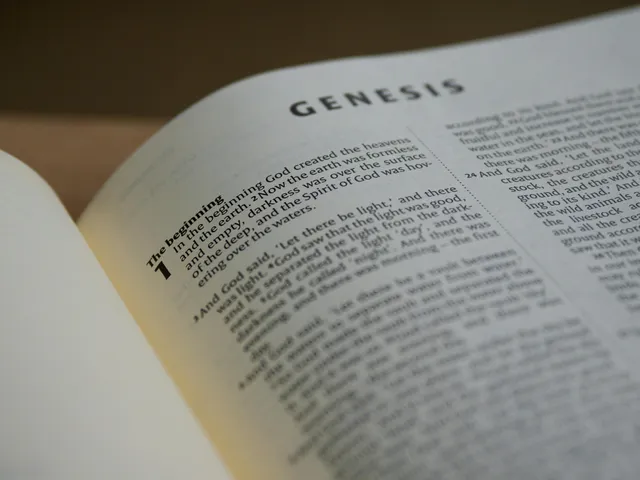
Every believer who opens the pages of Scripture steps into a story far older and deeper than themselves-the living Word of God that continues to speak, convict, comfort, and guide. Yet, the Bible is not meant to be skimmed like a newsfeed or studied like a textbook; it's meant to be lived. That's why Bible study tools exist-not to make faith mechanical, but to help our hearts and minds engage more fully with God's truth. Whether you're opening Genesis for the first time or navigating the depths of Revelation, these tools can become companions for the journey-helping you listen more carefully, think more deeply, and live more faithfully.
1. A Reliable Study Bible
Every great Bible study begins with the Bible itself. Yet, not all editions are created equal. A quality study Bible offers more than margin notes-it's a guidebook that helps bridge the cultural and historical distance between us and the ancient world of Scripture. Study Bibles like the ESV Study Bible, the NIV Life Application Bible, or the CSB Study Bible provide helpful commentary, maps, charts, and background information. Crucially, they keep the text itself central while giving insight where context may be confusing.
Consider the study Bible as your first line of conversation with Scripture. When you read a passage that puzzles you, the notes give clues, not conclusions. They should lead you back to the Word, not replace your own reflection. The true goal isn't to collect facts-it's to know the heart of God through His Word.
2. A Concordance or Search Tool
Sometimes, you remember just a word or phrase-"steadfast love," "peace," or "kingdom"-and want to find every time it appears in Scripture. A concordance, whether in print or digital form, helps you do exactly that. In the digital age, this has become effortless: modern Bible apps and websites let you search the text instantly. But a printed concordance still carries a kind of reverent weight-the slow process of searching and finding gives space for reflection.
More than a research tool, a concordance helps you trace themes across the whole biblical story. When you follow the thread of "light," you begin to see how God uses that word from Genesis to John's Gospel to Revelation. Bible study becomes a tapestry instead of isolated passages.
3. Cross-References and Harmony Guides
Scripture interprets Scripture. That's an old truth, and cross-references help us experience it. They connect one verse to another, letting you see how prophets, poets, and apostles all speak with one divine voice. A cross-reference guide-either in the margins of your Bible or in a separate resource-links related passages so you can see the threads that weave through God's word.
Take, for example, how Psalms 22's cry of anguish echoes on the lips of Jesus at the cross (Matthew 27:46). When we follow those links, we come to realize that the Bible is not a collection of stories but a single story with Christ at its center.
4. A Trusted Commentary
Commentaries provide insight from those who have dedicated their lives to studying Scripture deeply. They're not infallible-only Scripture is-but they can shed light on cultural settings, word meanings, and theological connections. The best use of a commentary is not at the start but after you've done your own meditation. After all, God delights in speaking through His Word personally before others explain it to us.
Choosing a Commentary Wisely
When choosing one, look for voices that honor the authority of Scripture. Accessible yet faithful series like the Tyndale Commentaries, The Bible Speaks Today, or Warren Wiersbe's "Be" series can be trustworthy companions. A commentary should confirm, clarify, and challenge-but never replace your dependence on the Spirit of God for understanding.
5. Bible Dictionaries and Encyclopedias
A Bible dictionary acts almost like a portal-opening up the world behind each term or location. What did "Pharisee" mean in the time of Jesus? What was a "cubit"? Where exactly was "Bethany"? These questions might seem small, but their answers deepen comprehension and appreciation for Scripture's texture and context.
When you realize that Bethlehem means "house of bread," and remember that Jesus, the Bread of Life, was born there, the symbolic beauty shines even brighter. These discoveries stir not only the mind but the soul. Bible study is meant to awaken wonder.
6. Digital Bible Apps and Online Platforms
We live in a generation blessed and challenged by technology. With one swipe, we can access an entire library of translations, commentaries, and lexicons. Apps like YouVersion, Logos, or Blue Letter Bible have made Scripture portable and participatory. You can join reading plans, share devotionals, and make your phone a sanctuary rather than a distraction.
Yet, technology requires discernment. It's easy to scroll faster than we pray. Use these tools as servants, not masters. Let them help you build rhythm-morning Scripture readings, quiet evening reflections, or digital prayer reminders. The goal is not constant connection, but consistent communion.
7. Journaling and Note-Taking Tools
There is something sacred about writing down what God is teaching you. A journal becomes a record of your growing relationship with Him, a testimony of prayers asked and answered. Whether you use a leather notebook or a digital app, journaling creates space to pause, process, and pray.
Journaling as Worship
Sometimes, Scripture speaks not just to inform but to transform. When a verse pierces your heart, write it down, reflect on why it resonated, and pray it back to God. Over time, flipping through the pages of your old notes becomes a quiet act of worship-reminding you of God's faithfulness and your own journey of grace. Your notes are not mere reflections; they are altars of remembrance.
8. Language Tools and Lexicons
For those who want to go deeper, understanding a few original Hebrew and Greek words can reveal powerful dimensions of meaning. You don't have to be a scholar to explore this. Simple lexical tools (like Strong's Concordance or Vine's Expository Dictionary) allow everyday readers to see what English translations sometimes flatten.
For example, when Jesus tells Peter, "Feed my sheep," the Greek words for love-agapē and phileō-add tenderness and nuance to the exchange (John 21). Exploring the language background can turn reading into Revelation. Each word of Scripture carries divine weight, precisely chosen to reveal God's heart.
9. Community and Small-Group Resources
Bible study is never meant to be a solitary pursuit. From the earliest days of the church, believers gathered to "devote themselves to the apostles' teaching and to fellowship" (Acts 2:42). The sharing of insight within Christian community guards us from isolation and misunderstanding. Study guides designed for groups can help conversations flow deeper-less about answering worksheet questions, more about truly encountering God together.
Hearing how someone else sees a familiar passage can awaken new awareness. When a friend shares how a verse has comforted her grief or strengthened his faith, the Word becomes flesh again. God often speaks through the voices of others just as surely as He speaks through the printed page.
10. The Holy Spirit-Your Ultimate Teacher
Every other tool pales beside this one. Commentaries may instruct and dictionaries may define, but only the Spirit gives life (2 Corinthians 3:6). Jesus promised that the Counselor, the Holy Spirit, would "teach you all things" and "remind you of everything I have said to you" (John 14:26). This is the most profound truth of Bible study: it is not fundamentally about knowing more but becoming more-more like Christ.
Before you open your Bible, take a breath and ask, "Holy Spirit, speak." This turning of heart is the difference between reading with your eyes and listening with your soul. Every genuine insight flows from His presence illuminating the page. Without Him, it's just ink on paper; with Him, it's fire and light.
Living the Word: The Study That Never Ends
Bible study is not an academic exercise-it's a lifelong conversation between God and His people. Over the years, your tools may change, your preferred translations may vary, and your journals may fill and give way to new ones. But the call remains the same: "Let the word of Christ dwell in you richly" (Colossians 3:16).
Use these tools not as trophies to prove knowledge, but as instruments to deepen love. Let study lead to service, insight to compassion, and Revelation to worship. When Scripture moves from the page into your daily choices-when it shapes how you speak, forgive, and trust-you'll know your study has become sacred life.
The greatest Bible study happens not at your desk, but in the way you live out the Word you've learned. And so, with Bible in hand, heart open, and Spirit leading, let every new morning be an invitation to know Him more-the Author who still writes His story in you.