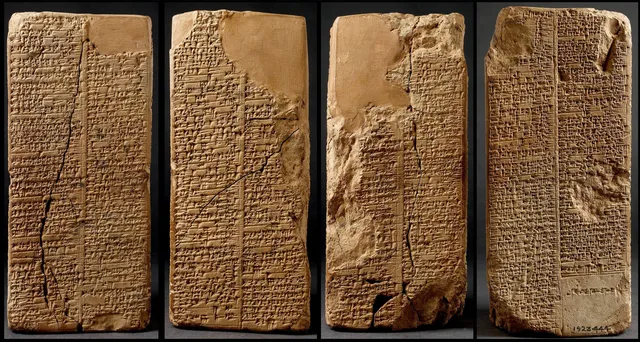
From the moment humans looked up at the night sky and asked, "What is out there?" a holy spark ignited-the same spark that led to both science and worship. The earliest astronomers were often priests; the first botanists, those who tended Eden's remnant soil. We studied creation not to replace the Creator, but to know Him better. Curiosity, rightly aimed, has always been an act of reverence.
Yet somewhere along the path, a chasm seemed to open between the lab and the sanctuary. Words like *faith* and *fact* began to sound like opposites. Science was said to deal with what is *real*, faith with what we only *wish* were real. But might this division be more artificial than actual? Perhaps the story of science and faith is not a battle, but a duet.
The False War Between Two Friends
The perceived conflict between science and faith often comes from a misunderstanding of what each one is meant to do. Science asks how things work; faith asks why they matter. Science describes the mechanism; faith reveals the meaning. They are partners in the pursuit of truth, not rivals for it.
Faith does not fear the microscope, and science does not vanish before the cross. Instead, both illuminate the same world from different angles-reason and Revelation as twin lights guiding one pilgrim humanity through the mystery of existence.
Historically, many scientific pioneers were deeply devout believers. Johannes Kepler, who discovered the laws of planetary motion, famously described his work as "thinking God's thoughts after Him." Isaac Newton spent more time writing about theology than physics. To these minds, uncovering natural laws was not to dethrone God, but to marvel at His order.
The Real Source of Tension
Conflict arises when either side oversteps its calling. When scientists insist that only measurable things exist, they step beyond science into scientism-a worldview, not a method. When people of faith dismiss evidence simply because it unsettles an old interpretation, we fall into fear rather than trust. The Bible itself celebrates truth in all its forms, declaring in Psalms 19 that "The heavens declare the glory of God; the skies proclaim the work of His hands." If creation declares, then careful listening-scientific listening-honors the Maker.
Faith and Evidence: Friends in Dialogue
Faith that fears evidence is brittle; faith that embraces discovery is resilient. When Thomas saw the resurrected Christ and touched His wounds, Jesus did not scold him for wanting evidence. "Do not be unbelieving," Jesus said, "but believing" (John 20:27). Faith was never meant to blindfold us; it was meant to open our eyes wider.
We live in an age dazzled by data-DNA sequences, distant galaxies, atomic structures-but also an age starved for meaning. Science can map the human genome but cannot tell us why love heals or why forgiveness brings peace. Faith speaks to that deeper layer. Together, they can form a full picture: bones and breath, molecule and miracle.
Revelation in the Lab and the Field
Walk through a forest or study a star nebula under a telescope, and you'll find echoes of divine creativity. Biologists describe intricate patterns that seem almost poetic-the delicate cooperation of ecosystems, the spiraled precision of a DNA helix. Geologists trace Earth's history through layers of rock, and physicists wonder at the beautiful simplicity behind complex equations.
Every formula, every experiment, every discovery whispers something of the faithfulness of God. The laws of physics are so consistent because the Lawgiver Himself is faithful and unchanging. The predictability of gravity, the symmetry of atomic bonds, the balance of ecological systems-all bear witness to a God of order, not chaos.
The Theology of Discovery
When we uncover something new, we are not trespassing on divine territory; we are walking further into the gift He gave us-to *tend and keep the garden* (Genesis 2:15). Adam was the first scientist in that sense: naming, categorizing, observing, and delighting. Research and curiosity become sacred acts when rooted in worship. True science does not shrink the wonder of God-it magnifies it.
When the Questions Hit Close to Home
But what about when science raises uncomfortable questions-about origins, about miracles, about suffering and disease? What happens when the doctor's diagnosis contradicts our prayers, or the telescope reveals a universe older and vaster than we ever imagined?
In those moments, the heart of the struggle isn't between biology and theology-it's between control and trust. Faith reminds us that not knowing everything is not the same as knowing nothing. When Job faced the whirlwind of mystery, God did not provide a lab report; He offered wonder: "Where were you when I laid the earth's foundation?" (Job 38:4). God's questions didn't belittle Job; they reoriented him toward awe.
Our peace does not come from having all the answers, but from knowing the Answerer.
The Harmony Hidden in Humility
It requires humility to be a scientist, and it requires humility to be a believer. Both must say, "I don't know-yet." The discoveries of science are provisional and self-correcting. The walk of faith is similar: we see "through a glass, darkly," as Paul puts it (1 Corinthians 13:12). Both demand patience, openness, and perseverance.
When we humble ourselves under truth-whether revealed through Scripture or nature-we step closer to the heart of God. Theologian Augustine wrote that all truth is God's truth, whether found in a sermon or a laboratory notebook. That insight protects us from the arrogance of thinking God speaks only through the domain we prefer.
Stories of Faith-Formed Curiosity
History overflows with believers who saw no contradiction between microscope and miracle. Gregor Mendel, the father of modern genetics, was an Augustinian friar. Blaise Pascal, inventor and mathematician, was also a man of profound spiritual experience. And in our time, faithful scientists explore medicine, climate, and quantum physics while bowing their hearts to the Creator whose fingerprints they detect.
Such lives remind us that embracing evidence is not betraying belief; it is honoring the God of truth. When we seek the truth fearlessly, we testify to a God who never fears inquiry.
Faith in a Future of Discovery
As humanity journeys deeper into the mysteries of life-artificial intelligence, genetic engineering, new worlds in distant galaxies-Christians have the opportunity to bring both integrity and awe into those spaces. We need not withdraw from discovery; instead, we can model what it looks like to explore with reverence.
Imagine a research lab where prayer precedes each experiment-not as superstition, but as gratitude. Imagine a church where young believers are told that curiosity is not rebellion, but reverence. That kind of integration could transform our culture's tired conflict narrative into a harmonious symphony of faith-filled exploration.
When Faith Gives Science a Soul
Science can tell us how to build a rocket, but faith tells us why it matters that we explore. Science can describe the brain, but faith speaks to the mystery of consciousness and the value of every person made in God's image. Without faith, scientific progress can drift into pride or misuse. Faith gives science its conscience. It calls every discovery to serve life, love, and truth.
This is why Jesus told His followers to be both "wise as serpents and innocent as doves" (Matthew 10:16)-to marry knowledge with goodness. Progress without compassion can wound the very creation it seeks to understand. But when science is wielded by souls anchored in grace, the result is healing, stewardship, and praise.
The Living Intersection
At the intersection of experiment and prayer, of telescope and Scripture, something beautiful happens: worship that thinks, and thinking that worships. Every believer who is also a scientist stands at that junction daily-seeing God in the data, hearing His whisper in the wonder.
And even for those of us not in laboratories, the invitation is the same. We can approach our work, our parenting, our service, with the same sacred curiosity. Every moment holds a question worth exploring, every sunrise a study in grace.
One World, One Truth
In the end, the supposed battle between science and faith dissolves under the light of truth itself. There is only one reality-the one God made. The microscope and the Bible, rightly understood, describe the same creation from different vantage points. God authored both the Word and the world.
So, let us walk forward unafraid-reading the Scriptures, studying the stars, seeking wisdom wherever it glimmers. Faith need not close its eyes to the world; it can open them wider. And science, with all its calculations and curiosity, can echo the psalmist: "O Lord, how manifold are Your works! In wisdom You made them all." (Psalms 104:24)
In our daily lives, that means we can honor God not only by praying in church but by delighting in discovery-by letting curiosity lead us to worship, and worship lead us to curiosity. The more we learn, the more we wonder; the more we wonder, the more we adore.
Science and faith do not stand face-to-face in conflict, but shoulder-to-shoulder in awe. And when they walk together, the world shines with the glory of the Creator-seen, studied, and believed.