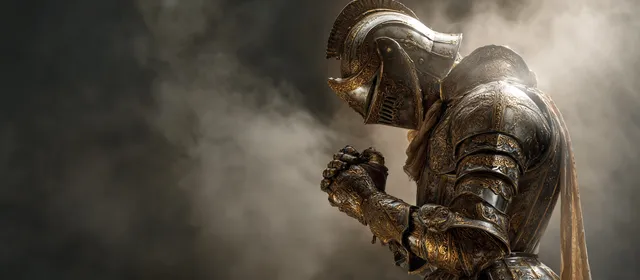
Faith, in the language of Scripture, is far more than a word we use to describe belief-it is the lifeblood of the Christian journey. It is trust in the unseen God, confidence in His promises, and surrender to His will even when circumstances shout otherwise. In an age when doubt, fear, and skepticism so easily cloud the horizon, returning to the Bible's view of faith offers clarity, hope, and renewal. What, then, does the Bible truly mean when it speaks of faith? And why does it matter so profoundly to the shape of our lives today?
The Heart of Biblical Faith
The most well-known definition of faith comes from Hebrews 11:1: "Now faith is the substance of things hoped for, the evidence of things not seen." This verse has resonated through centuries of Christian history because it captures both the mystery and solidity of faith. Faith is not wishful thinking; it is the assurance-an invisible reality-that God will do what He has said.
Faith begins where sight ends. It pulls us out of the realm of the tangible and into the presence of the eternal. When life makes no sense, faith whispers that God is still good. When answers don't come, faith reminds us that the story isn't over yet. This is the posture the writer of Hebrews celebrates-not blind optimism, but trust rooted in the character of a faithful God.
Faith Is Confidence in God's Character
At its core, biblical faith is a relationship. It is knowing who God is and responding to Him accordingly. Faith is built not only on what God can do but on who He is-holy, loving, unchanging, and true. Abraham's story illuminates this beautifully. When God told him to leave everything familiar and go "to the land I will show you" (Genesis 12:1), Abraham obeyed. He had no roadmap, no security plan-only the promise of God's presence. His faith was counted as righteousness, not because he had all the answers, but because he trusted the right One.
Faith Beyond Circumstance
Faith doesn't depend on outcomes. Shadrach, Meshach, and Abednego declared to King Nebuchadnezzar that even if God did not deliver them from the fiery furnace, they would not bow down to false gods (Daniel 3:17-18). That is the kind of faith that glows in the dark-faith that rests not on God's deeds alone but on His nature. True faith says, "Even if the miracle doesn't come, I will still believe."
The Struggle Inside Faith
One of the most beautiful aspects of Scripture is its honesty about faith's struggle. The Bible does not present faith as a straight, unbroken line of triumph. Rather, it records moments of doubt, delay, and difficulty that refine believers in the fire of experience. Consider Thomas, forever labeled "doubting Thomas," yet who, when he finally touched the risen Christ, exclaimed, "My Lord and my God!" Faith grew out of his questions. God did not reject him for doubting; instead, Jesus invited him closer. That is grace.
The same grace meets us in our questions. Faith is not the absence of doubt but the decision to trust God in spite of our doubts. As Charles Spurgeon once observed, a weak hand may be trembling, but if it grasps a strong Savior, it receives the same rescue as the steady hand. Faith, no matter how fragile, holds fast because God holds us fast.
Living Faith: Action Over Apathy
Faith that remains internal or theoretical is not the kind the Bible celebrates. James 2:17 bluntly declares, "Faith by itself, if it does not have works, is dead." Genuine faith breaks through the surface of belief and reshapes how we live. It moves the heart to obedience, generosity, forgiveness, and courage. Faith without action is like a seed sealed in a jar-it has potential, but no growth.
Think of Noah, who built an ark before the rains fell. Think of the woman with the issue of blood, who pressed through the crowd to touch Jesus' garment. Or the Roman centurion who believed Jesus could heal with a word. Each story demonstrates faith in motion-belief that acts. Faith transforms theory into trust-filled steps.
The Daily Texture of Faith
Most of us will never face a lion's den or build an ark, but every day offers chances to walk by faith. It is faith that forgives when we have every reason to hold a grudge. It is faith that prays when the answer seems delayed. It is faith that keeps loving when love isn't returned. Faith lives in small obediences as much as in great miracles.
Faith Tested and Strengthened
Faith is refined through pressure. Peter described trials as a testing ground "so that the tested genuineness of your faith-more precious than gold-may result in praise, glory, and honor" (1 Peter 1:7). Hard seasons are not evidence that God is absent; they are invitations to trust Him more deeply. When life's foundation shakes, faith forces us to discover what (and Who) we're really standing on.
Job knew this truth well. Though stripped of everything, he declared, "Though He slay me, yet will I trust Him." That kind of resilient faith doesn't come cheaply-it is cultivated in loss, waiting, and surrender. Yet when we come through such seasons, we find that what remains is stronger, purer, and anchored not in outcomes but in the living God.
When God Seems Silent
Periods of divine silence are among faith's hardest tests. We pray and hear nothing, act in obedience and see little fruit. Even the psalmists cried, "How long, O Lord?" Yet silence is not abandonment; it is invitation. The stillness teaches us to trust without proof, to love without immediate reward. Faith, after all, is not merely believing that God can speak, but believing He is good when He doesn't.
The Gift and Growth of Faith
The Bible teaches that faith itself is a gift-"God has dealt to each one a measure of faith" (Romans 12:3). But like a muscle, faith grows with use. We strengthen it when we choose to depend on God in the small things, when we remember His past faithfulness, and when we immerse ourselves in His Word. "Faith comes by hearing, and hearing by the word of Christ" (Romans 10:17). The more time we spend meditating on Scripture, the more grounded our faith becomes.
Faith also grows in community. The early believers in Acts shared their faith stories, prayed together, and encouraged one another daily. When our faith feels frail, the faith of others can carry us. That is why gathering with fellow believers, worshiping together, and sharing testimonies matter so deeply-they remind us that we do not walk this path alone.
The Fruit of Faith
Faith changes not only what we believe but who we become. The Bible links faith with peace, joy, endurance, and love. A faithful heart learns to see beyond the storm to the calm that God promises. It develops holy patience, a steadiness that doesn't waver every time the wind shifts. The fruit of faith is trustful rest in God's sovereignty-even when life feels out of control.
Such faith empowers us to face uncertainty without fear. It gives meaning to suffering, redirects ambition toward service, and ignites a compassion that mirrors Christ's heart. The more we trust Jesus, the more we begin to act like Him. Faith is not only belief in God-it is becoming like the One we believe in.
Faith That Lasts
Perhaps the most stirring images of faith are found at the end of Hebrews 11, often called the "Hall of Faith." The writer recounts men and women who died without receiving the full promises of God, yet they continued to trust. They saw something greater-a city whose builder and maker is God. Their faith was not disappointed because its object was eternal.
Our faith, too, must look forward. The Apostle Paul wrote that we "walk by faith, not by sight" (2 Corinthians 5:7). Someday, sight will replace faith, and hope will become reality. Until then, we are pilgrims with a compass pointed toward eternity.
Living by Faith Today
What does faith look like in the rhythms of modern life-in our families, workplaces, or quiet moments alone? It looks like choosing peace over panic when headlines terrify. It looks like generosity when culture tells us to hoard. It looks like forgiveness that defies bitterness, and worship in the middle of pain. Faith transforms ordinary life into sacred ground.
In a skeptical world that prizes certainty, faith asks us to rest in mystery. It invites us to trust the One who knows the end from the beginning. And as we do, our faith becomes not only a belief but a testimony-a living witness that God is real, and that His promises stand.
A Faith That Sees the Invisible
According to Scripture, faith is not a blind leap but a confident step toward the unseen reality of God's kingdom. It anchors us in His promises, empowers us in trial, and transforms us into reflections of His Son. In every season-whether joy or sorrow, victory or silence-faith calls us to lift our eyes beyond what is visible and fix them on Jesus, "the author and finisher of our faith."
So wherever you stand today-whether your faith feels strong or barely flickering-remember this truth: What matters most is not the size of your faith, but the strength of the One in whom you place it. Trust Him anew. Walk forward in confidence. The same God who called Abraham, upheld Daniel, and comforted Mary still speaks today-and He is worthy of your trust.