Few questions stir more wonder-or more debate-than this: How did it all begin? When we lift our eyes to the night sky or feel the soil beneath our feet, something deep within us asks: Where did this come from? Who set it in motion? For followers of Jesus, the Bible's story of creation isn't just a starting point in Genesis-it's the foundation of how we view God, ourselves, and the world we live in. Yet for many believers today, the topic of evolution and creation raises sincere questions of faith and understanding. What does Scripture truly say? How are we to hold the mysteries of God's creative power in a world filled with scientific discovery?
The Song That Began It All
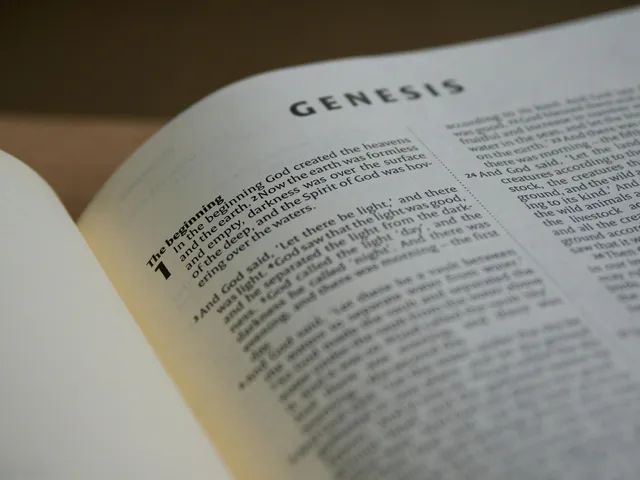
The Bible opens not with an argument, but with a Song of Songs: "In the beginning, God created the heavens and the earth." From the first verse, creation is presented as an act of divine intention, power, and love. The Hebrew word for "create," bara, is used uniquely of God. Humans might form, shape, or build-but only God creates from nothing. The opening chapter of Genesis reveals a carefully ordered rhythm: light and darkness, sea and sky, earth and life, all declared good in God's sight.
Genesis is not a scientific manual-it was never meant to be-but it speaks in poetic and theological language about who God is and why we exist. The Creator speaks, and creation responds. The ultimate crescendo of this divine symphony is humanity, made in God's image, entrusted with stewardship of creation and endowed with the ability to know and love the Creator.
What Genesis Really Tells Us
For centuries, Christians have wrestled with how to interpret the opening chapters of Genesis. Some read them as a straightforward six-day historical account. Others see them as a structured, symbolic depiction of God's creative work over undetermined spans of time. Still others point to a literary or theological framework, emphasizing what the story reveals about God's character rather than the mechanics of creation.
What's consistent across faithful interpretations is the affirmation of purpose. Genesis declares that creation is not a cosmic accident. The world did not spring from chaos or chance, but from a Creator who called it "very good." Everything exists because of His word, His will, and His wisdom.
The Image of God
Perhaps the most profound declaration is that men and women are made "in the image of God" (Genesis 1:27). To be created in His image means to reflect His nature-creativity, moral awareness, relationship, love, and stewardship. This means that every person, regardless of background, ability, or age, carries divine worth. Creation, then, is more than a backdrop-it's a stage upon which God's glory is displayed, and humanity's calling is played out.
The Tension: Faith and Science
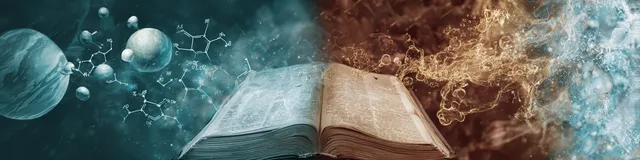
Modern life places believers at the crossroads of faith and scientific discovery. The theory of evolution, proposed to explain life's diversity through natural processes, has become central in the sciences. How should Christians engage with it? The question often feels like a forced choice: either the Bible or science-but that false dichotomy isn't the only option.
Throughout history, Christians have been scientists-Kepler, Newton, Mendel-men and women who saw science as a way to understand the mind of the Maker. They believed that studying creation brings honor to the Creator. Science asks "how" questions-what mechanisms shaped the universe, what processes govern life. Scripture, on the other hand, answers "who" and "why." The two aren't necessarily opposed; they address different layers of truth. As Paul affirms in Romans 1:20, God's "eternal power and divine nature" are clearly seen through what has been made.
When Knowledge Becomes Worship
It's possible to study the cosmos and miss the glory behind it-or to gaze through a telescope and be led to holy wonder. The Bible invites us not to fear discovery but to let it lead us into deeper awe. Every scientific Revelation can be a window into God's creativity. When we study the natural world with humility, we trace the fingerprints of the divine Artist.
Understanding Evolution Through the Lens of Faith
For some believers, the idea of evolution feels threatening. Does it mean we're accidents of biology rather than purposeful creations? Does it contradict God's Word? Yet many thoughtful Christians have found ways to affirm both the authority of Scripture and the insights of science, understanding that truth cannot ultimately contradict truth, since all truth originates in God.
Some propose what is often called "theistic evolution" or "evolutionary creation," a view suggesting that God could have created life through an evolutionary process, guiding it toward His intended outcome. Others hold to young-earth or old-earth creationism, emphasizing that God acted directly in short or long periods of creative work. While interpretations vary, at the heart of all faithful views is this confession: God is Creator, and we are His creatures.
In any view, Scripture insists that humanity is not the result of random chance. The Genesis story-and the whole sweep of the Bible-proclaims a Creator who forms us intentionally, who breathes into us His Spirit, and who desires relationship with us. There is something irreducibly sacred about being human that cannot be explained by biology alone.
Creation as a Reflection of the Creator
The psalmist declared, "The heavens declare the glory of God; the skies proclaim the work of His hands" (Psalms 19:1). Creation, in all its vastness and intricacy, points beyond itself. From the spiral of a galaxy to the veins in a leaf, each detail whispers of a divine imagination beyond comprehension. The Bible invites us not only to respect creation but to let it draw us back into worship.
We are caretakers, not consumers. To believe in creation means we understand that the world belongs to God, not to us. Christians, more than anyone, should care deeply about the environment-not because of political trends, but because of sacred trust. When humanity lives out its role as steward, it reflects the goodness of the One who made it all.
The Fall and the Groaning of Creation
Of course, the story doesn't end with creation's goodness. In Genesis 3, sin enters the world, and with it, disharmony. The ground is cursed, relationships are broken, and creation itself begins to groan. Paul later writes in Romans 8:22, "The whole creation has been groaning as in the pains of childbirth right up to the present time." The world is still beautiful, but it's also broken-waiting for redemption, yearning to be made new.
This longing sets the stage for the Gospel. The same God who spoke the first light into being speaks again through Christ, bringing new creation. "If anyone is in Christ, he is a new creation" (2 Corinthians 5:17). The original act of creation and the redemptive work of Christ mirror each other: in both, God brings order out of chaos and life out of death.
The Mystery of Divine Creativity
There will always be mysteries in how God created the world. Some aspects may remain beyond human understanding this side of eternity. The Bible doesn't reveal every mechanism-it reveals meaning. When Job challenged God with questions about creation, the answer he received was not a list of scientific explanations, but a sweeping vision of divine greatness: "Where were you when I laid the earth's foundation?" (Job 38:4). God's response was not meant to humiliate, but to humble-to remind Job of the vastness of divine wisdom.
Faith is not threatened by mystery. In fact, mystery deepens faith. To stand in awe before a God whose ways are higher than ours is to take the right posture: wonder, worship, and trust.
Living as People of Creation and Redemption
What does it mean, then, to believe that God created the world? It means every sunrise is a gift. Every breath we take is sustained by divine mercy. It means our lives are not accidents, but callings. To affirm creation is to affirm purpose.
And in light of Christ, we see even more: creation is not just something God did long ago-it's something He's still doing. Every act of renewal, every healing, every reconciliation is a glimpse of new creation. The Spirit hovers over the chaos of human life even now, bringing light and life in places that seem barren.
Wonder, Worship, and Work
At the heart of the question of creation and evolution lies something far greater than theories-it's about knowing the Creator Himself. The Bible calls us to look at the world, not as detached observers, but as beloved participants in a divine story that stretches from "In the beginning" to "Behold, I am making all things new."
We may never grasp every mystery of the cosmos, but we can rest in this: the God who formed galaxies also formed us. His creative power is matched only by His redeeming love. Every star tells His story, every life bears His image, and every heart awakened by grace becomes part of His continuing creation.
So the next time you look at the night sky-or at your own reflection in the mirror-pause. Whisper gratitude to the Creator whose imagination gave you breath. Let the wonder of creation lead you to worship, and let worship lead you to stewardship, faith, and hope. For the same God who spoke the universe into being still speaks today, calling light out of darkness, and making all things new-in the world, and in us.