For many people, science and faith have long been seen as uneasy companions - two worldviews glancing warily at each other across a philosophical divide. Yet, for those who look closely, the supposed friction between them often dissolves into a deeper harmony. Science does not pull back the curtain on creation to deny the Creator; it simply shows us more of His handiwork. When approached with humility, curiosity, and reverence, every true discovery of science reveals another aspect of the God who spoke the universe into being.
The Myth of Conflict
It's easy to imagine science and faith locked in some perpetual battle - microscopes versus Bibles, laboratories versus sanctuaries. That narrative has been repeated so often in the modern age that it feels almost unquestionable. But look a bit closer at history, and you find a very different story. The first scientists - the pioneers of what we now call the scientific method - were largely people of deep faith. They studied creation because they believed it was ordered, knowable, and purposeful. Astronomers charted the heavens not to escape God, but to marvel at His order. Isaac Newton famously declared that in studying the heavens, he was thinking God's thoughts after Him.
This is not revisionist history. It's a reminder that faith and reason were never meant to be enemies. Scripture itself assumes that creation will proclaim the majesty of its Maker: "The heavens declare the glory of God; the skies proclaim the work of His hands" (Psalms 19:1). Science simply provides a more detailed translation of that declaration.
When Discovery Deepens Wonder
There is something sacred about wonder. That feeling - the quiet, jaw-dropping awe that swells up when we realize how immense, intricate, and alive creation truly is - is one of the soul's oldest prayers. Every new discovery in physics, every new Revelation in biology, adds color to that picture. The further we explore, the more we grasp the sheer extravagance of God's design.
Consider the vastness of the cosmos. When astronomers mapped galaxies beyond our own, the discovery didn't make the heavens less miraculous. It made them infinitely more so. The fact that God spoke, and billions of galaxies sprang into being, should lead the believer not into skepticism but into stillness. Science stretches our picture of God's grandeur; it doesn't shrink it.
Microcosms of Grace
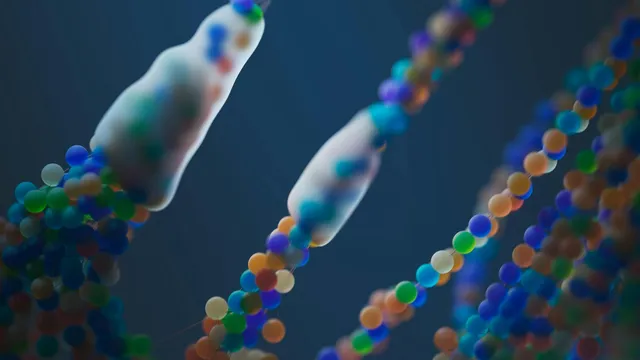
In the other direction - into the smallness of things - discoveries are no less glorious. Within the structure of a single cell, in the elegant choreography of proteins, or in the coded language of DNA, we find whispers of divine artistry. There's a beauty in the fact that God not only rules the galaxies but also dwells in the hidden architectures of life itself. That He would care for both the sweep of the universe and the pattern of a snowflake tells us something profound about His nature.
The God Who Loves Questions
Doubt sometimes grows in the soil of curiosity, but so does faith. When Abraham looked up at the stars, he couldn't count them - but he trusted the God who made that promise (Genesis 15:5). Biblical faith has never been blind; it has always been rooted in trust strong enough to ask honest questions. The same is true for the scientific spirit. To inquire, to seek, to test - these aren't acts of rebellion but reflections of God's image in us. Humanity's hunger to know is itself evidence of divine fingerprinting.
Faith isn't weakened by the search for truth; it assumes the God of truth will not be disproven by honest discovery. Christians do not fear facts. We welcome them, because we believe that all truth is God's truth.
When Knowledge Becomes Worship
The danger arises only when knowledge loses its humility. When discovery turns into pride - when we begin to think we can explain creation without the Creator - science becomes hollow. But in its purest form, science is an act of reverent curiosity. Every great leap forward in understanding can become an opportunity for worship. "Oh, the depth of the riches of the wisdom and knowledge of God!" writes Paul. "How unsearchable His judgments, and His paths beyond tracing out!" (Romans 11:33). He might just as well have written that after visiting a laboratory or gazing through a telescope.
The Mirror of Creation
Contemplating creation has always been a window to knowing God's heart. When Jesus told His followers to consider the lilies and the sparrows, He was sending them to study God's natural world as living parables of trust. Creation points beyond itself. It speaks, it sings, it directs attention back to the sustaining Word that holds everything together (Colossians 1:17).
Science, in essence, is a disciplined form of that same wondering contemplation. When we measure a mountain's age, we aren't dethroning God; we're glimpsing His patience. When we study the laws of motion, we're tracing His steadiness. When we map out the human genome, we're uncovering the care with which He knit us together in the womb (Psalms 139:13). Every law and constant, every cellular process, every star's trajectory, tells a piece of a story that begins and ends in divine wisdom.
Faith's Anchor in a Changing World
For some Christians, the pace of modern discovery feels unsettling. New findings can seem to challenge old assumptions about how the world was made. But this is where faith's anchor holds steadier than fear. If Scripture reveals who created and why, and science explores how, then they are not rivals but partners in Revelation. Faith gives science its moral compass; science gives faith its sense of awe. Together they lead us toward a fuller understanding of truth.
It's worth remembering that God's Word was never afraid of being tested. "Taste and see that the Lord is good" (Psalms 34:8) invites empirical experience long before that word existed. God doesn't fear exploration. In fact, it delights Him when His children study His creation deeply enough to be amazed anew.
Living Between the Seen and the Unseen
The beauty of Christian belief is its dual vision: we dwell in the visible and trust in the invisible. Science teaches us about the mechanisms of light; faith reminds us that God is light. Science charts the age of the stars; faith speaks of the One who calls them by name. Science may uncover the laws that govern the waves, but faith tells us of the voice that can still them.
These are not contradictions. They are harmonies. When believers engage the world - whether through medicine, physics, or ecology - they're not wandering away from faith, but walking in the very vocation God gave at the beginning: to tend, to name, to explore, to steward. Every Christian scientist, every curious believer, joins Adam's original assignment to understand and care for creation.
The Bright Thread of Wonder
What keeps faith vibrant in the age of knowledge is wonder - the bright, childlike awe that refuses to let knowledge become cynicism. Jesus told us that only those who become like little children can enter the kingdom of heaven (Matthew 18:3). Maybe that includes recovering the pure delight in discovery - a sense that learning isn't about power, but praise. When believers approach science this way, discovery becomes devotion.
A Universe That Worships
Creation is not silent. Every atom hums with obedience to its Maker. Every sunrise is a recurrence of grace. Every breath we take depends on unseen marvels of chemistry, exchange, and balance. This world, far from being mechanical and soulless, is alive with the rhythm of divine order. Scientists may call it equilibrium or ecosystem; Scripture calls it covenant - a faithful ongoing relationship between God and all He has made.
The more we understand that relationship, the more we see that science is not an intrusion into the sacred, but a window into it. In discovering how intricately life works, we are invited into worship, not arrogance. Our telescopes and microscopes simply give us new ways to say what the psalmists declared thousands of years ago: "Lord, how many are Your works! In wisdom You made them all" (Psalms 104:24).
Faith Enlarged, Not Eclipsed
In the end, the story of science and faith is not one of rivalry but reunion. The same God who gifted humanity with reason also invites us into relationship. Every Revelation about the physical world is another opportunity to trust the One who designed it. When we hold faith and science together, we stand in awe both of what we can measure and what we cannot.
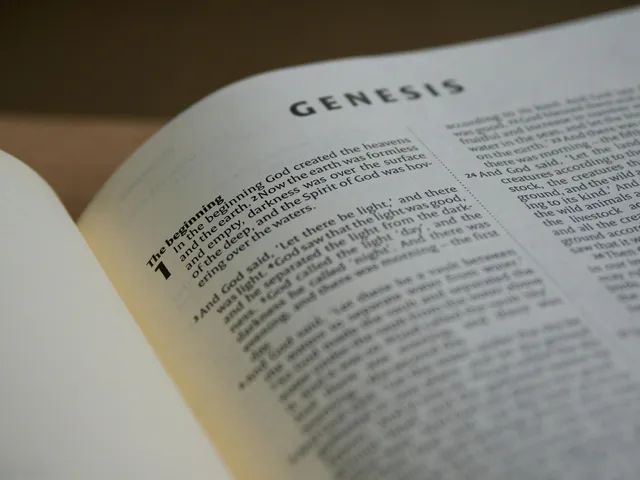
So when the next great discovery makes headlines - when a new planet is found, a new cure developed, a new marvel unveiled - let your first response not be fear but worship. Remember: every light we uncover shines, in the end, from the source of all light. Scientific discoveries do not weaken our faith; they expand it. They remind us that the God of Genesis is also the God of galaxies, that the Christ of Calvary is also the sustainer of quarks and code and cosmos. And when we step outside tonight and look at the stars, we can whisper with renewed confidence - not despite our understanding, but because of it - "The heavens declare the glory of God."