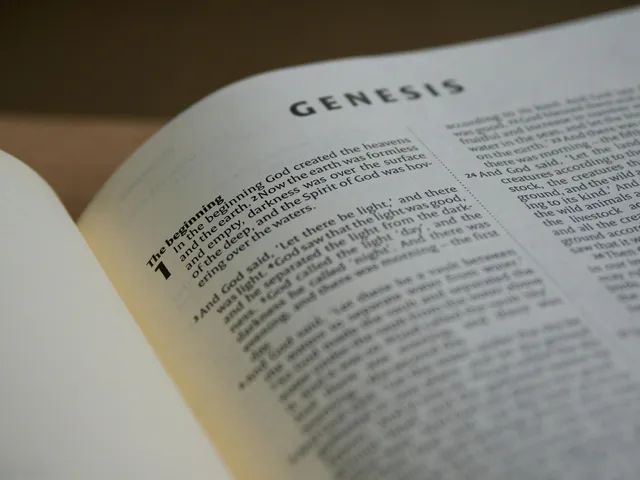
When people first hear the phrase "Big Bang," they often imagine a cosmic explosion-light bursting forth into the emptiness of space, galaxies swirling into being, a universe awakening. It's a stunning image, one that beckons the imagination and compels scientists to search for deeper understanding. Yet for many Christians, another image comes to mind: the opening words of Scripture-"In the beginning, God created the heavens and the earth." Are these two beginnings in conflict, or could they, in some mysterious way, be telling different sides of the same story?
The Wonder of Beginnings
Every story-whether in science or in faith-starts with a beginning. The Big Bang theory describes the universe emerging from a single, unimaginably dense point, expanding and cooling over billions of years to form stars, galaxies, and ultimately us. Genesis tells of God speaking light into existence, separating sky from sea, forming the earth, and breathing life into humankind.
At first glance, these two accounts seem to speak different languages-one mathematical and observational, the other poetic and spiritual. Yet both begin in wonder. Both declare that our universe had a definite beginning, not an eternal past. This is no small connection. Before the Big Bang theory was accepted, many scientists assumed the universe was eternal and self-sustaining. Yet the Bible had long proclaimed that there was a moment when time itself began-"In the beginning."
The Moment Science Caught Up with Scripture
It's worth remembering that the idea of a universe with a beginning wasn't popular in early 20th-century science. It was unsettling. If the cosmos had a starting point, then something-or Someone-had to cause it. When Belgian priest and physicist Georges Lemaître first proposed what became known as the Big Bang, even Albert Einstein resisted the idea. Yet years later, Einstein reportedly conceded that the expanding universe supported what Scripture had always affirmed: a creation that began.
Science, in its honest inquiry, often ends up bowing to mystery. When astronomers peer back through the ages, they describe seeing the afterglow of creation itself-the cosmic background radiation that whispers of a fiery beginning. How fitting that light, the very first creation God spoke into being according to Genesis 1:3, marks the earliest trace the universe still holds.
Genesis as a Song, Not a Science Text
If we read Genesis with 21st-century scientific curiosity, we might miss its deeper melody. The opening chapter of the Bible was never meant to serve as a textbook in physics or cosmology. It is better understood as a temple hymn-an act of worship describing who created, not necessarily how every molecule came into being.
The Literary Beauty of Creation
Each line in Genesis 1 is deliberate. There's rhythm and repetition: "And God said... and it was so... and God saw that it was good." The cadence is that of liturgy, declaring a Sovereign who speaks life into existence. When read devotionally, those days of creation draw the reader into awe-not calculation. The text's purpose is to reveal divine intent and relationship, not to map astrophysical timings.
That doesn't mean it's detached from reality. Rather, Scripture speaks truth through its own mode-truth about meaning, purpose, and relationship. Science may study the universe's mechanisms, but Genesis tells us the universe matters because it was made in love and with purpose.
Faith and Discovery Hand in Hand
It's easy to assume that science threatens faith or that belief in God dismisses science. In truth, many of history's scientific pioneers were believers who saw discovery as worship. They viewed studying creation as "thinking God's thoughts after Him."
When we look at the Big Bang not as competition to Genesis but as a glimpse into the mechanics of creation, a harmony emerges. The Big Bang describes how the universe might have unfolded. Genesis declares why it did: because of divine will and love. These are not rival explanations any more than a composer's score and a physicist's sound wave are rival explanations for a symphony.
The Echo of the Divine Voice
Psalms 19:1 says, "The heavens declare the glory of God; the skies proclaim the work of his hands." Every telescope directed into the depths of space extends that same declaration. Each new discovery-a distant galaxy, a planetary system, the strange shimmer of cosmic background light-whispers of a vastness that points beyond itself. The Big Bang, viewed through eyes of faith, could be seen as that first magnificent "Let there be..."
Facing the Tensions Honestly
That's not to say there aren't real questions and tensions. Believers differ on how literally to interpret the "days" of Genesis, the age of the earth, and the mechanisms by which God created life. Such discussions have value, but they must be approached with humility. Faith is not afraid of truth, wherever it's found, because all truth belongs to God.
When Christians fear science, we risk shrinking our sense of wonder. When scientists dismiss faith, they risk silencing the very awe that ignites discovery. The healthiest place to stand is in reverence-eyes open to both Scripture's Revelation and creation's evidence, willing to let mystery remain mystery when needed.
Creation as Relationship
What Genesis uniquely proclaims, and what no scientific model can replicate, is that the world was made in relationship. "Let us make mankind in our image," God says in Genesis 1:26. The universe is not random; it flows from a personal Creator who desires fellowship with His creation.
The Big Bang may describe a moment of physical origin, but the Bible reveals an ongoing narrative: creation, fall, redemption, and restoration. It's not just about how we came to be, but how we are called to live now-aware that the same God who flung galaxies into place also numbers the hairs on our head (Matthew 10:30).
The Creator Still Speaks
Consider this: Genesis begins with God speaking creation into existence. John's Gospel echoes that theme, declaring, "In the beginning was the Word... and the Word was God" (John 1:1). The same Word who spoke light into being became flesh in Jesus Christ. Science can trace energy and matter back to a singularity, but Scripture takes us further-to a personal Logos, a living Word through whom all things exist. The Big Bang may describe the when; Christ reveals the Who.
Where Awe Leads Us
Perhaps one of the most worshipful responses to understanding the universe's beginning is awe. Standing beneath a midnight canvas of stars, we realize how small we are-and yet how cherished. The magnitude of the cosmos should never make us feel forgotten; it should make us gasp at the immensity of God's attention. The same voice that created quasars and galaxies also whispers peace to the human soul.
When we see the universe through this lens, science becomes a pathway to worship. Each new discovery deepens gratitude. As Psalms 8 exclaims, "What is man that you are mindful of him?" It's a question that pours from any heart humbled by both telescope and Scripture alike.
Living the Truth of Creation
If Genesis and the Big Bang both point us toward a beginning filled with light, then perhaps the most faithful way to live is to reflect that light wherever we go. The universe may have started with a burst of brilliance, but God's ultimate purpose is still unfolding-in lives restored, compassion offered, justice pursued, Christ revealed.
To believe in a Creator is to live creatively. To trust that there was a beginning is to trust that there is also a purpose, and an ending-one that leads to renewal, not despair. The same hands that shaped the stars are shaping our hearts, drawing us into His redemptive narrative.
The Symphony of Truth
In the end, science and Scripture need not be enemies but different instruments in the same grand symphony of truth. The Big Bang theory, far from undermining faith, can deepen it by showing us just how majestic and ordered creation is. Genesis, far from rejecting scientific exploration, reminds us that all knowledge must rest upon reverence and gratitude.
The God who said "Let there be light" is the same God who still calls light out of darkness in every human heart. And that cosmic beginning is mirrored every day when someone awakens to grace, sees truth anew, and chooses to walk in the light of Christ.
So when we gaze up into the night sky or read stories of the universe's birth, let us not imagine conflict, but harmony-two voices, science and Scripture, both declaring the same glorious refrain: The heavens declare the glory of God.