It's a question that has echoed through lecture halls, coffee shops, and church basements alike: Is Christianity anti-science? From the story of Galileo's telescope to contemporary debates about evolution and cosmology, some have painted Christianity and science as adversaries locked in eternal conflict. Yet for many believers-from ancient scholars to modern physicists-the story looks far different. When we slow down long enough to examine history, Scripture, and the wonders of creation itself, we begin to see not a collision but a dance: one of faith seeking understanding and reason reaching toward the divine.
The Tension That Was Never Meant to Be
There's a common narrative suggesting that faith belongs to the heart and science to the mind, and never the twain shall meet. But that division is a modern invention. For most of history, the pursuit of knowledge about the world was a way to know God more deeply. Medieval monks studied stars not to challenge God but to celebrate His craftsmanship. Early scientists like Isaac Newton, Johannes Kepler, and Robert Boyle wrote passionately about the Creator whose orderly universe they explored. Newton famously described himself as a boy "playing on the seashore, finding a smoother pebble or prettier shell," while the great ocean of truth lay all undiscovered before him-an echo of wonder, not rebellion.
Christianity, at its heart, invites exploration. The Psalmist declares, "The heavens declare the glory of God; the skies proclaim the work of his hands" (Psalms 19:1). When we look into a microscope or peer through a telescope, we aren't trespassing into forbidden territory. We're stepping onto sacred ground-the same ground the Creator called good.
Faith and Science: Two Languages for One Reality
Science tells us how the heavens go; Scripture tells us why. One reveals process, the other purpose. To pit them against each other is like arguing whether a painting is better understood by studying its composition or knowing the artist's soul. Both matter. Both enrich each other when held together rightly.
Understanding the Difference in Questions
Science asks measurable questions: What is the universe made of? How do organisms evolve? How does gravity work? Christianity, meanwhile, addresses meaning: Why is there something rather than nothing? What is our place in creation? What kind of God made a world that can be so beautiful and yet so broken?
These aren't competing questions. They are complementary. A person can study biology to understand how cells divide, and still fall to their knees in awe at the mystery of life. Indeed, faith without curiosity becomes superstition, and curiosity without faith becomes arrogance. Both need the other to stay human, humble, and whole.
When Science Becomes a Form of Worship
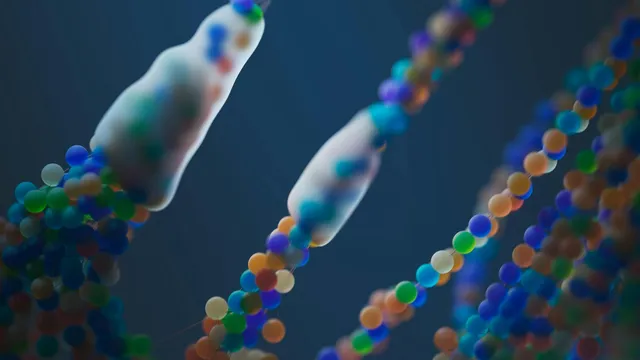
There's something breathtaking about watching an eclipse or seeing images from a distant galaxy. For believers, those moments can be profoundly devotional. Each new discovery doesn't shrink God; it enlarges our view of His creativity. When we map DNA, we are tracing the very alphabet of life that He first spoke into being. When we measure the curvature of space-time, we are glimpsing the grandeur of His design.
In Genesis, God invites humanity to "name" the animals (Genesis 2:19-20)-an ancient calling to classification, observation, and stewardship. From the very beginning, science was woven into worship. To study creation was to fulfill our original vocation as caretakers and co-discoverers in God's world.
The Danger of Forgetting the Giver
Yet C.S. Lewis once warned that while science helps us see how things work, it can also tempt us to adore the creation rather than the Creator. When human pride turns knowledge into self-glory, science ceases to be worship and becomes idolatry. The same curiosity that can open hearts can also inflate egos.
That's why humility is essential. The best scientists know that every discovery opens the door to more questions, not fewer. It echoes Paul's reminder: "Now we see through a glass, darkly; but then we shall see face to face" (1 Corinthians 13:12). Every unanswered question can become an invitation into deeper faith.
Why the Conflict Narrative Persists
If Christianity and science can live in harmony, why does the myth of conflict endure? Partly because both sides have, at times, misrepresented the other. Christians have occasionally reacted with fear when scientific discoveries seemed to unsettle traditional understanding. Scientists, likewise, have sometimes dismissed spirituality as superstition. The echo of those skirmishes lingers in popular culture.
But history itself offers a strong rebuttal. The very foundations of modern science-empirical observation, the laws of nature, rational order-arose within a Christian worldview. Early thinkers saw the universe as intelligible precisely because its Maker was rational. They expected to find patterns, order, and consistency because they believed in a faithful God. That conviction became the soil from which science grew.
Misunderstanding Scripture's Purpose
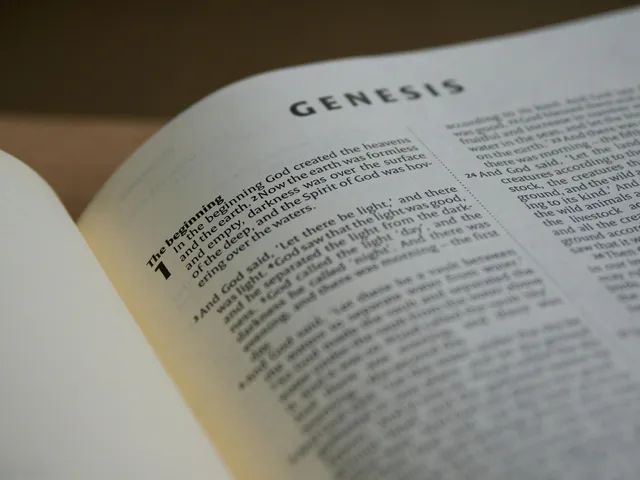
Many of the supposed conflicts come from reading the Bible as a scientific document rather than a theological one. Scripture was never meant to serve as a physics manual. It tells us the truth about God's relationship with His creation, not the chemical composition of a star. When Genesis says God created the heavens and the earth, it proclaims agency and intention: We are not accidents; we are beloved designs.
Science, on the other hand, reads the story of creation through the lens of natural processes. It answers questions of mechanism. There's no need for contradiction unless one demands that the Bible replace a telescope or that the telescope disprove God.
Faithful Curiosity in the Modern World
Today, more than ever, Christians are engaging science in creative and faithful ways. From climate research grounded in stewardship theology, to medical breakthroughs driven by compassion, believers around the globe are witnessing to the harmony of faith and discovery.
Neuroscientists are exploring the mysteries of consciousness with reverence. Astronomers speak of God's majesty when describing black holes and supernovae. Farmers use soil science as an act of care for God's earth. These are not contradictions; they are continuations of a tradition that began long ago, when the first humans gazed at the night sky and whispered, "Lord, our Lord, how majestic is your name in all the earth!" (Psalms 8:9).
Practicing Wonder in Everyday Life
One doesn't need a laboratory to experience the divine connection between faith and science. You might see it in a child's fascination with a butterfly's wings, in the geometric marvel of a snowflake, or in the steady rhythm of your own heartbeat. Every ordinary moment becomes a silent sermon declaring that creation is both comprehensible and sacred.
When we pause long enough to notice these wonders, the Spirit stirs gratitude. We realize that God is not threatened by our questions. He is honored by them, just as any artist is honored when someone wants to study their masterpiece closely.
From Doubt to Deepened Worship
Sometimes believers wrestle when science unsettles comfortable assumptions. But doubt, handled faithfully, can become fertile ground for deeper worship. Thomas the disciple needed to touch the risen Lord's wounds before belief burst into joy. Likewise, when science leads us into mystery-toward questions bigger than we expected-it can guide us to a fuller awe of God, not away from Him.
Think of how the universe operates according to laws so precise that physicists speak of "fine-tuning." Or how DNA encodes life with staggering complexity-three billion letters written in every human cell. For the believer, this isn't an argument of proof so much as an invitation to praise. The more intricate the design, the more magnificent the Designer.
Reclaiming a Theology of Creation
To answer whether Christianity is anti-science, we must first remember that Christianity begins not with escape from the world but with the Word made flesh-God entering creation, not abandoning it. Jesus healed the sick, stilled storms, broke bread, and walked dusty roads. His ministry dignified both body and soul, both the natural and supernatural. To follow Him is to care deeply about the material world-to seek healing, to study nature, to cherish the physical as something worthy of understanding and redemption.
The apostle Paul proclaimed that all things hold together in Christ (Colossians 1:17). That means the atom and the angel, the law of gravity and the law of grace, find coherence in Him. When we study creation, we trace His fingerprints. When we do honest science, we continue the Genesis command to tend and keep the garden God set before us.
Wonder as a Bridge Between Worlds
So, is Christianity anti-science? No-when understood rightly, it is profoundly pro-science because it is pro-truth. It calls us to pursue knowledge with humility, to celebrate discovery as worship, and to remember that truth, wherever found, belongs to God. The same hand that stretched out the heavens also touched the leper and calmed the sea.
In the end, both the believer and the scientist stand together at the edge of mystery-looking out into the vastness of what they cannot fully know, yet longing to know it. That longing is holy. It's built into us by a Creator who delights in being sought after.
So let your questions lead you deeper into awe. Let your study of the natural world become a doorway to prayer. And when you next look up at a starlit sky or down at the intricate weave of a leaf, whisper with grateful wonder: The God who made all this also made me, and calls it good.