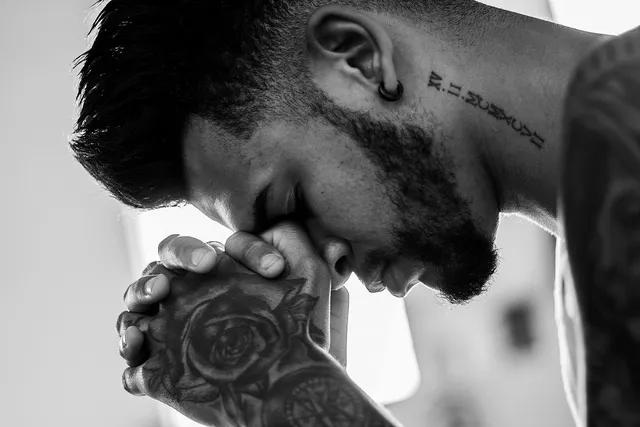
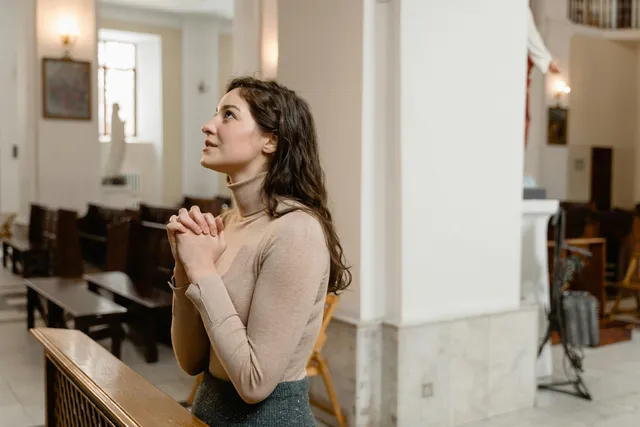
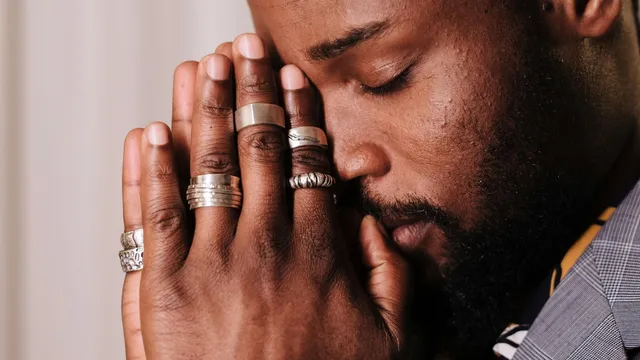
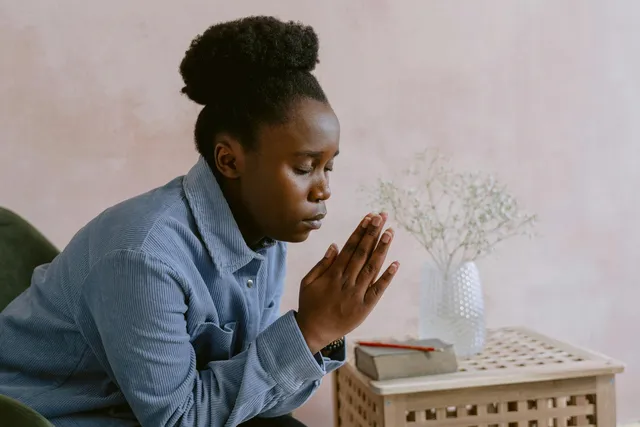
Every generation faces its own dark headlines-wars and wildfires, violence in the streets, moral confusion, and political unrest. But it's not new for people of faith to feel the tremors of an unstable world. The deeper question has never changed: Will we allow the news to drive us to fear, or to prayer? Today, amid the relentless speed of information, that question grows more urgent than ever.
The Noise of the World vs. the Whisper of God
The modern world doesn't whisper fear-it shouts it. The moment we wake, news apps on our phones tell us of conflict, tragedy, division, and loss. With every headline, our emotional temperature rises. One study after another confirms what many feel: constant exposure to crisis erodes hope and heightens anxiety. And yet, Scripture reminds us, "Be still, and know that I am God" (Psalms 46:10).
That simple command holds a profound irony: Stillness is the most countercultural act a believer can take in chaotic times. While the world screams for reaction, the Spirit invites us into reflection. While fear demands instant commentary, prayer demands quiet surrender. When we begin to see that prayer is not withdrawal from reality but deeper engagement with it-rooted in trust-we recover the balance we've lost.
When Fear Speaks Louder Than Faith
Fear is persuasive. It tells us we must do something immediately-post, protest, panic, or prepare for the worst. Fear whispers that our well-being depends on our ability to control what's uncontrollable. But faith looks the same chaos in the face and says, "My help comes from the Lord, the Maker of heaven and earth" (Psalms 121:2).
Consider how Jesus responded when His disciples panicked during a storm on the Sea of Galilee (Mark 4:35-41). The waves were real. The boat was truly filling with water. Yet Jesus slept. Not out of apathy, but because He lived from a different center-one anchored in complete trust. When He finally rose and rebuked the storm, the disciples marveled, not only at His authority, but at His peace. Our goal is not to find peace by escaping storms, but to find the kind of faith that can rest within them.
Returning to the Practice of Prayer
Prayer has always been the Church's first and greatest response to crisis. From the upper room of Acts to communities praying under persecution, believers have turned to prayer not because it's the only thing left to do, but because it's the most powerful thing they could do.
Prayer Is Alignment, Not Escape
When we pray, we reorient our hearts around God's sovereignty. We are saying, in essence, "Lord, You see what I cannot. Do through me what I cannot do by myself." Too often, prayer is treated as a soothing exercise or emotional outlet. Those aspects are real-but deeper still, prayer is spiritual alignment. It restores a proper view of God, the world, and ourselves. In prayer, fear becomes fuel for faith, and worry turns into watchfulness.
Every Headline Is an Invitation
Imagine if every time a distressing story flashed across our screen, it immediately turned into a petition: "Lord, have mercy. Lord, bring wisdom. Lord, show me how I can act with compassion today." What if every alarming news cycle became a personal call to intercession rather than despair? Instead of being paralyzed by the enormity of global problems, we'd participate-through prayer-in the steady, unseen work of divine restoration.
Learning from Those Who Prayed Through History
Throughout Scripture and the centuries, believers have faced moments far darker than ours-and yet they prayed. Daniel prayed in Babylonian captivity. Esther fasted for her people under threat of annihilation. Paul sang hymns in a prison cell. The early Christians prayed under the shadow of Rome, not for safety, but for boldness (Acts 4:29-31).
Each example teaches us that prayer was not a retreat from the world, but a rebellion against despair. The Church has always believed in the transforming power of a praying people. When Nehemiah wept over the broken walls of Jerusalem, he didn't first draft a reconstruction plan; he fell on his knees. From that posture of humility flowed action. Prayer didn't distract him from the work-it directed him to it.
Refusing to Be Discipled by Fear
If we're not intentional, the endless scroll of bad news can shape our hearts more than Scripture does. Fear becomes a teacher, discipling us into its worldview: that danger is inevitable, hope is naïve, and God seems distant. But when we pray, we reenter the reality of God's kingdom. We remember that history is not a random collection of tragedies, but a story moving toward redemption. Prayer reclaims our narrative.
Paul's words to the Philippians ring as true now as ever: "Do not be anxious about anything, but in everything, by prayer and petition, with thanksgiving, present your requests to God" (Philippians 4:6). The next verse continues, "And the peace of God, which transcends all understanding, will guard your hearts and your minds in Christ Jesus." Notice: it doesn't promise that circumstances will change immediately, but that we will be changed in the midst of them. Prayer guards the gate of the heart against fear's intrusion.
When the World Feels Out of Control
There's an old saying: "When you can't trace His hand, trust His heart." That's precisely what prayer teaches us. In unstable times, we rediscover the stability of the One who holds all things together. The Book of Revelation-so often misread as pure doom-is actually a sustained vision of worship. Even when the world collapses, heaven is filled with unceasing praise. That perspective shifts everything. Even when earthly events are uncertain, heavenly reality is constant.
Prayer as Participation, Not Passivity
Some assume prayer is passive-a way to avoid acting. But that's a misunderstanding. Every genuine prayer aligns us with God's movement. It opens us to courage, love, and wisdom. Think of how Jesus prayed before choosing the disciples, before healing, before the cross itself. Prayer fueled His mission. For believers today, prayer must precede-not replace-action. It is how we begin to act with discernment rather than impulsiveness.
When we pray about current events-political conflicts, natural disasters, moral crises-we are not trying to make sense of everything at once. We are simply committing what we cannot control to the One who can. That posture changes the tone of our engagement. It replaces reactive outrage with redemptive hope.
Cultivating a Lifestyle of Prayer in Troubled Times
So how do we live as people of prayer in a fearful age? It begins in the small, daily choices that form our inner landscape:
- Choose Scripture before the news. Ground your heart in God's truth before you engage the day's narratives. Begin your morning with a Psalms or a Gospel passage-not a headline.
- Turn anxiety into intercession. Each time worry arises, transform it into a prayer. Let concern become conversation with God.
- Fast from fear. Consider periodic breaks from social media or constant news-consumption to reset your spiritual attention.
- Pray collectively. Join others in community prayer groups. Shared prayer doesn't multiply fear; it multiplies faith.
- Keep gratitude central. Thanksgiving reorients the heart toward what God has done and is doing, reminding us that grace is still active even in global chaos.
These practices may seem small, but over time, they reshape how we experience the world. The more we pray, the less we panic. As prayer becomes habit, peace becomes reflex.
Faith That Outlasts Headlines
Every major moment of change in history has tempted believers to despair. And yet the Church has endured-not merely by avoiding anxiety, but by transforming it into prayerful persistence. Today's believers are part of that same story. The upheavals we witness are not evidence of God's absence, but opportunities for deeper dependence.
When we look at current events through the lens of prayer, we do not deny the pain of our times-we acknowledge it honestly before the Lord. We lament, we intercede, we trust. But we refuse to let fear dictate our conversation. Prayer reframes everything. It teaches us that the darkest nights are often preludes to redemption, that God still works through imperfect people in imperfect circumstances, and that hope is not a fragile candle but a wildfire sustained by divine breath.
As we turn our hearts toward prayer rather than panic, we become living testimonies of peace in an age of outrage. We demonstrate, by presence and trust, that the kingdom of God is not shaken by the front page. And perhaps, in the quiet strength of a praying people, the world might catch a glimpse of that unshakable hope.
From Panic to Peace
The invitation is simple but powerful: let current events drive you to prayer, not fear. Let the headlines invite you to lift your eyes instead of lower your hope. Let the storms remind you of the One who speaks peace over wind and waves. In doing so, we are not ignoring reality-we are embracing a truer one: that God remains sovereign, His promises endure, and His Spirit is working even now.
So when the next notification flashes across your screen, pause-not in despair, but in dependence. Whisper a prayer. Remember that fear never tells the full story, but faith always leads us back to the Author. And from that place of trust, live boldly, love deeply, and keep praying. For in every age, and especially this one, that is how light breaks through the news cycle-one surrendered heart at a time.