There comes a moment for every believer-whether new to faith or long seasoned in it-when prayer feels impossible. The words don't come. The emotions feel tangled. You sit in silence, maybe staring at the ceiling or into the dim light of dawn, and your heart aches with all the things you can't begin to say. Yet you know you need God. You long for Him to meet you in that fog of wordlessness. What do you do when you want to pray, but your soul doesn't know how?
Prayer Is Not a Performance
We often approach prayer as if we must craft the perfect sentence for God to listen. We imagine that somehow the right combination of words will unlock His attention, or that a polished phrase will prove our devotion. But prayer, at its heart, is not a performance-it's a relationship.
Jesus cautioned against those who stood on street corners praying eloquently just to be seen by others. Instead, He invited His followers into the quiet space of the soul: "When you pray, go into your room, close the door and pray to your Father, who is unseen" (Matthew 6:6). The emphasis isn't on polish or poise. It's on presence.
When you don't know what to say, start there: with presence. You don't have to perform before God. You only have to be real with Him.
The Holy Spirit Prays When You Can't
One of the most comforting promises in Scripture whispers to the believer who feels wordless: "The Spirit himself intercedes for us through wordless groans" (Romans 8:26). That means even your silence can be prayer. Even your confusion can be holy ground. The Spirit living within you translates sorrow, uncertainty, or numbness into heavenly language that reaches the Father's heart.
Prayer isn't about finding the words-it's about finding your way into the presence of God, even when words are gone. When you inhale slowly, when you exhale tears, when you lift your face heavenward with no sentences at all-He hears. The Spirit is already praying what you can't.
Embrace the Silence
Sometimes, the most faithful prayer is silence. Not the silence of neglect, but the silence of awe. There are seasons when words feel too small to contain what the heart carries. In those moments, let the quiet become your sanctuary. Whisper His name. Let that be enough. He hears your breath, your heartbeat, your longing. And He loves you still.
Honest Prayers Are Holy Prayers
If you read through the Psalms-those raw, ancient songs that still echo through today's worship-you'll notice something remarkable. Many of them sound nothing like polite prayers. They are desperate, furious, confused, tearful, even accusatory at times. David, who was called "a man after God's own heart," wrote lines filled with complaint and lament. He did not shy away from saying exactly how he felt.
That's because God prizes honesty over eloquence. When you can't find the right religious words, bring the real ones. Tell Him you're tired. Tell Him you're scared. Tell Him you don't know what you believe in this moment. The very act of turning that honesty toward Him is a prayer of trust, even when it feels fragile. He knows your heart completely-no mask needed.
Let Scripture Speak for You
When your mind feels blank, the Bible can become the language of your soul. Open the Psalms and borrow their cries. Whisper words that countless believers have whispered before you: "The Lord is my shepherd, I shall not want" (Psalms 23:1). Let ancient truth steady your trembling faith. Reading Scripture prayerfully is not just recitation-it's participation in the prayers of the saints across generations.
Sometimes you can simply read a verse and stay with it, repeating it quietly, allowing it to breathe life back into your soul. Let Scripture be a starting line when you feel stuck. The words you borrow today may lead you into new ones tomorrow.
Try Praying the Psalms
If you don't know where to start, try choosing one Psalms that reflects your mood-whether hope, fear, grief, or joy-and read it slowly. Change the pronouns to make it personal. Pause on a phrase that seems to match your heart's cry. This isn't formulaic; it's relational. Through the Psalms, you align your soul with a centuries-old chorus of voices who have met God in every season imaginable.
Pray with Your Body
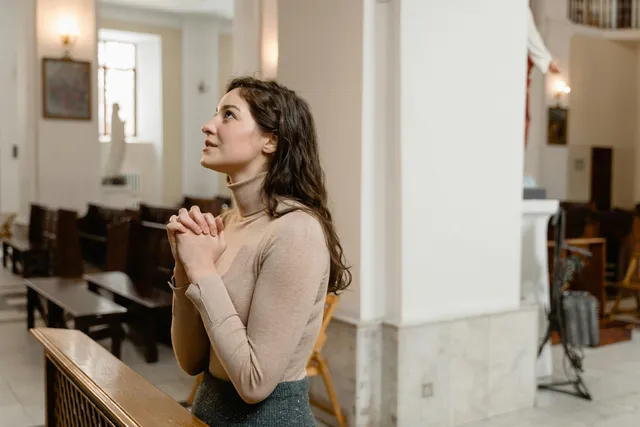
Words are not the only language of prayer. The human body-God's own creation-can pray through posture, movement, and stillness. When words fail, let your body become your prayer. Kneeling, opening your palms, lifting your face, or simply sitting in stillness are all ways of turning your whole being toward Him.
In 1 Kings 18, the prophet Elijah bowed low to the ground before he prayed for rain. His posture reflected dependence and humility. In Gethsemane, Jesus knelt down before the Father in His anguish (Luke 22:41). Sometimes, kneeling says more than speaking ever could. Other times, lifting your hands might release what you've been holding too tightly. Physical prayer humbles the heart and centers the soul on God's presence rather than your performance.
Let Community Carry You
When your own words run dry, the prayers of others can become a lifeline. There's something profoundly healing about being surrounded by faithful friends and knowing their voices are lifting where yours falter. You might not have the strength to speak, but you can lean into the rhythm of their intercession, their belief carrying you where yours has grown weary.
The early Church understood this deeply. Believers gathered regularly to pray, not just because it was tradition, but because their shared faith made them strong. In Acts, when Peter was imprisoned, the community "was earnestly praying to God for him" (Acts 12:5). Their collective prayer moved heaven and earth. Even when Peter couldn't pray for himself, he was held by their faith.
Find a small group, a trusted friend, a church family. Let their words and presence become part of your prayer when yours feel absent. Sometimes, community is the echo of God's own compassion.
Write Your Way to Prayer
Another way to find your voice again is through writing. A journal doesn't demand perfect grammar or spiritual insight; it only asks for honesty. When you can't speak your prayers, you can write them. Scribble your confusion, praise, or longing. Let it be messy. God reads between the lines. Over time, your written prayers may become a story of God's faithfulness and of your perseverance through silence.
Don't Censor What Comes
In a private notebook, you can be completely unfiltered. Tell God how things really are. Write the questions you're afraid to ask aloud. This kind of spiritual journaling often transforms silence into conversation. One day, as you look back, you might see that your wordless season was full of quiet answers all along.
When Prayer Feels Dry
Every believer eventually meets the dry ground of faith. Prayer feels mechanical, distant, or futile. Even the saints spoke of this as the "dark night of the soul." Don't mistake silence for absence. Often, when we cannot feel God, He is doing deeper work within us-a refining, a strengthening of trust that is not dependent on emotion.
Faith grows in hidden soil. Seeds don't sprout in sunlight alone. Sometimes they must rest in darkness before life appears. When you persist in turning toward God during dryness, you're forming deep spiritual roots. Keep showing up. Keep whispering His name. Keep trusting that He listens, even when you can't feel Him listening.
Simple Prayers to Begin Again
If you need a place to start, begin small. Whisper, "Lord, help." or "Jesus, I'm here." Those simple phrases carry depth beyond measure because they come from an honest heart. The Lord who hears every sparrow's cry also hears yours. Over time, your prayer life may blossom again, not because you mastered the right language, but because you learned to trust His presence even in wordlessness.
Rediscovering the Heart of Prayer
Ultimately, prayer is not about speaking well-it's about loving well. It's an open posture toward God, whether in words, silence, tears, or stillness. When you no longer know what to say, remember that prayer begins and ends with God's invitation: "Be still, and know that I am God" (Psalms 46:10).
The truest prayer is a heart turned toward Him. You can rest there. You can breathe there. You can find again, in the quiet, that He has been listening all along.
So when you don't know what to say, come anyway. Sit in the silence. Let the Spirit interpret your longings, let Scripture lend you words, let the body and community carry you. Prayer is not a test of eloquence-it's the practice of presence. And even when your prayers sound like nothing more than a sigh, heaven hears. Because love listens before it speaks.
He already knows. And He already cares. Come just as you are-that is prayer enough.