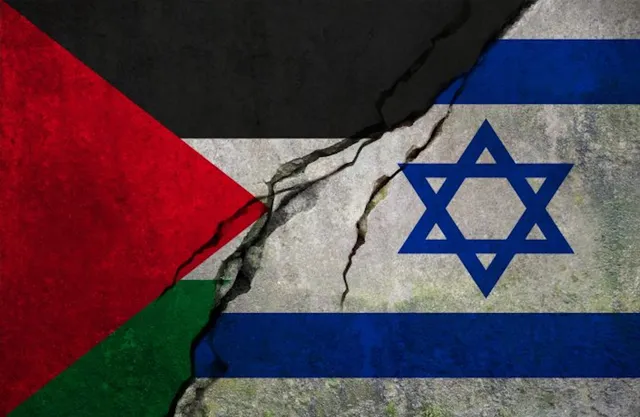
The Bible speaks often about peace-but not only the peacefulness that means quiet or calm. It speaks of a deeper, divine peace: a wholeness of heart and community that can only be rooted in the heart of God. Likewise, the Scriptures are filled with stories and teachings on diplomacy-how people of faith are to navigate relationships, conflicts, and responsibilities in a fallen world. When we look closely, we find that peace and diplomacy are not marginal subjects; they lie at the very heart of what it means to follow Christ.
The Peace That Passes Understanding
When Paul wrote to the Philippians about the "peace of God, which surpasses all understanding" (Philippians 4:7), he wasn't promising an absence of struggle. He was describing a sacred inner stability that comes from trusting in God's sovereignty even when the world shakes. This peace cannot be manufactured; it flows from the assurance that our lives are held securely in divine hands.
Jesus Himself was both the bringer and the embodiment of peace. In John 14:27, He said, "Peace I leave with you; my peace I give you. I do not give to you as the world gives." His peace was not dependent on political balance or outer safety-it was rooted in reconciliation: with God, with others, and within our own hearts. The biblical peace, or shalom, means far more than the end of conflict. It means harmony with divine purpose, fullness, and right relationship.
Old Testament Echoes of Shalom
From Genesis onward, peace is portrayed as the fruit of God's order. Creation itself was peaceful until human disobedience shattered its balance. The prophets longed for the restoration of that peace, pointing to a Messiah who would reign as the "Prince of Peace" (Isaiah 9:6). In that promise lies both a prophecy and a pattern: peace is something God ushers in, yet something His people are called to embody even now.
Consider Abraham, who served as a kind of diplomat for peace in his time. When conflict arose between his shepherds and Lot's, Abraham chose generosity over greed. He gave Lot first choice of land, trusting God to provide. His diplomacy was not weakness-it was faith-driven restraint. He knew peace with God allowed him to release his grasp on earthly advantage.
Peacemaking as Strength
The Hebrew leaders understood something that our world often forgets: real strength lies not in conquering others but in mastering oneself. Proverbs 16:32 declares, "Better a patient person than a warrior, one with self-control than one who takes a city." Peacemaking in the biblical sense is active, courageous, and self-sacrificial. It calls one to confront pride, to bend the will toward reconciliation, and to love where the world expects hostility.
Jesus and the Radical Diplomacy of the Kingdom
When we come to the Gospels, peace and diplomacy take on new dimensions. Jesus modeled a diplomacy that transcended politics-it was spiritual, moral, deeply relational. He met with Pharisees and tax collectors, listened to outcasts, and spoke to Roman centurions with both truth and grace. He embodied an impossible combination: unshakable conviction paired with unguarded compassion.
In the Sermon on the Mount, His words pierce through the surface: "Blessed are the peacemakers, for they shall be called children of God" (Matthew 5:9). Not the peace-lovers, but the peacemakers. Diplomacy, in the kingdom sense, means taking initiative to bridge divides-even when those divides are built of centuries of suspicion and hurt. Jesus didn't wait for people to come to Him on His terms; He went out to meet them in theirs.
The Table of Reconciliation
Every meal Jesus shared with sinners and enemies was a declaration of divine diplomacy. He was revealing that God's plan was not merely to win arguments, but to win hearts. His example challenges the Church today to become tables of peace-to foster communities where dialogue, humility, and truth can coexist without hostility. Christian diplomacy is not appeasement-it is the art of truth-telling wrapped in grace.
Practical Wisdom for a Conflicted World
In a world obsessed with winning debates and defending positions, the Bible calls believers to a higher path. "If it is possible, as far as it depends on you, live at peace with everyone," wrote Paul (Romans 12:18). That simple condition-"as far as it depends on you"-reminds us that peace isn't always possible, but the effort always is. The believer's responsibility is not to control outcomes, but to embody Christ's posture.
In conversations, conflicts, and even politics, diplomacy anchored in truth honors God. The Christian diplomat-whether a parent mediating between children, a pastor guiding a congregation, or a citizen engaging in civic discussions-does not compromise righteousness for calm. Rather, he or she seeks wisdom that finds peace through integrity, not avoidance.
When Peace Costs Something
Sometimes peace demands surrender-but not of faith or conviction. It may require letting go of being right for the sake of being reconciled. The cross itself is the ultimate image of costly peace: Christ bore hostility, rejection, and injustice to make peace between God and humanity. His sacrifice is not only our salvation but our pattern for living. We are called not merely to celebrate peace but to suffer for it, if needed.
The Prophet's Diplomacy: Speaking Truth to Power
One might imagine that diplomacy means silence in the face of wrongdoing, but the prophets prove otherwise. Moses, Nathan, Elijah, and Jeremiah all stood before rulers and confronted injustice. Yet even their boldness was guided by a longing for restoration, not revenge. Biblical diplomacy always aims at redemption.
Nathan's private confrontation with King David after the Bathsheba affair is a classic example. He spoke truth with surgical precision-neither condemning nor flattering-but appealing to David's conscience. That moment of holy diplomacy brought repentance instead of rebellion. The same Spirit calls leaders today to balance courage and compassion in their words.
Building Bridges in the Church and Beyond
Peace begins at home-within the believer's heart-and then radiates outward. The early Church faced constant tension: between Jews and Gentiles, rich and poor, male and female. Paul tirelessly urged them toward unity, reminding them that Christ "himself is our peace" (Ephesians 2:14). He tore down the dividing wall of hostility so that a new humanity could live as one body.
Modern believers face similar fractures: political differences, cultural divisions, even church feuds. The call to biblical diplomacy is a call back to our shared center-Christ Himself. To live as His ambassadors means refusing to dehumanize opponents, instead recognizing every person as one for whom Christ died. Peacemaking may not fix systems overnight, but it transforms the souls who participate in it.
Listening as a Form of Ministry
One overlooked form of Christian diplomacy is listening. James's counsel remains timeless: "Be quick to hear, slow to speak, and slow to anger" (James 1:19). Listening demonstrates respect, builds trust, and defuses pride. It opens hearts to truth in ways argument cannot. The believer who listens with the patience of Christ represents heaven's calm in earthly storms.
A Spiritual Posture More Than a Strategy
Ultimately, peace and diplomacy in Scripture are not techniques-they are postures of the redeemed heart. A person who walks in God's peace will naturally move through the world as a reconciler. They will choose soft answers where the world shouts, they will seek understanding where others assume the worst, and they will pray for enemies rather than curse them. This lifestyle reflects a deep confidence in God's justice and timing.
Isaiah's vision of the future-when swords become plowshares-remains our hope. But even now, every act of forgiveness, every patient conversation, every refusal to retaliate becomes a preview of that kingdom peace. In Christ, what begins as inner stillness ripples outward into the world as healing diplomacy.
Living as Ambassadors of Peace Today
The Apostle Paul reminds us, "We are ambassadors for Christ" (2 Corinthians 5:20). That means our daily lives stand as living diplomacy between God and others. Every believer represents not a personal agenda but a heavenly kingdom. Our demeanor, language, and actions either draw others toward that kingdom-or push them away.
Imagine a world where believers practiced this godly diplomacy: where social media became a venue for blessing instead of bitterness, where disagreements in the church led to deeper humility rather than separation, where international conflicts found quiet influence through prayer and compassion. That is not naïve idealism-it is resurrection realism. The same power that raised Jesus from the dead empowers His people to live in peace today.
The Quiet Power of Peace
Peace and diplomacy, as revealed in Scripture, are not passive postures but active expressions of trust in a sovereign God. They begin in the heart transformed by grace and extend through hands willing to build bridges. As followers of Christ, our calling is not to avoid conflict but to walk through it carrying His presence-a presence that calms seas, softens hearts, and reconciles the irreconcilable.
In homes, workplaces, neighborhoods, and nations, the invitation stands the same: Let the peace of Christ rule in your hearts (Colossians 3:15). When that rule takes hold, diplomacy ceases to be strategy-it becomes worship. The world, weary of violence and noise, will again see the quiet strength of those who believe that true peace is not won by might but revealed through love. And in that witness, perhaps hearts will turn, bridges will rebuild, and the prophetic vision will echo anew: "Peace, peace," says the Lord, "to those far and near."