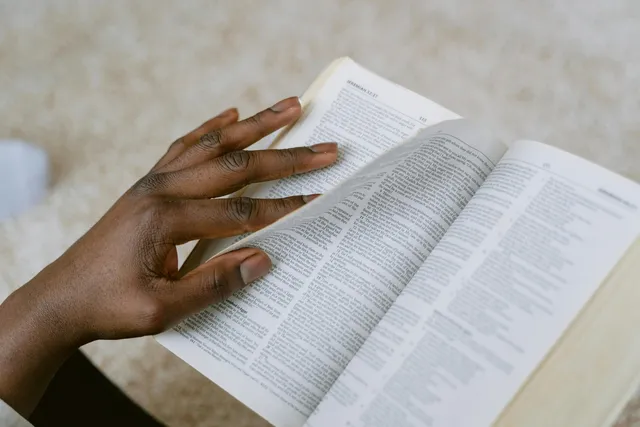
The Psalms are the heartbeat of ancient Israel's faith-a collection of songs and prayers that rise like incense from earth to heaven. They are words born in valleys and mountaintops, composed by shepherds and kings, saints and sinners. Within their lines, we hear the full range of human emotion: joy and despair, confidence and confusion, peace and pleading. To open the Psalms is to open the soul of God's people across generations-and perhaps to rediscover something of our own along the way.
The Songs That Shaped a Nation
Long before the Psalms became chapters in our Bibles, they were melodies echoing across Israel's hills. They were sung around campfires, whispered in exile, and shouted in temple courts. The Psalms were the hymnal of a people shaped by covenant, a nation learning to trust the faithfulness of Yahweh through seasons of abundance and desolation.
David's voice, the most famous among the psalmists, still rings with immediacy. But the Psalms represent a choir of hearts, not just a single singer. From Moses (Psalms 90) to Asaph, from anonymous Levites to exiles longing for Zion, *many voices converge in one divine symphony.* Each Psalms, in its own way, joins the same refrain: God is worthy of worship, even when the world feels unworthy of hope.
Poetry as Prayer
When we think of prayer today, we often imagine quiet monologues whispered to heaven. But the Psalms are prayers that breathe and sing, drenched in metaphor and rhythm. Their beauty lies not only in their words but in their honesty-unfiltered cries of the heart poured out before God.
The Power of Honest Words
There is a sacred permission found in the Psalms. We hear it when David laments, "Why are you downcast, O my soul?" (Psalms 42:5) or when the exiles cry, "How can we sing the Lord's Song of Songs in a foreign land?" (Psalms 137:4). The Psalms give voice to grief and protest, as if God invites His people to bring not only praise but pain into His presence. True prayer does not edit emotion-it offers it up for transformation.
By weaving poetry and prayer, the Psalms teach us that our words need not be polished to be heard. They need only be real. The imagery of the Psalms-the deer panting for water, the tree planted by streams, the shadow of the Almighty-opens our spiritual imagination. Each image draws us closer, giving form to feelings we often cannot name.
The Language of Worship
In the Psalms, worship is never passive. It is dynamic, responsive, full-bodied. The poets praise with cymbals and shouts, dance and silence, tears and triumphs. Worship, for ancient Israel, was the rhythm of life itself.
Psalms 150 captures this exuberance in its closing crescendo: every instrument, every breath, every creature joining in praise. But alongside this joy we find another kind of worship-the quiet, determined praise that rises from the dark. Praise in pain is perhaps the purest form of worship. When David sang from his cave or when Israel sang by the rivers of Babylon, their songs became acts of defiance against despair. Each note declared, "The Lord reigns, even here."
Worship in the Wilderness
Consider Psalms 63, written as David fled through the wilderness. He thirsts-not just for water, but for God Himself: "My soul thirsts for You, my flesh longs for You, in a dry and weary land." That wilderness Song of Songs reveals the essence of biblical worship: not performance, but pursuit. The psalmist longs for communion, not comfort. In that longing, we learn that worship is not limited to sanctuaries-it can bloom in deserts, exile, or even silence.
The Psalms as a Spiritual Mirror
One reason the Psalms remain timeless is that they mirror the complexity of our own hearts. Their language may be ancient, but their emotion is strikingly modern. We find ourselves in the words of the fearful, the grateful, the repentant, the hopeful. The Psalms reflect back our own humanity while drawing us toward the holiness of God.
When we read, "The Lord is my shepherd" (Psalms 23), we not only learn something about God's care-we feel known as sheep within His fold. When we confess with Psalms 51, "Create in me a clean heart," we encounter the mercy that still makes whole. The Psalms give us the language of repentance and renewal, helping us pray when we have no words of our own.
The Psalms and Jesus
The story of the Psalms finds its fulfillment in Christ, the true Singer and the ultimate subject of every Song of Songs. On the cross, Jesus Himself quoted Psalms 22: "My God, My God, why have You forsaken Me?" He sang the ancient pain of Israel-and through His suffering, turned lament into redemption. The Psalms, long before His birth, were already telling His story.
Christ in the Songs
Jesus embodied the faith the Psalms express. He lived as the Righteous One of Psalms 1, trusting and delighting in the law of the Lord. He fulfilled Psalms 2's vision of the anointed King, reigning not through conquest but through surrender. The Psalms of lament find their resolution in His resurrection, where mourning turns to dancing (Psalms 30). Every cry for deliverance, every hope of glory, finds its answer in Jesus.
When Christians pray or sing the Psalms today, we do so in Him and through Him. We join a chorus that spans millennia-echoing from David's harp to Christ's cross, from temple courts to modern churches. The Psalms become not only ancient poetry but living prophecy, breathed anew in the worship of God's people.
The Psalms as a Guide for the Soul
It's easy to treat the Psalms as mere art or liturgy. Yet throughout Christian tradition, they've also been used as a kind of spiritual map. Early believers memorized them, prayed them daily, and found in their rhythm a guide for communion with God. Monks recited all 150 Psalms weekly; ordinary believers turned to them in joy and sorrow alike. The Psalms train the soul to speak fluently the language of faith.
Praying Through Seasons
Each Psalms, in its way, corresponds to a spiritual season. There are Psalms of orientation-songs of steady trust in God's goodness (like Psalms 1 and 8). Then there are Psalms of disorientation, when life shatters and nothing feels secure (Psalms 13, 74, 88). Finally come Psalms of reorientation, where new joy rises from ashes (Psalms 30 and 145). In these movements we discover that the Psalms are not linear theology-they are lifelines through shifting tides of faith.
They remind us that believing does not mean never doubting, praising does not mean never grieving. Instead, the Psalms invite us into a rhythm of relationship: honesty before God that ripens into hope.
From Ancient Israel to Your Daily Life
The enduring gift of the Psalms is their accessibility. You don't need to be a scholar or a musician to enter their beauty. Whether read in the quiet of dawn, spoken through tears, or sung in fellowship, the Psalms are a place your heart can always find words.
When anxiety stirs, Psalms 46 reassures us: "God is our refuge and strength." When guilt weighs heavy, Psalms 32 whispers of forgiven joy. When gratitude overflows, Psalms 100 becomes our joyful shout. And when sorrow grips the heart, Psalms 34 promises, "The Lord is near to the brokenhearted." These ancient prayers become pathways for us today-connecting our modern lives to timeless grace.
Living the Psalms
To live the Psalms is to live awake-to see the sacred woven into the ordinary, the divine present in every breath. Through their verses, we learn that God hears the honest soul. We discover that worship is not confined to the temple or the Sunday morning gathering-it is the ongoing melody of faith that continues between the lines of our days.
The Psalms teach us that God welcomes the full range of our humanity and meets us within it. Whether we come to Him rejoicing or wrestling, whispering or weeping, He listens-and He answers. The same God who inspired Israel's poets still delights in the praise and prayer of His people today.
So open the Psalms. Read them slowly. Pray them honestly. Sing them freely. Let their rhythm shape your walk, and their truth kindle your hope. For in these ancient songs, heaven and earth still meet-and our hearts, like David's, can yet declare: "I will sing to the Lord all my life; I will sing praise to my God as long as I live."