The Psalms have always sung the language of the heart - joy and sorrow, wonder and lament, awe and trust. But woven through those songs is another voice, sometimes quieter but always present: the voice of creation. It is the rustle of trees clapping their hands, the roar of oceans proclaiming His majesty, the skies that declare His glory day after day. To read the Psalms attentively is to be invited into a divine symphony - one in which creation itself teaches us how to see, how to praise, how to live in right relationship with God and His world.
The Heavens as a Psalm Foretold
Psalms 19 opens with one of the most arresting declarations in Scripture: "The heavens declare the glory of God; the skies proclaim the work of his hands." The psalmist sees the natural world not as mere background but as God's first preacher. Before any sermon was spoken or any scroll unrolled, creation itself was already telling the truth - without words, yet with unmistakable eloquence.
What the psalmist recognizes is that the beauty of creation is intrinsically communicative. The world is not indifferent or inert; it is alive with God's artistry. The stars, the wind, the sweeping spans of light at dawn - all of these proclaim something about the Creator's nature. In a world of distraction and noise, perhaps this is one of the most countercultural lessons the Psalms teach us: that attention to creation can become an act of worship. Every sunrise is a fresh verse of praise.
Listening to the Sermon of the Sky
If the heavens declare, are we still listening? The psalmist invites us not just to look but to behold. The act of beholding - of sustained, reverent attention - is itself a spiritual discipline. When we slow down to study the patterns of the sky or the shading of a leaf, we enter into the habit of wonder. And wonder, in the theology of the Psalms, is the beginning of wisdom and worship alike.
From Dust to Dominion: Remembering Our Place
Psalms 8 speaks directly into the human dilemma: the tension between our smallness and our significance. "When I consider your heavens, the work of your fingers," the psalmist writes, "what is humanity that you are mindful of them?" He looks up at the night sky and feels humility; yet that humility turns to astonishment as he realizes God has crowned human beings with glory and honor.
This Psalms teaches that valuing creation begins by knowing our place within it - not above it but within it, entrusted with stewardship, not domination. Humanity's glory, the Psalms suggests, is not in subduing nature for our own ends but in mirroring God's care for it. We are made rulers over the works of His hands, but rulers in the sense of gardeners, caretakers, image-bearers reflecting the Creator's love into His creation.
To read Psalms 8 prayerfully is to feel both humility and responsibility: humility because we are dust, and responsibility because that dust has been breathed into by God Himself. Creation care is not a side project of faith - it is an act of obedience to the creation mandate and an echo of the psalmist's wonder.
Creation's Cry and Humanity's Hope
Not every Psalms presents creation as serene or untroubled. Many remind us that creation itself groans under the weight of human sin and brokenness. Psalms 104 portrays an ideal world in harmony - springs bursting forth, animals finding their food, trees flourishing under divine care. Yet Psalms 107 paints an aching contrast: storms, wilderness, devastating drought. These realities are not just meteorological; they are theological, revealing that when humanity rebels against God, creation itself bears the scars.
Still, even in these darker Psalms, there is hope. The psalmists never despair completely because the Creator is always also the Redeemer. He who commands the tempest can restore order again. He who sets boundaries for the seas can also still their waves. For the people of faith, this is not naïve optimism - it is a trust rooted in the enduring character of God. The Psalms remind us that creation's story, like humanity's, is headed toward renewal.
Creation as a Partner in Praise
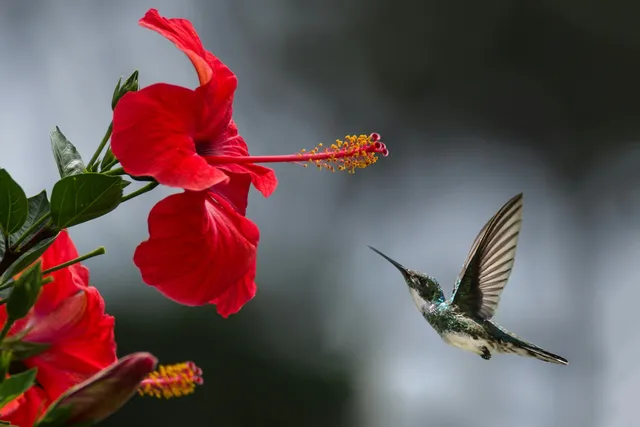
Psalms 148 is a crescendo of this theme. "Praise the Lord from the heavens," it begins, but quickly expands the choir: "Sun and moon, all you shining stars... you mountains and all hills, fruit trees and all cedars." It is as if the psalmist cannot help but enlist every voice that can possibly sound. In the psalmist's imagination, all creation is a symphony of praise, and humanity's voice is meant to join, not drown out, the chorus.
When we see the world this way, even mundane acts - gardening, recycling, protecting a waterway, or admiring a sunset without reaching for a camera - become small liturgies of praise. To care for creation is to continue the psalmist's Song of Songs.
The Earth Is the Lord's
Psalms 24 begins with one of the boldest declarations of ownership in all Scripture: "The earth is the Lord's, and everything in it." This single line reframes every conversation about our relationship with the natural world. Ownership belongs not to humanity but to God. We are tenants, not proprietors; caretakers, not conquerors.
The Psalms invites us to humility in our dominion. We walk on sacred ground because it was God's before it was ours. Every mountain, every ocean current, every field belongs first to Him. When we pollute or exploit, we deface what is His. When we steward wisely, we honor His name.
In practical terms, Psalms 24 calls people of faith to a posture of reverence that extends beyond the sanctuary walls. The earth itself becomes a cathedral, the shores and skies its stained-glass windows. Reverence in worship should flow seamlessly into reverence for the world God made.
Purity of Hands, Purity of Heart
The same Psalms asks, "Who may ascend the hill of the Lord? Who may stand in his holy place?" The answer: those with clean hands and a pure heart. This connection is not accidental. It suggests that right relationship with God involves tangible honesty ("clean hands") and inner integrity ("pure heart"). In our time, we might hear an echo here: righteousness cannot be separated from how we treat the earth we inhabit. The Psalms's spiritual and ecological dimensions are intertwined - to honor creation is a reflection of the purity God desires.
Creation's Rhythms and Our Spiritual Renewal
One of the most striking qualities of the Psalms is how they follow and celebrate the rhythms of the natural world - morning and evening, seedtime and harvest, storm and calm. Psalms 104, in particular, moves like a poetic field guide through creation's patterns: springs that give life, trees that harbor birds, moon and sun governing the day and night. It is a tapestry of gratitude.
When we live in tune with creation's rhythms, we rediscover something profoundly spiritual. Rest finds its model in the Sabbath woven into creation's order. Gratitude becomes instinctive when we remember the source of every breath and every meal. Many of the Psalms seem to teach that when our souls grow restless or dry, the remedy is often to return to creation - to listen again, watch again, remember again whose world this is.
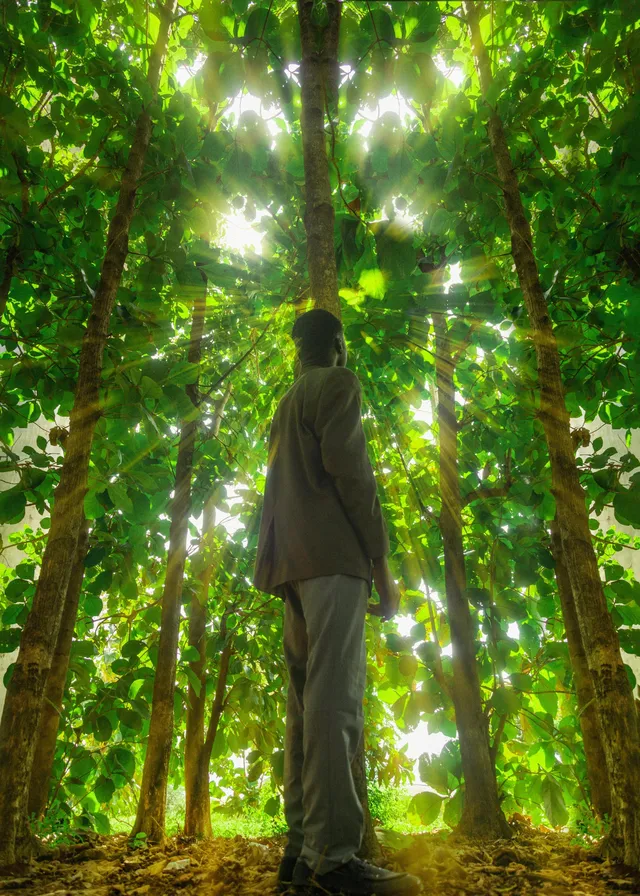
Modern life tempts us to escape these rhythms. We live under artificial light, work without season, and scroll endlessly through digital landscapes. The Psalms invite us back to embodied awareness. To watch the stars as David did is to remember scale; to hear the water's flow is to be reminded of baptism; to walk in the forest is to feel again what Eden might have been.
From Psalm to Practice
The real test of how the Psalms teach us to value creation arises when we carry their music into daily life. How does a Psalms-inspired love for God's world reshape our routines? It might begin in gratitude - the quiet words before a meal, not only for the food but for the soil, rain, and sun that made it grow. It might express itself in curated simplicity - choosing less to honor the God who gives enough. It might look like local compassion - joining a cleanup effort, planting a tree, supporting efforts that preserve the beauty others take for granted.
None of these actions earn divine favor; they are expressions of it. They are acts of praise, embodied and real. When the psalmist says, "Let everything that has breath praise the Lord," he does not exclude the very air we breathe. Creation's praise and ours are meant to be intertwined until the whole earth resounds with God's glory.
The Song Beneath All Things
Ultimately, the Psalms teach us that creation's value lies not simply in utility or beauty but in its role as a reflection of God's glory and a partner in His praise. The same God who formed the mountains also shaped the human heart to recognize beauty and respond with wonder. When we worship in tune with creation, our faith grows deeper, our lives more grounded, and our hope more resilient.
In a time when the earth itself seems exhausted - forests stripped, oceans strained, climates destabilized - the ancient Psalms remind us of an enduring truth: creation is not expendable; it is beloved. It was made good, sings still of its Maker, and awaits His renewal. Our task is not to silence that Song of Songs but to join in, to live in such a way that our voices harmonize with the world God so lovingly made.
So next time you lift your eyes to the heavens - whether to admire a sunrise or to marvel at the night sky - remember that you are surrounded by praise. The world itself is worshiping. Let it teach you again the joy of saying with the psalmist: "Let everything that has breath praise the Lord."