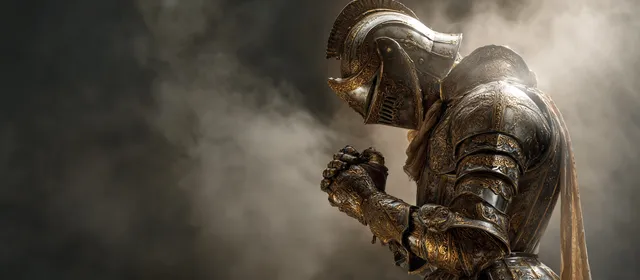
There's an old saying that faith means "believing without seeing." For many, that phrase paints faith as something fragile-like stepping into darkness, hoping something solid will catch you. But the Bible paints a far richer picture. Genuine faith isn't blind optimism or wishful thinking. It's not self-deception or denial of the facts. Faith looks steadily at the evidence of God's character, remembers His track record, and chooses to trust even when the next step isn't yet visible.
A Misunderstood Word
In everyday conversation, the word "faith" often gets reduced to a hazy feeling or a leap into uncertainty. Yet in Scripture, faith never stands alone-it's always directed toward Someone. The question is not simply, "Do you have faith?" but "In whom is your faith placed?"
When the writer of Hebrews defines faith, he says it is "confidence in what we hope for and assurance about what we do not see" (Hebrews 11:1). Confidence and assurance-those are not blind words. They arise from knowledge, from relationship, from evidence of things already experienced. Faith rests on the trustworthy character of God as revealed through His actions in history and through His Word.
Faith and Evidence Walk Together
There is a subtle but crucial distinction between blind faith and evidential faith. Blind faith insists on believing without reflection; evidential faith considers what is known of God and then trusts Him beyond what is yet known. This is the rhythm of believing hearts throughout Scripture.
Abraham's Example: Evidence on the Journey
When God called Abraham to leave his home and go to a land he had never seen, Abraham obeyed. On the surface, that may look like blind faith. But Abraham didn't trust a vague spiritual feeling; he responded to the voice of the God who had already spoken to him, shown Himself faithful, and entered into covenant with him. Every step Abraham took was a step deeper into relationship, not a step away from evidence. Past faithfulness became the evidence that sustained future trust.
Faith isn't bound to sight, but it's not disconnected from reality either. It builds upon what God has already revealed-the seen-and extends that trust into what is still unseen. The trajectory of Abraham's life points us to a God who is not asking us to close our eyes, but to look more deeply.
Jesus: The Center of Our Assurance
Throughout the Gospels, Jesus invites people not into blindness but into awareness. When John the Baptist's disciples came wondering if Jesus truly was the One, Jesus didn't say, "Just believe." He said, "Go and report what you hear and see: the blind receive sight, the lame walk, the lepers are cleansed..." (Matthew 11:4-5). He pointed them toward evidence-miracles that fulfilled prophecy and revealed the nature of God's kingdom coming near.
Even after His resurrection, Jesus met Thomas's hesitation with patience and understanding. Thomas wanted evidence before he would believe. Jesus provided it. Then Jesus gently blessed those "who have not seen and yet believe" (John 20:29). Notice that He didn't condemn inquiry-He simply showed that true faith transcends the need for physical proof because it trusts in a Person whose trustworthiness has already been displayed.
Faith Grows Through Relationship
Faith is not a static possession but a living relationship-one that matures over time. You might recall how in Mark's Gospel a desperate father cries out, "I do believe; help my unbelief!" That prayer captures the beautiful tension of faith based on evidence yet stretched beyond it. He believed enough to come to Jesus, having heard of His power and mercy. And yet, he still needed grace for the gap between knowledge and trust. Jesus met him there with both compassion and healing.
Faith is nourished by knowing God personally. It grows each time we choose to remember what He has done rather than fixate on what is currently unclear. Think of David facing Goliath: he didn't blindly hope for victory. He recalled how God delivered him from the lion and the bear-and therefore had reason to trust that He would deliver him again. Past encounters with God fuel present courage.
When Evidence Seems Hidden
Some seasons of faith are bright and full of clarity. Others feel like walking through fog. The Psalms are filled with cries of saintly believers who cannot see or understand what God is doing. "How long, O Lord?" "Why are You far from me?" These are not words of empty despair-they are the vocabulary of faith struggling to see in the dim light but still calling out to the One it remembers as faithful.
Faith Doesn't Deny the Darkness
When the evidence of God's goodness feels thin, faith doesn't pretend. It wrestles honestly while holding onto what has already been revealed. The cross itself is the supreme example. For the disciples, Good Friday looked like a failure-the evidence of divine power seemed gone. And yet, hidden within that moment was the greatest proof of God's love the world would ever see. The resurrection restored sight, yet even in the waiting, faith was not wasted.
God invites us to trust not blindly, but with eyes open to His promises, past actions, and unchanging heart. Even in silence, there remains evidence: the empty tomb, the transformed lives, the enduring hope of the Spirit within us.
The Mind and the Heart of Faith
Christian faith is not opposed to reason-it encompasses it. Jesus called His followers to love God with all their heart, soul, strength, and mind (Luke 10:27). Faith and intellect are not enemies; they dance together. When we study creation, history, Scripture, and experience, we gather evidence that points consistently toward the same truth: God is who He says He is.
The apostle Peter urged believers to always be ready to give a reason for the hope that is in them (1 Peter 3:15). Reasons and hope belong together. The reason does not replace the hope; it strengthens it. Our spiritual life is not sustained by arguments alone, but by daily trust grounded in real knowledge of God's activity-both in the world and within our own stories.
Everyday Evidence: The Testimony of Lives Changed
Some of the most powerful evidence for faith is found not in abstract proofs but in human hearts transformed. Every story of redemption, every reconciliation, every act of forgiveness speaks of a God who is alive and working. The history of the early church is saturated with courageous faith supported by visible fruit-believers who held to Christ through persecution, not out of blind loyalty, but because they had encountered the living Lord.
We see the same today: addictions broken, families restored, peace emerging in hearts that were once anxious and hard. These are not coincidences; they are quiet miracles-small yet steady confirmations that God is real, near, and faithful. Faith based on evidence does not need to shout; it simply lives and moves in harmony with the truth that has already proven dependable.
When Faith Becomes Sight
Ultimately, all faith points toward a future when it will no longer be needed. "For now we see only a reflection as in a mirror; then we shall see face to face" (1 Corinthians 13:12). Until that day, we live between vision and promise. Faith fills the gap by trusting the One who bridges it.
In that sense, faith is not blindness-it is foresight. It sees what is coming based on what has already been revealed. It prepares us to live courageously, to love sacrificially, to hope enduringly. Faith is less about closing your eyes and more about opening them to a deeper reality: the eternal reliability of God.
Walking It Out: Faith in Daily Life
How does this understanding shape our daily walk? It means we can step forward with holy confidence, even in uncertainty. When challenges come, we recall what God has already done in Scripture, in history, and in our own hearts. We rehearse His track record, allowing remembered evidence to steady today's trembling hands.
Practically, it can look like choosing prayer over panic, trusting His timing when our plans unravel, forgiving when it seems irrational, giving when it feels risky. Each act of obedience becomes both an expression and a witness of faith-an embodied way of saying, "I have seen enough to know You are trustworthy."
Faith Is Seeing with the Heart
Faith is not a blindfold-it's a window. Through it, we see the past faithfulness of God and the future promises of His kingdom. Our sight isn't yet complete, but it's clear enough to walk by. The more we know Him, the more evidence we gather, and the more natural it becomes to trust.
Faith, then, is both informed and inspired. It grows out of realities already witnessed and reaches beyond them toward the unseen glory ahead. It is rooted in evidence but blossoms in surrender.
The Steadfast Heart
Faith that is blind can easily break. But faith anchored in who God has revealed Himself to be-through His Word, His works, His Son, and His Spirit-will withstand any storm. It is not naïve hope but resilient confidence. It looks back and remembers; it looks forward and believes.
So, when you next find yourself at the edge of uncertainty, don't fear that your faith requires blindness. Instead, open your eyes wide-to Scripture, to God's history with His people, to your own story of His grace. Let all those evidences converge in your heart until trust feels like the most reasonable thing in the world.
And when you take your next step, you won't be stepping into darkness at all. You'll be stepping further into the light.