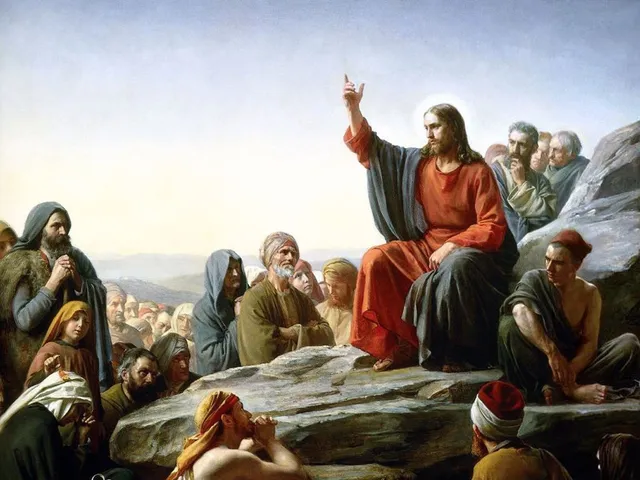
The phrase "Kingdom of God" is among the most profound and often repeated themes in Scripture. It sits at the heart of Jesus' preaching, saturates His parables, and forms the foundation of Christian hope. Yet for many believers, it can feel mysterious-something simultaneously present and future, visible yet hidden. What did Jesus really mean when He spoke about the Kingdom of God? And perhaps more importantly, what does it mean for us now, in the middle of ordinary life?
More Than a Place-A Reign
When we hear the word "kingdom," we might picture a location: castles, borders, and armies. But biblically, the Kingdom of God is not primarily a place-it is a reign. It is God's sovereign rule, His divine authority breaking into the world and into human hearts. The Greek word often translated as "kingdom," basileia, speaks more of dominion than geography. It is about who is ruling, not where they are ruling.
Jesus came proclaiming, "The kingdom of God is at hand" (Mark 1:15). To say it was "at hand" meant it was breaking in, near enough to touch, already emerging through His words, His healing, and His mercy. The blind saw, the lame walked, the poor heard good news-these were signs that God's reign was active. Through Jesus, heaven's rule was coming to earth.
The Kingdom Announced by Jesus
From the beginning of His ministry, Jesus declared that something extraordinary was happening: the long-awaited rule of God was arriving. The prophets had dreamed of a time when God would reign fully, when justice and peace would cover the earth. Now, Jesus stood among the people as the fulfillment of those hopes. He was both the messenger and embodiment of that Kingdom.
But His vision of God's Kingdom often clashed with people's expectations. Many in first-century Israel longed for a political restoration-a freedom from Roman occupation, a revival of national pride. Yet Jesus spoke of a kingdom not of this world, a reign that does not advance by force or fear, but by love, forgiveness, and truth. In His Kingdom, the poor were honored, the meek exalted, and the proud invited to yield.
The Upside-Down Kingdom
Everything about the way Jesus described the Kingdom turned worldly values on their head. "The last shall be first," He said; "blessed are the poor in spirit," "love your enemies." These are not the principles of earthly power-they are the patterns of grace. The Kingdom of God, in Jesus' teaching, is a radically different society, one where humility and mercy are the true measures of greatness.
The Kingdom is wherever God's will is done. When a heart forgives, a generous act replaces greed, or a life turns from self to service-there, the Kingdom shines through. It may be hidden, like yeast in dough or a mustard seed in the soil, but it is active and growing, changing everything it touches.
Already and Not Yet
One of the most mysterious truths about the Kingdom of God is that it is both "already" and "not yet." Jesus spoke of it as something present-"the kingdom of God is among you" (Luke 17:21)-yet He also taught His disciples to pray, "Your kingdom come." The tension between these two statements captures the dynamic of Christian life itself.
Through Jesus' life, death, and resurrection, the Kingdom has already begun. Sin and death have been defeated; salvation has come. Wherever people live under the lordship of Christ, wherever His Spirit reigns in hearts, the Kingdom is real and present. Yet the full realization-the day when all creation is made new-is still to come. We live in that sacred tension, in the overlap of two ages: the fallen world that still groans and the coming world that is breaking in, glowing at the edges.
Living in the In-Between
This "already-but-not-yet" reality gives shape to our discipleship. It reminds us that faith is not passive waiting but active participation. We are called to live as citizens of heaven even while dwelling on earth, to embody the values of the Kingdom in a world that often resists them. Every act of compassion, every prayer for peace, every stand for justice is a way of aligning our lives with the reign of God.
As Paul wrote, "The kingdom of God is not a matter of eating and drinking, but of righteousness, peace, and joy in the Holy Spirit" (Romans 14:17). It is a spiritual reality, yet it expresses itself in deeply practical ways-in how we treat people, how we respond to need, and how we hope when the world feels dark.
Parables: Windows into the Kingdom
Jesus often chose stories-parables-to describe the Kingdom, using simple images to reveal profound truths. He compared it to a mustard seed, a hidden treasure, a pearl of great price. Each parable opens a window onto a different facet of the Kingdom's nature.
The Mustard Seed and the Leaven
The parable of the mustard seed (Mark 4:30-32) shows how something small and seemingly insignificant can grow into something magnificent. The Kingdom begins humbly-in a manger, in the hearts of common fishermen-but it expands beyond measure, offering shelter to nations. Likewise, the parable of the leaven (Matthew 13:33) teaches that the Kingdom works quietly but powerfully, transforming everything from within. God's work often begins unnoticed, but it cannot be stopped.
The Hidden Treasure and the Pearl
In the parable of the hidden treasure and the pearl (Matthew 13:44-46), Jesus shows that the Kingdom is of incomparable worth. Finding it is like discovering something so precious that all else fades in significance. These stories invite us to revalue everything-to count the cost joyfully, knowing that to belong to God's Kingdom is to find the treasure we were created for.
Who Belongs to the Kingdom?
Jesus made clear that entrance into the Kingdom of God is not based on titles, status, or heritage-it is an issue of faith and surrender. "Unless you are born again," He told Nicodemus, "you cannot see the kingdom of God" (John 3:3). This is not about religious performance but a spiritual rebirth-a yielding of the heart to the reign of Christ.
The Kingdom belongs to those who let God rule within them. The poor in spirit, the pure in heart, the merciful-these are the ones Jesus called blessed. The doorway is low so that only the humble can enter. And yet, it is a Kingdom of radical welcome: tax collectors, sinners, the outcasts and the overlooked all found a home there. Grace throws the gates wide open.
Power and Presence
The Kingdom of God is not only about eternal hope but present power. When Jesus healed the sick or forgave sins, He wasn't just performing miracles-He was demonstrating the reality of God's reign breaking into human suffering. Every act of deliverance was a foretaste of the restoration yet to come.
The presence of the King means the presence of the Kingdom. That's why, after His resurrection, Jesus could tell His followers that all authority in heaven and on earth had been given to Him. The risen Christ now reigns, and through the Holy Spirit, that reign continues to spread-not through conquest, but through love, truth, and service.
The Coming Glory
Even as we experience glimpses of the Kingdom now, the Bible promises a day when it will come in full. The book of Revelation envisions a future in which "the kingdoms of this world become the kingdom of our Lord and of His Christ." On that day, every tear will be wiped away, injustice will be no more, and God's glory will fill the earth like waters cover the sea. That is the ultimate hope toward which all creation moves.
In the meantime, we pray the prayer Jesus taught us: "Your kingdom come, Your will be done, on earth as it is in heaven." Each time we say those words, we are aligning our hearts with God's great purpose. We are inviting His reign to deepen in us-and through us-in the middle of real life, in our homes, workplaces, and relationships.
Living as People of the Kingdom
So what does it look like, practically, to live as citizens of the Kingdom of God here and now? It begins with allegiance. To declare "Jesus is Lord" is to renounce competing loyalties-to put His way above all other ways. It means loving when it's costly, forgiving when the world says to retaliate, seeking peace where there is conflict. It means trusting that the hidden work of grace ultimately triumphs over the noise of sin and chaos.
Kingdom living is not about escape from the world-it's about transforming it. Wherever believers bring compassion to the broken, beauty to the barren, and hope to the hopeless, the Kingdom is advancing. It may come quietly, like dawn, but it changes everything.
A Kingdom Within and Among Us
Jesus said the Kingdom of God is within us and among us. That's a profound mystery to ponder. It means that the reign of God starts in the heart, but it doesn't stay there. It spreads outward, shaping families, communities, and even cultures. To seek the Kingdom, as Jesus instructed, is to align every part of life-our desires, our decisions, our priorities-with God's will.
Maybe that's why Jesus also said, "Seek first the kingdom of God and His righteousness, and all these things will be added to you" (Matthew 6:33). When we center our lives on His rule, everything else falls into its proper place. The anxiety of striving gives way to the peace of trust. The scattered pieces of life begin to fit together under the gracious government of God.
The Kingdom That Cannot Be Shaken
The Kingdom of God is not a distant ideal-it is a living reality, moving quietly through the world, transforming hearts one by one. It began with the words and works of Jesus, continues through the Spirit-empowered church, and will one day fill the universe in glory. To follow Christ is to live in anticipation of that fullness while already tasting its joy.
Every time justice triumphs over cruelty, every time mercy overcomes pride, every time faith conquers fear, the Kingdom has drawn near. And even in our weakness, the King reigns. He is at work in unseen ways, gathering, healing, renewing all things. That's the hope we carry into every day-that the reign of God, begun in Christ, will one day be complete, and we will stand in the light of a Kingdom that cannot be shaken.