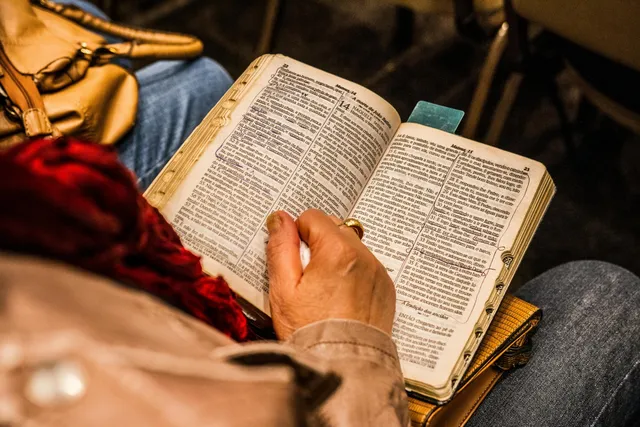
When we think of "education," we might picture classrooms, chalkboards, or university diplomas. But Scripture offers a broader and far deeper vision. The Bible may not describe formal schools as we know them today, yet it speaks powerfully about learning, wisdom, and the lifelong call to be taught by God. Education-seen through a biblical lens-is not simply about acquiring knowledge; it's about formation of the heart, mind, and character in harmony with divine truth.
The Roots of Learning in the Divine Story
From the very first chapters of Genesis, we are introduced to a God who teaches. He speaks, explains, commands, and walks with His people. Adam learned directly from the Creator how to tend the garden and name the animals. Knowledge, then, was never meant to be godless. It began in relationship-a conversation between God and man. In Eden, the tragedy started when Adam and Eve sought knowledge apart from God's guidance. The problem was not their curiosity; it was the desire to know without the Teacher. Even here, we see that true education in the biblical sense is relational and moral, not merely intellectual.
Throughout the Old Testament, teaching and learning are woven into the covenant community. God commands His people to pass down His words: "You shall teach them diligently to your children" (Deuteronomy 6:7). This wasn't a casual suggestion. Education, for Israel, was the heartbeat of covenant faithfulness. Every meal, every journey, every festival was a moment for instruction-a living classroom of faith.
Wisdom as the Bible's Curriculum
Much of Scripture's educational vision is captured in one radiant word: wisdom. The Book of Proverbs is essentially a curriculum on godly living. It begins with an unmistakable mission statement: "The fear of the Lord is the beginning of knowledge" (Proverbs 1:7). In that short phrase, we find the cornerstone of biblical education. To know rightly, one must begin with reverence. Every pursuit of knowledge that forgets God may accumulate facts but loses wisdom.
Education and Character
Biblical wisdom trains not just the mind, but the soul. It shapes discernment, encourages humility, and calls learners to moral responsibility. Proverbs paints education as a lifelong mentorship, often expressed in the voice of a father instructing his child. "Listen, my son," echoes again and again. The vision is deeply relational and personal; it is education that happens in love and accountability, not in detachment.
The Hebrew Model of Learning
Among ancient Israel, education was not confined to temples or schools but lived out in homes, at tables, and within the rhythms of communal worship. The faithful were learners in the broadest sense-students of God's Word and works. Scribes and prophets became teachers, passing down stories, laws, and songs. Learning was immersive, rooted in memory, repetition, and devotion. It was education in the service of transformation.
Jesus: The Master Teacher
The educational thread running through Scripture finds its full expression in Christ, who is often addressed as "Rabbi"-teacher. His ministry revolved around teaching: in fields and synagogues, from boats and mountaintops. Yet His lessons went far beyond academic argument. Jesus taught through stories, questions, and life itself. His classroom was wherever hearts were open. He did not just relay information; He formed disciples.
Consider how He taught His followers to see the Kingdom of God not as a far-off abstraction but as something as near as a mustard seed, as precious as a pearl, as hidden and real as yeast in dough. Christ's education invited transformation-a shift from ignorance to insight, from blindness to sight. His words still train believers today, calling us to a continual renewal of heart and understanding.
The Curriculum of the Kingdom
Jesus' approach to teaching revealed something revolutionary: to follow Him is to enter into a lifelong apprenticeship. Knowledge of God is never static. In John 8:31-32, He tells His listeners, "If you abide in my word, you are truly my disciples, and you will know the truth, and the truth will set you free." Education here is dynamic, relational, and liberating. Discipleship is the divine classroom where freedom and knowledge intertwine.
When we view education through this lens, we see that every act of learning becomes sacred when directed toward Christ. He reorients what we know and how we know, redeeming even our intellect for His glory.
The Early Church and the Legacy of Learning
After Jesus' resurrection, the early Church carried forward His educational mission. Acts 2 describes how believers devoted themselves to "the apostles' teaching." The first Christians were a learning community-gathering not just for fellowship and prayer but for formation in truth. They studied the Scriptures, retold the story of Jesus, and encouraged one another in faith and practice.
Over the centuries, this vision profoundly shaped Christian civilization. Monasteries became centers of reading, writing, and scholarship. Cathedrals contained schools where Scripture and the liberal arts were studied side by side. The Church's reverence for learning inspired the founding of universities across Europe. Even literacy itself was preserved and promoted largely through Christian devotion to the Word of God.
Yet the core motivation remained spiritual: education served the larger goal of knowing and loving God more deeply. True Christian learning was never for prestige or power, but for service and discipleship.
Learning as an Act of Worship
One of Scripture's subtle truths is that seeking understanding can itself be a form of worship. When we study, reflect, or wrestle with truth under God's guidance, we mirror the Creator who made us thinking, searching beings. The Psalmist prays, "Teach me your statutes" (Psalms 119:12), expressing a beautiful humility: a learner's heart before the divine Instructor.
In daily life, this humility might look like asking for wisdom in our decisions, studying Scripture with attentiveness, or even approaching our professional and academic pursuits with integrity and wonder. Every field of study-science, art, business, or literature-becomes, when approached with faith, another doorway into the knowledge of God's creation.
Education Beyond the Classroom
We sometimes limit the word "education" to school settings, but the Bible invites a larger view. The Spirit of God continues to teach us in every moment of life: through Scripture, through hardship, through the quiet conviction of conscience. Jesus promised that the Holy Spirit would "teach you all things" (John 14:26). This divine teaching continues wherever hearts are receptive. Every moment of spiritual growth is, in truth, a lesson in God's ongoing classroom.
Challenges of Modern Learning
In our age of endless information, the biblical perspective on education feels both ancient and startlingly relevant. Knowledge is abundant, yet wisdom is scarce. We are well-informed but not always well-formed. The Bible reminds us that education without moral and spiritual orientation can become fragmented-a tower of Babel built to our own glory.
But when we anchor learning in reverence, compassion, and truth, it becomes a means of grace. Christian students, teachers, and parents today have an opportunity to restore learning to its sacred purpose: not pride, but participation in God's wisdom and redemptive work. Education that begins and ends in love is what the Bible calls wisdom.
Growing as Lifelong Learners in Faith
Even in old age, the biblical vision never suggests that we have "graduated" from God's school. Moses was still learning on the mountain. Paul, near the end of his ministry, longed to know Christ more fully. The Scriptures continually portray the righteous as those who remain teachable, whose delight is in the "law of the Lord" and who meditate on it day and night (Psalms 1:2). The heart of a Christian education is therefore a learner's posture before God: curious, humble, and always willing to be changed by the truth.
Perhaps the greatest testimony of biblical education is transformation-not a diploma, but a renewed mind. Paul's exhortation in Romans 12:2 serves as the Church's enduring educational motto: "Be transformed by the renewal of your mind." This renewal is the Spirit's ongoing work in us, turning understanding into obedience and knowledge into love.
Redeeming the Love of Learning
So, is education mentioned in the Bible? Not by name perhaps, but everywhere by nature. From Genesis to Revelation, Scripture reveals a God who teaches, a creation designed for discovery, and a people called to be lifelong learners of divine truth. The call is not simply to know-but to grow, to walk in wisdom, and to reflect the mind of Christ.
Wherever we are studying, working, or teaching, we stand in sacred territory when our learning is offered to God. Every page read, every idea explored, and every question asked can become a prayer if done in reverence. True education, as the Bible reveals, is not about mastering information but about being mastered by the truth. And in that journey of learning, we discover the Teacher who has been patiently guiding us all along.