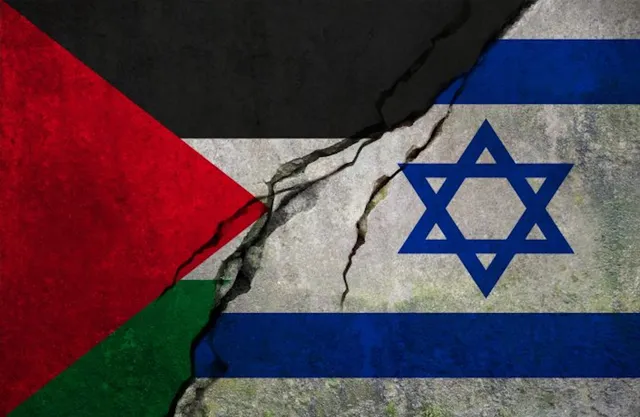
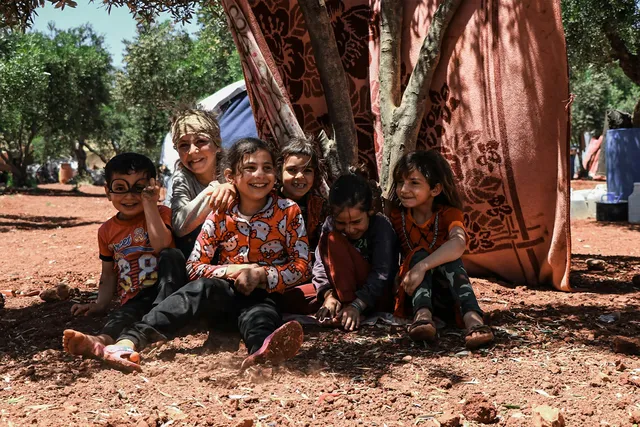
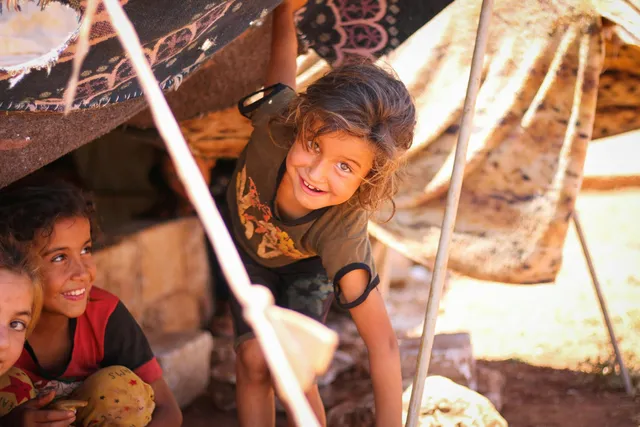
When news headlines erupt with violence, when nations rage and war drums sound once again, Christians are often left with aching hearts and holy questions. How should followers of Jesus-people called to peace, mercy, and truth-respond when the world tears itself apart? The tension is not new. From the earliest days of the church, believers have wrestled with their place in a violent world, struggling to reconcile the commands of Christ with the chaos of human conflict.
The Weight of a Broken World
War forces us to face what we'd rather avoid: that sin's fracture runs through every nation, every ideology, and every human heart. When we see the ruin of cities and the displacement of families, we are reminded that creation itself groans for redemption (Romans 8:22). In a world still marked by rebellion against God, conflict seems inevitable. Yet Christians are not merely spectators-we are called to be witnesses of a different kingdom, a kingdom defined not by conquest but by compassion.
Jesus lived in occupied territory, under the shadow of Roman oppression. He saw the injustice, the cruelty of empire, and the yearning for political liberation-and yet His response was neither armed revolt nor naïve withdrawal. He brought an entirely new way to live: to love enemies, to bless persecutors, to overcome evil with good. It was a way that confounded Rome and still confounds us today.
Followers of the Prince of Peace
To be a Christian in times of war is to remember whose footsteps we follow. The prophet Isaiah proclaimed the coming of the Prince of Peace (Isaiah 9:6). And when Christ declared, "Blessed are the peacemakers, for they shall be called children of God," He wasn't speaking metaphorically-He was describing the family resemblance of heaven.
But peace doesn't always come easily. It's not passivity or avoidance. Biblical peace is active, forceful, redemptive-it reconciles enemies, not merely silences them. Peacemaking often hurts. It means interceding, forgiving, speaking truth to power, and standing in the gap for the suffering. It takes courage to pray for both the victim and the aggressor, for both the attacked and the attacker. Yet this is precisely the kind of prayer the gospel compels.
When Justice and Peace Seem to Clash
In times of armed conflict, Christians often find themselves torn between compassion for the innocent and the cry for justice. Can peace be pursued while defending what is right? Throughout history, theologians have wrestled with the idea of "just war," acknowledging the difficult reality that sometimes, restraining evil requires strength. However, even when force is used, the Christian heart must never delight in destruction. We weep for every casualty, we grieve for every enemy, we remember that behind every uniform is a soul Christ came to save.
The call of Jesus resists easy answers. It presses deeper into motives and hearts. Are we seeking vengeance, or longing for redemption? Does our involvement-whether in speech, prayer, or action-reflect love for neighbor and obedience to God?
Living as Ambassadors of Reconciliation
Paul wrote that God has entrusted us with "the ministry of reconciliation" (2 Corinthians 5:18). In times of war, that calling becomes luminous against the darkness. Christ Himself reached across the greatest possible divide-holy and sinful, Creator and creation-and made peace by His blood. That is the peace we carry wherever the world's dividing lines are drawn.
Reconciliation begins in the heart. Before it can happen between nations, it must happen in souls. It looks like forgiving offenses, healing memories, and refusing to let cynicism take root. It also involves embodying peace in tangible ways: supporting refugees, aiding the wounded, advocating for policies that preserve life, and comforting those who grieve. When Christians step into broken places with Christlike love, they reveal that another kingdom is already breaking in.
Prayer as Resistance
It may sound quiet, even inadequate, but prayer is one of the most powerful forms of resistance against the spirit of hatred. When believers lift up both sides of a conflict in prayer, they declare that no human power, ideology, or weapon will have the final word. Prayer realigns our vision with heaven's perspective. It dissolves fear, softens anger, and reminds us that history belongs to God, not to generals or governments.
Intercessory prayer also shapes our hearts to act rightly. It prevents compassion from freezing over and equips us to offer tangible hope: feeding the hungry, sheltering the displaced, raising funds for relief, or simply listening to a story with empathy. Prayer moves us to become answers to the very cries we lift before God.
Choosing Hope in the Midst of Horror
How does one keep hope alive when the news shows rubble and ruins, when conflict seems endless and reconciliation impossible? The cross stands as the Christian's answer. On that dark day outside Jerusalem, injustice, violence, and fear all seemed victorious-yet resurrection was waiting on the other side. The cross teaches us that God redeems even what the world deems irredeemable. No war, however brutal, can snuff out His purposes.
Hope isn't a blind denial of reality; it's the steadfast confidence that Christ will make all things new. This hope empowers believers to keep building, to keep comforting, to keep imagining a healed world even when we witness its scars. Christians can be the stubborn voices of resurrection in the ruins, refusing to let despair define the story.
The Power of Small Acts
Often, believers wonder what difference their individual response can make. The truth is, every act of mercy reverberates beyond its moment. When a church shelters displaced families, when a believer writes a letter of encouragement to someone serving overseas, when communities gather to pray and give-it's a testimony that the kingdom of God is at hand. The early church changed the Roman Empire not by armies but by compassion, patience, and sacrificial love. The same Spirit that worked in them works in us.
Guarding the Heart
Amid outrage, propaganda, and political debates, perhaps one of the hardest disciplines is guarding our own hearts from hatred. War feeds on fear and anger, but the gospel calls us to stand apart from those flames. Proverbs reminds us that "above all else, guard your heart, for everything you do flows from it" (Proverbs 4:23). We guard our hearts not by disengaging, but by staying rooted in Christ's presence-worshipping, forgiving, listening to the Spirit's quiet voice more than the noise of commentary and conflict.
Guarding the heart also means discerning our consumption of news and rhetoric. Do our words inflame division, or do they plant seeds of peace? Are we being discipled more by our favorite commentators than by Christ? The fight for peace begins within us long before it transforms the world around us.
A Kingdom That Cannot Be Shaken
History's wars remind us that every empire eventually falls, every weapon rusts, every border shifts-but the kingdom of Christ endures. Our ultimate allegiance is not to any flag but to a King whose rule is everlasting. When we love, give, and serve in His name, we bear witness to a dominion that will never be toppled.
Jesus told His followers that in this world they would have trouble-but to take heart, for He had overcome the world (John 16:33). That victory is not abstract; it is the undercurrent of hope sustaining believers in war zones, refugee camps, and quiet prayer rooms across the globe. It assures us that while nations may rage, the Lamb still reigns.
Living Peace in Daily Life
We may not all face the direct horrors of war, but conflict finds us in smaller ways every day-in workplaces, families, and communities. The principles that guide global peace also guide our daily discipleship. Forgiveness, humility, gentleness, prayer, and service are battlefield strategies for the Christian life. Every time we choose reconciliation over resentment, truth over gossip, compassion over indifference, we resist the world's violence and echo the peace of Christ.
Peace begins where obedience begins-in the surrendered heart that says, "Jesus, have Your way in me." From there it spreads outward, like ripples across water, transforming not only relationships but entire communities.
Shining Light in the Darkness
War will always test our convictions. Yet if we listen closely amid the clamor, we still hear the quiet call of the Carpenter from Galilee urging us to love one another, to pray for those who persecute us, and to embody a peace the world cannot give. The church's witness in times of conflict is one of its most powerful testimonies. When believers serve their enemies, when they choose mercy over vengeance and hope over hate, the very heart of God is revealed.
So how should Christians respond to war and conflict? With tears, prayers, and open hands. With courage rooted in Christ. With steadfast love that refuses to despair. We become living reminders that light still overcomes darkness-that the Prince of Peace still reigns-and that one day, every sword shall indeed be beaten into a plowshare, and every heart will finally rest in His peace.