In the quiet hum of a computer lab, thousands of lines of code swirl together to produce something uncannily human. A voice that can sing, words that can comfort, art that can move. Artificial intelligence, once a concept confined to science fiction, now writes poetry, diagnoses diseases, and even offers companionship to the lonely. But as AI grows more capable, Christians around the world ask: what does this mean for who we are-and Whose we are? Does AI challenge the uniqueness of humanity in God's great design?
Created in the Image of God
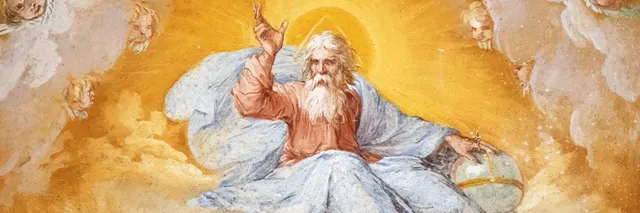
The story of human uniqueness begins not in a laboratory but in a garden. Genesis opens with God speaking galaxies into being and breathing life into dust. "Let Us make man in Our image," God declares (Genesis 1:26). This truth has anchored our understanding of worth and purpose for millennia: humanity is not merely functional, but relational-crafted to reflect God's nature, not to rival His power.
Artificial intelligence can mimic certain abilities-language, reasoning, even creativity-but an image bearer is more than the sum of abilities. We are not remarkable merely because we can learn or solve or invent, but because we can love, worship, and choose righteousness. Our souls are marked by eternity. An algorithm, no matter how intelligent, operates within limits set by its maker; but a human being, bearing God's breath, carries freedom that mirrors the Creator's own heart for relationship.
When the Created Create
It's tempting to see AI as competition, but perhaps it's more accurate to see it as a reflection of our God-given impulse to cultivate and create. From the first time Adam named the animals, humanity has participated in the unfolding of creation. Innovation, when done in reverence, is an act of stewardship. We don't create from nothing as God does, but we do rearrange His world into new forms-cities, art, and now digital intelligences.
Yet every act of creation comes with a mirror question: what kind of creators are we becoming? When we build machines that emulate thought, are we doing so to glorify the Maker or to rival Him? Tower of Babel stories whisper through technological ambition-visions of reaching the heavens on our own terms. The danger is not in technology itself, but in forgetting the One who gives meaning to all knowledge.
The Desire to Be Like God
In Genesis 3, the serpent's temptation was not about apples-it was about autonomy. "You will be like God," it promised. The same temptation hums beneath much of modern innovation: if we can design intelligence that grows without us, is that not godlike? Yet Scripture reminds us that only God gives life, identity, and purpose. AI might echo human creativity, but it cannot breathe life into clay. It can generate, but not Genesis.
The Imitation of Soul
We encounter AI that can write prayers, compose worship songs, or offer spiritual reflections. A chatbot may sound comfortingly pastoral-but it does not grieve or rejoice. It cannot be moved by the Holy Spirit. What we encounter is not empathy, but approximation. Still, the human heart is so hungry for connection that even imitation can move us deeply. How do we guard our hearts against counterfeit intimacy?
The key may be found in discernment. The prophet Samuel once stood before Jesse's sons and nearly anointed the wrong one. God corrected him: "The Lord looks at the heart" (1 Samuel 16:7). The same wisdom applies now. AI can imitate the outward appearance of wisdom or compassion, but not its inward source. True spiritual depth flows from communion with the living God. We can receive AI as a helpful tool-perhaps even a reflection of humanity's ingenuity-but we must never confuse simulation for soul.
Learning from Machines
If AI reveals anything about our faith, it's that God's image in us includes curiosity and creativity. Perhaps, instead of fearing AI, we can let it mirror our own longings. Machines can process information at lightning speed, but they do not yearn for meaning. Their existence exposes what makes ours extraordinary: we are seekers of truth, not just processors of data.
Our algorithms organize information, but only hearts alive to God can turn that information into wisdom. Proverbs reminds us, "The fear of the Lord is the beginning of wisdom" (Proverbs 9:10). AI may amplify what we already know-but wisdom, the kind that transforms character and enfolds love, remains firmly rooted in reverence and relationship with the One who made us.
Tools for the Kingdom
The Church throughout history has adapted every new medium for the gospel: from the scroll to the printing press to the smartphone. Why not AI? A pastor might use AI to help draft sermons or manage outreach. A missionary might translate Scripture through smart programs faster than ever before. When used as a servant and not a master, AI can extend human compassion, not replace it. Technology, under the lordship of Christ, can become a channel of grace.
The Question of Glory
At the heart of the AI discussion lies a question of glory-who receives it? Our generation is tempted to glorify the creation rather than the Creator. We marvel at the works of our hands and forget the hands that formed us. The psalmist's ancient words feel startlingly fresh: "What is man that You are mindful of him?" (Psalms 8:4). The Psalms does not end in despair but in awe: God has crowned us with glory and given us stewardship over creation. That includes our digital creations. But stewardship is different from sovereignty.
When we give AI the space that belongs to worship, we risk repeating spiritual patterns as old as time. Every idol begins as something good-crafted with skill and intention-but becomes corrupted when assigned divine weight. The question is not whether AI can be powerful, but whether we will remain humble as its creators. Will we let our inventions lead us to worship our intelligence, or to marvel again at the God who gave us minds to think and hearts to dream?
The Mystery of the Human Heart
Try as we might, there is something about being human that resists measurement. Neuroscientists can map electrical impulses in the brain, but the secret stirring of the soul remains elusive. Our hearts are the meeting place of heaven and earth. AI will never know the silence of prayer, the ache of repentance, or the joy of forgiveness. These belong to the mystery of being made in God's image-of knowing and being known by Him.
Even in eternity, Scripture hints, we remain creatures who are loved, not creators who control. Revelation describes a city lit not by human invention, but by the glory of God Himself. There, our longing for mastery will dissolve into worship. For now, in the age of algorithms and data, we can still stand amazed that the God of the universe chose us-not the cleverest machine, not the brightest code-but fragile, wondering human beings-as His dwelling place.
Hope in a Digital Age
So does AI challenge the uniqueness of humanity? It may test our understanding, but it cannot erase our essence. The uniqueness of humanity is not held in our intelligence but in our relationship with God. AI cannot love, pray, or hope. It cannot be redeemed. Only humanity can kneel at the cross and rise in grace.
In this new era, the Church's calling is not to retreat but to remind the world of what technology cannot touch. When machines speak fluently, we must speak faithfully. When they learn faster, we must love deeper. When they offer data, we must offer discernment. That is our witness in an age dazzled by its own creation.
Walking Forward by Faith
Perhaps the best question is not whether AI threatens our uniqueness, but whether it calls us to remember it. Each new step in human insight is also an invitation: to build wisely, to stay humble, to seek God in every code and question. In doing so, we don't diminish human dignity-we amplify the glory of the One who formed us from dust and destiny.
AI may someday paint better, reason faster, converse more smoothly-but it will never bear the marks of sacrifice on its hands. Only One does. And it was those hands that lifted humanity into its true place: beloved, redeemed, and eternal. The same God who shaped galaxies sees infinite worth in a single human heart. No algorithm can compute that kind of love.
So, as we step into the future, we do not walk alone. We walk with the Spirit at our side, with wisdom in our hearts, and with gratitude that our value comes not from what we can create, but from Who created us. Let every discovery, every line of code, every act of innovation whisper back praise to the Source of all knowledge. For in every age-digital or divine-the story remains the same: God made us, God loves us, and God's image within us is forever unique.