For centuries, the Bible has stood as both a sacred text of faith and a remarkable record of ancient history. Yet, in a modern age that often demands proof, countless believers have wondered: Do the discoveries of archaeology support the truths of Scripture? The answer, in many inspiring ways, is yes. Time and again, the stones of the ancient world have cried out-quietly, patiently-confirming details, places, and people named in God's Word. Each find may not prove every miracle, but together they form a mosaic of faith, history, and divine continuity that underscores the reliability of Scripture and reminds us of the God who is Lord over both time and space.
The Land Beneath the Bible
Every time an archaeologist's trowel breaks new ground in Israel, Jordan, or Egypt, it touches not just soil but story. The Bible is rooted in real geography-mountains, deserts, rivers, and cities that shaped the lives of Abraham, David, and Christ Himself. Archaeology gives us a glimpse beneath the surface, revealing the traces of these lives and worlds long buried yet miraculously preserved.
The beauty of biblical archaeology is how it bridges the ancient and the present. To walk through the ruins of Jericho, where the walls collapsed as the Israelites advanced (Joshua 6), or to stand amid the gate of Lachish that saw the armies of Assyria, is to stand within the geography of faith. These are not mythic realms invented to make a moral point; they are dusty, measurable places that speak of God's covenant in human history.
The City That Fell: Jericho's Unearthed Testimony
One of the most discussed discoveries in the history of biblical archaeology is the ancient city of Jericho. The Bible describes the miraculous fall of its walls after Israel's silent march and trumpet blast. Skeptics once dismissed this story as legend-until excavations began to tell their own story.
Kathleen Kenyon and the Walls of Bronze Age Jericho
In the mid-20th century, British archaeologist Kathleen Kenyon led meticulous digs at Tell es-Sultan, the mound that marks ancient Jericho. While her early interpretations sparked debate, subsequent reexaminations of pottery, grain storage, and fallen brick layers pointed to a dramatic destruction around 1400 B.C.-precisely in line with the biblical timeline for Joshua's conquest. Most striking were indications that the city fell rapidly, its walls crumbling outward. This was unusual; siege walls almost always tumbled inward. Perhaps, as Scripture says, God really did cause the walls to fall flat (Joshua 6:20).
Jericho's ruins whisper of divine reality-that even stones remember the day God's promises stood unquestioned before His people.
The House of David and the Tel Dan Stele
For generations, some critics argued that King David was merely a legend, a poetic invention to glorify national history. Then, in 1993, in the northern reaches of Israel, something remarkable came to light. A team of excavators at Tel Dan unearthed a broken basalt stele inscribed by an Aramean king celebrating victories over "the House of David." It was the first extra-biblical reference directly confirming the existence of David's royal dynasty.
The Tel Dan inscription is small-a handful of lines carved over 2,800 years ago-but its impact was seismic. It verified that David was no symbolic name, but a real king who established a lineage and a kingdom whose memory extended far beyond Israel's borders. The stele, now housed in the Israel Museum, stands as tactile evidence that Scripture's portrait of early Israel reflects actual human history, not ancient fiction.
Hezekiah's Tunnel: Water, Faith, and Engineering Genius
In the pages of 2 Kings 20 and 2 Chronicles 32, we read of King Hezekiah's preparations for the Assyrian siege of Jerusalem. One remarkable feat was his redirection of water through a secret tunnel that safeguarded the city's supply from enemy attack. Today, that very tunnel can be walked from the Gihon Spring to the Pool of Siloam-an astonishing archaeological confirmation that this moment of biblical ingenuity actually happened.
In 1880, a young boy playing in the tunnel discovered an ancient Hebrew inscription carved into its wall: the Siloam Inscription, one of the earliest known examples of Hebrew writing. It describes workers tunneling through rock from both ends until their picks met-just as the Bible recounts Hezekiah's preparations with precision and urgency. Every step through that cool, damp tunnel echoes with faith and foresight. Hezekiah didn't just build infrastructure; he built trust in God's deliverance against overwhelming odds.
The Dead Sea Scrolls: Words Preserved for a Time Such as This
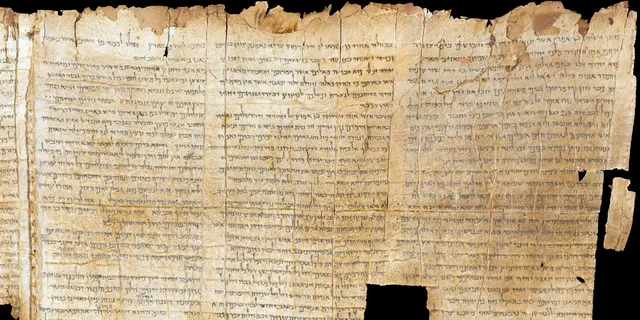
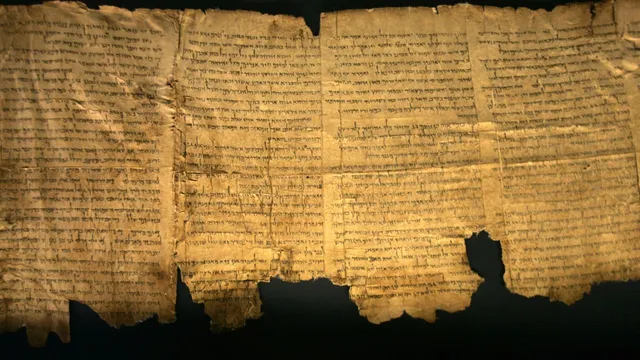
Few discoveries have affected biblical scholarship like the Dead Sea Scrolls. Found by Bedouin shepherds in the Qumran caves between 1947 and 1956, these texts date back over two thousand years and include portions of nearly every Old Testament book. Before their discovery, the oldest known Hebrew manuscripts of the Old Testament were from around A.D. 900. The scrolls suddenly pushed our textual record back by over a millennium-and the results were breathtaking.
When the ancient manuscripts were compared with the more recent Masoretic Text, scholars found astonishing consistency. The words written by anonymous scribes of the desert agreed almost line for line with the Bibles we hold today. After thousands of years of copying and translation, the message remained intact. In a world that often questions the reliability of Scripture, the Dead Sea Scrolls silently but powerfully testify that God's Word endures. "The grass withers, the flower fades, but the word of our God will stand forever" (Isaiah 40:8).
Pontius Pilate: From Question to Confirmation
For many years, skeptics doubted whether Pontius Pilate-the Roman governor who ordered Jesus' crucifixion-was a historical person. The Gospels spoke of him clearly, but Roman records seemed silent. Then, in 1961, archaeologists excavating the ancient theater in Caesarea Maritima uncovered a limestone block bearing an inscription: "Pontius Pilate, Prefect of Judea." The discovery placed Pilate exactly where the Gospels said he would be, and during the same era.
The Pilate Stone, now displayed in Jerusalem's Israel Museum, is a simple artifact-yet deeply profound. It takes a man who might have been dismissed as a literary creation and anchors him within Roman administration and culture. Jesus did stand before a man named Pilate. The events of Good Friday unfolded in real sunlight, under real authority, in a real land ruled by real people. Faith, then, is not a leap into myth; it's a response to history's living truths.
The Pool of Bethesda: Healing Waters Rediscovered
In John 5, Jesus heals a paralyzed man at the Pool of Bethesda, described as having "five porticoes." For years, scholars dismissed the description as symbolic-until excavation work north of the Temple Mount in the late 19th century revealed a complex with precisely five colonnaded porches surrounding twin pools. Once assumed allegorical, this site is now among the most reliably identified biblical locations in Jerusalem.
Here again, archaeology aligns with Scripture-not to prove faith by force, but to affirm that the Savior walked among concrete realities. As pilgrims stand today by the ruins of Bethesda, they stand where mercy met brokenness, and wholeness triumphed. Each stone seems to echo Christ's command: "Rise, take up your bed, and walk."
Why These Discoveries Matter
Some may wonder-why do these finds matter for faith? After all, belief in God doesn't rest on pottery shards or ancient inscriptions. And yet, each discovery lights a candle of affirmation within a skeptical world. Archaeology doesn't create faith, but it reminds us that faith is reasonable, anchored in reality, and historically coherent. When the Bible speaks of nations, kings, and battles, it does so as a testament to God's presence in human affairs. These findings don't replace spiritual experience-they complement it, confirming that the eternal Word has always walked hand-in-hand with human history.
The Marriage of Faith and Fact
Faith does not depend on proof, but God, in His kindness, often leaves traces for those with searching hearts. Each fragment unearthed from ancient deserts or temple ruins is a whisper of divine continuity. It tells us our faith isn't misplaced-it's rooted in the same reality that unfolded thousands of years ago under the same sun and sky.
Lessons from the Dust: What Archaeology Teaches Our Souls
Beyond the thrill of discovery lies something more profound: the humility of time. Archaeology teaches us that history, like faith, requires patience. The answers we long for may remain buried until the proper season, when God reveals them-not to satisfy curiosity, but to nourish conviction.
When we see how God's truth survives the ages-etched on clay, hidden in caves, or buried beneath centuries of rubble-we learn to trust Him with our own current uncertainties. The same God who preserved His Word through millennia is faithful to preserve His promises in our lives. Just as the scrolls of Qumran lay untouched until the world was ready, so some of God's plans in our own stories await their appointed reveal.
Standing Among the Ruins-and the Promises
As modern pilgrims walk through Israel, exploring places like Megiddo, Bethsaida, or Caesarea, there is a quiet realization: these aren't just ruins. They're living reminders that God's Word breathes through time. The ancients told their stories in stone and parchment, but the Author behind those stories remains unchanged. From Abraham's journey through Canaan to the empty tomb outside Jerusalem, archaeology and faith together weave a tapestry that points toward the same truth-God's Word stands firm.
The Echo That Never Fades
The dust of the Near East continues to yield its secrets, and with each whisper from the past, faith finds fresh affirmation. We don't need ruins to believe-but oh, how they inspire us to worship the God who not only writes history but inhabits it. Every artifact, every inscription, every buried wall uncovered in light is another echo of His faithfulness.
Jesus told the Pharisees, "If these should hold their peace, the stones would immediately cry out" (Luke 19:40). And indeed, they have. Across millennia, the stones cry-not with mere data, but with testimony. They proclaim that the stories of Scripture resound through the ages with truth and trustworthiness. They testify to a God whose promises do not decay with time.
To believe the Bible is not to close one's eyes to history-it's to open one's soul to the God who wrote it. Whether in the ruins of Jericho or the caves of Qumran, the Lord has left fingerprints of grace across the landscapes of time. And as we uncover them, we are reminded that our faith, too, rests on solid rock.