Faith. It's one of those words that Christians use daily, sometimes so naturally that we forget how radical it truly is. Yet if you distill Christianity down to one pure essence-one inner flame that lights every belief, prayer, and act of love-you find faith. Not a vague optimism, not a sentimental hope, but a deep trust in the unseen, a confident reliance on the goodness and promises of God. Faith is not merely part of Christianity; it is the pulse that keeps the entire body alive.
The Core of the Gospel
From the very beginning, God has invited His people into a relationship built on trust, not performance. When Abraham looked up at the night sky and believed God's promise that his descendants would outnumber the stars, Scripture tells us, "it was credited to him as righteousness" (Genesis 15:6). That moment became the blueprint for the faith life: belief birthing righteousness, trust opening the door to what human effort never could. Faith, then, isn't a New Testament innovation but the golden thread weaving the entire story of redemption together.
When Jesus Christ came, He didn't dismantle that foundation-He fulfilled it. Over and over, He told people that faith was the key: "Your faith has made you well," He said to the woman who reached for the hem of His robe. "Do not be afraid; only believe," He said to Jairus before raising his daughter from the dead. Faith became the bridge between the divine and the desperate, the channel through which grace flowed freely into human need.
Faith as Relationship, Not Religion
At its heart, faith is not about religious performance or blind acceptance. It's relational. To have faith in God is to trust His character when His actions are hidden, to rest in His promises when our circumstances provide no reassurance. Faith says, "Even if I can't see, I will still believe."
Think of Peter stepping out on the water. The storm was real. The waves were fierce. Yet one word from Jesus-"Come"-was enough for him to risk everything. In that moment, Peter didn't analyze theology; he trusted the Person calling his name. That's the essential character of faith: personal, responsive, alive. Faith breathes because its object is alive.
Faith Is Not Denial
To have faith is not to ignore reality or suppress doubt. It's to acknowledge both fully while choosing to lean into God's truth. The Psalms are filled with this tension-crying out, questioning, lamenting-yet often ending with the word "yet." "Yet I will trust in You." Faith is not the absence of fear but the decision to anchor hope deeper than fear can reach.
Why Faith and Grace Travel Together
One of the most profound insights of the New Testament is that salvation is "by grace through faith" (Ephesians 2:8). Grace opens the hand of God; faith opens the heart of man. Both are gifts, inseparable partners in the divine dance of redemption. If it were by merit or effort, no one could boast. But in faith, we approach God empty-handed, trusting entirely in His generosity.
Faith, then, is the posture of humility. It admits, "I cannot save myself." It renounces both pride and despair. Pride says, "I can do enough." Despair says, "I am beyond help." Faith says, "Christ is enough." In that surrender, grace rushes in like a rising tide, carrying us places our striving never could.
Faith Shapes the Christian Life
Faith doesn't end at conversion; it's the ongoing rhythm of a believer's life. Scripture calls us to "walk by faith, not by sight" (2 Corinthians 5:7). That means every decision, every act of obedience, is rooted in trust rather than visibility. Abraham believed before he saw the child. Moses obeyed before the sea parted. Mary said yes before she understood how a virgin could bear the Son of God.
Faith teaches us patience in unanswered prayer, courage in trial, and gratitude in abundance. It transforms ordinary obedience into holy adventure. When we tithe while finances are tight, forgive when emotions are raw, or speak truth when silence seems safer, we exercise faith. And that practice strengthens spiritual muscles in ways comfort never could.
Faith in Seasons of Suffering
There's a particular depth of faith that only suffering produces. In pain, faith is purified, stripped of immaturity. Job's story gives voice to this refinement. He wrestled, questioned, and ultimately declared, "Though He slay me, yet will I trust Him." Such faith is fierce and tender at once-trust that has walked through fire and emerged still holding on.
In suffering, faith teaches us that God's goodness is not contingent on our circumstances. It anchors us beyond explanation. It believes that someday we will understand, even if today we can only whisper, "Lord, help my unbelief."
Faith and the Invisible Kingdom
So much of the Christian story unfolds in mysteries unseen: heaven, angels, answered prayer, the indwelling Holy Spirit. Faith is the lens that lets us perceive those realities. Hebrews defines faith as "the substance of things hoped for, the evidence of things not seen" (Hebrews 11:1). In other words, faith gives tangible weight to invisible truth. It acts as if the unseen Kingdom is the most concrete thing in existence-because it is.
That's why faith felt so radical in the first century and still does today. We live in a world that says, "See, then believe." Faith says, "Believe, then you will see." It challenges the world's operating system by asserting that spiritual realities shape the material world, not the other way around. The unseen Spirit moves the visible universe.
Faith and Action: Living What We Believe
True faith never sits idle. James wrote that "faith without works is dead." The point wasn't to diminish grace but to declare that real faith always produces fruit. If we truly trust Christ, our lives will show it-in compassion, in integrity, in love that reaches beyond comfort zones. Faith moves us to serve, give, forgive, and hope again.
Faith is not passive belief but active reliance. It is choosing to forgive the betrayer, to hope in dry valleys, to lift our eyes when despair says look down. It's a verb as much as a noun.
When Faith Feels Fragile
Every believer knows those seasons when faith feels small-moments when prayers seem to hit the ceiling or the heart feels empty. Yet Jesus compared faith to a mustard seed, the tiniest of all seeds that grows into a tree. He wasn't minimizing doubt; He was magnifying what even the smallest faith can do when placed in a powerful God.
God doesn't measure faith by size but by direction. A trembling hand reaching toward Him pleases Him more than a proud heart standing apart. What matters is not the strength of our faith but the strength of the One in whom our faith rests.
Even the cry, "Lord, I believe; help my unbelief!" is a prayer of faith, because it's addressed to the right Person. The struggle itself becomes sacred when it keeps us leaning into God's mercy rather than withdrawing in isolation.
Faith in a Distrusting World
The Scriptures speak of faith often, but our world rarely does without cynicism. We are conditioned to verify, to distrust, to require visible proof before commitment. Yet the Christian faith invites us to a different kind of assurance-one grounded not in naivety but in a Person who has already proven Himself faithful.
Modern believers often live in tension: wanting certainty in a world built on mystery. Yet perhaps that tension is the very space where faith thrives. It's in the unknown that trust grows deep roots. Every unanswered question becomes an invitation to rely on the unchanging character of God.
Faith's Witness to the World
When believers live by faith, they tell a refreshing story to a watching world-the story that there is a trustworthy God who holds His promises. The world needs that testimony. Not polished perfection, but real people trusting a real God through real trials. Our faith becomes a light precisely when life grows darkest. It whispers, "God is still good," even through tears.
Living Faith Daily
Faith is not a spiritual concept to admire from afar; it's a life to be lived moment by moment. It flourishes not only in churches but in commutes, kitchens, classrooms, and late-night hospital rooms. Every "yes" to God in ordinary places builds a life of extraordinary faith.
Each day offers countless opportunities to trust: trusting His timing when dreams delay, trusting His love when we feel unworthy, trusting His direction when the road bends unexpectedly. Such faith turns life into a pilgrimage rather than a performance. And along the way, we discover that as we hold fast to God, He is already holding us firmer still.
The Steady Flame of Faith
Christianity without faith is like a lamp without oil-decorative, but powerless. Faith fuels every other spiritual virtue. It ignites love, sustains hope, and gives endurance meaning. It is the whisper that says, "God is here," when everything else says otherwise.
When the disciples asked Jesus to increase their faith, He didn't hand them a formula. He gave them Himself. Because in the end, faith grows not by trying harder, but by knowing Jesus more deeply. The more we gaze upon His goodness, the more we trust His heart. The more we trust His heart, the more we find peace-real, resilient peace that carries us through the storms.
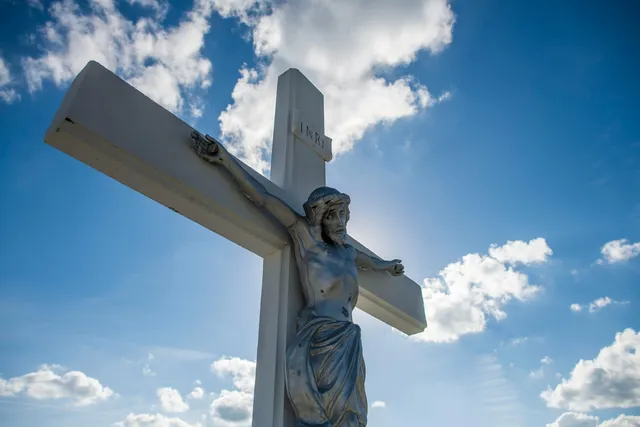
So why is faith central to Christianity? Because Christianity is not built on clarity of explanations but on confidence in a Savior. It's not about understanding every mystery, but about entrusting every fear to the hands that bear the scars of love. And when we do, faith becomes not just a belief-but a way of breathing.