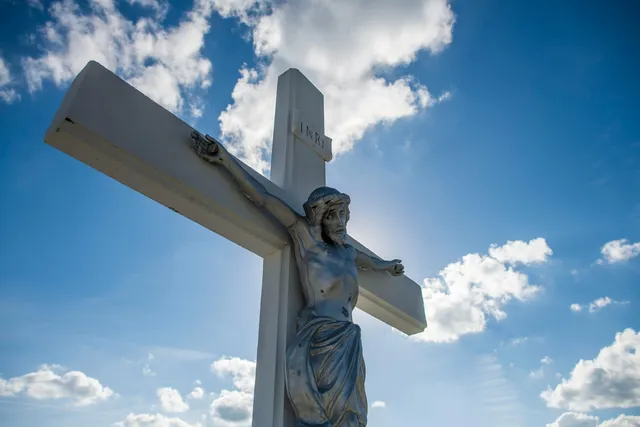
Hope is one of those words Christians speak often but rarely pause to define. It's painted in hymns, whispered in prayers, and stamped across inspirational wall art-but what does it truly mean when a follower of Jesus says, "My hope is in the Lord"? The answer runs deeper than wishful thinking or optimism. For Christians, hope is not a vague fling at the future; it's a living anchor tied to the steadfast faithfulness of God.
The Difference Between Hope and Optimism
In everyday speech, hope often sounds like optimism-a bright outlook, a positive attitude, a desire that things will turn out well. Yet in Scripture, hope carries a radically different tone. It isn't based on moods or probabilities, but on certainty in God's promises. Optimism looks at the circumstances; Christian hope looks at Christ, regardless of the circumstances.
The writer of Hebrews describes hope as "an anchor for the soul, firm and secure" (Hebrews 6:19). Anchors don't float on gentle seas; they take hold in turbulence. So, biblical hope isn't fragile-it's forged in the storms. It does not say, "Maybe God will fix this," but "Even if He doesn't, I trust His goodness." That subtle but sacred difference is what transforms hope from a feeling into faith in motion.
Hope Grounded in God's Character
Every human form of hope depends on changeable things-health, success, reconciliation, answered prayers. The Christian's hope, by contrast, rests in something unchanging: the character of God Himself. In the Old Testament, hope often appears intertwined with waiting-waiting on the Lord, trusting that what He has promised will yet come to pass. "The LORD is good to those whose hope is in him, to the one who seeks him" (Lamentations 3:25).
That verse was written from the ashes of devastation, when Jerusalem lay in ruins. Still, Jeremiah clung to hope, not because his situation was improving, but because God's mercy had not ceased. To define Christian hope, then, we must start not with the circumstances of life, but with the unshakeable faithfulness of the Lord.
Hope as Waiting With Confidence
Waiting is perhaps the hardest part of Christian hope. It requires patience in the space between promise and fulfillment-between Good Friday and Easter Sunday, between doubt and divine deliverance. Abraham waited decades for God's promise of a son; Israel waited centuries for their Messiah. Still, faith grew in the soil of delay. Hope matures in the waiting room of God's plans.
In a culture obsessed with speed and instant results, hope feels countercultural. But to wait in faith is not to sit idly; it's to trust actively-to believe that, even unseen, God is weaving redemption into the story.
The Resurrection as the Core of Christian Hope
If you want to trace hope to its heartbeat, look to the empty tomb. The resurrection is not only a past event-it's the lens through which Christians interpret everything. Peter writes, "He has given us new birth into a living hope through the resurrection of Jesus Christ from the dead" (1 Peter 1:3). This hope is "living" because Christ is alive; it breathes assurance into every fear.
Our world often treats hope as self-generated: believe hard enough, and things will improve. But Christian hope is received, not manufactured. The resurrection declares that even death, our fiercest enemy, cannot erase the purposes of God. Every loss, every unanswered question, every unfulfilled promise stands under the light of the risen Christ. That truth transforms the nature of hope from a fragile dream to an eternal certainty.
When Hope Hurts
Let's be honest: hope isn't always warm or easy. Sometimes, believing that tomorrow will bring joy feels like a burden more than a blessing. In seasons of grief, exhaustion, or disappointment, the words "just have hope" can feel hollow. Yet that's precisely when Christian hope reveals its depth.
Hope doesn't deny pain-it defies despair. It does not demand that we plaster smiles over tears; rather, it invites us to lift our eyes beyond them. Paul's words in Romans 8 remind believers that creation itself groans, "as in the pains of childbirth," waiting for redemption. That groaning is part of hope's anatomy-it's the tension of living between what is and what will be. The suffering doesn't cancel out the hope; it confirms that we are still waiting for the full unveiling of glory.
Hope Lived Out: The Everyday Practice
Hope is not simply a theological word; it's a way of living. It manifests in small, courageous choices: responding kindly when wronged, forgiving when deeply wounded, praying again after silence, working honestly in a world that rewards shortcuts. Each act becomes a seed sown in faith that God's kingdom is coming even when unseen.
Hope and Perseverance
Romans 5 outlines a sacred sequence: "suffering produces perseverance; perseverance, character; and character, hope." Notice that hope is not the starting point-it's the outcome of faith refined by trials. God doesn't waste the hardships; He uses them to deepen the roots of hope so they can hold firm when storms return.
That pattern reframes our perspective. Instead of seeing challenges as hope's enemies, we can see them as its trainers-events that strengthen our trust muscle. In the furnace of waiting, we discover that hope isn't fragile after all; it's fireproof.
Hope as a Witness
In an anxious and cynical world, hope becomes a form of evangelism. When others see believers confident in Christ despite uncertainty, something luminous shines through. Peter calls Christians to "always be prepared to give an answer to everyone who asks you to give the reason for the hope that you have" (1 Peter 3:15). That question arises only when people can see that hope at work.
A life anchored in hope speaks volumes louder than words. It declares, "I believe God's story ends in redemption," even when the current chapter feels unfinished.
The Eternal Perspective: Hope Beyond This Life
Christian hope stretches beyond the boundaries of time. While much of the world's hope aims at immediate happiness, the believer's gaze extends to eternity. Revelation's final promise-"He will wipe every tear from their eyes"-is not sentimental poetry; it's the Christian's ultimate horizon line. Every ache of this world aches toward that fulfillment.
That eternal hope does not detach us from life's responsibilities; rather, it deepens them. A hope set on heaven fuels compassion on earth. Knowing that Christ will bring perfect justice makes us care deeply about justice now. Knowing He will heal all wounds inspires us to bring comfort today. The eternal doesn't replace the temporal-it redeems it.
Living With Hope in Uncertain Times
Our generation knows uncertainty all too well-economic instability, cultural division, wars, and a persistent undertone of fear about the future. Against that backdrop, hope can sound naïve or unrealistic. Yet, precisely here, the gospel calls believers to embody a counter-story. Christian hope is not a denial of reality but a proclamation of a greater one: that God is still sovereign, Christ is still risen, and love is still leading history toward renewal.
Hope is not blind-it's visionary. It sees beyond what the eye observes to what the heart knows by faith. That kind of hope transforms daily living: it turns anxiety into prayer, impatience into endurance, and despair into expectancy. Hope doesn't necessarily make life easier; it makes life meaningful.
How Hope Transforms the Heart
Hope works quietly, like yeast in dough, shaping our emotions, our disciplines, and our vision of God. It teaches us to pray in the language of trust, to dream under the sovereignty of grace, and to face tomorrow-even if trembling-with the confidence that our Redeemer lives.
As we dig into Scripture, we discover that hope is never solitary. It always walks hand-in-hand with faith and love. Faith looks back to what Christ has done; love acts in the present; hope looks forward to what He will do. Together, they form the Christian's compass for navigating this world. Without hope, faith turns static and love loses endurance. But with hope, every setback is not an ending, but a turning page.
Holding Fast to the Anchor
When Christians define hope, they aren't describing a fleeting emotion or a shallow attempt at positivity. They are describing the confident expectation that God will be true to His word-that the same Jesus who conquered death will complete the good work He began in each of us. This hope doesn't fade because it's not tied to circumstance; it's tied to Christ, who is the same yesterday, today, and forever.
So whether you find yourself in bright sunlight or under storm clouds, remember: hope is not gone. It is alive because He is alive. Lift your eyes to the One who promised, and let hope rise-not as a fragile wish, but as a steadfast anchor. Because in the kingdom of God, hope is not a gamble. It's a guarantee signed in the scars of Jesus and sealed in His resurrection.
Such hope is unstoppable because it flows from the unchanging heart of God Himself.