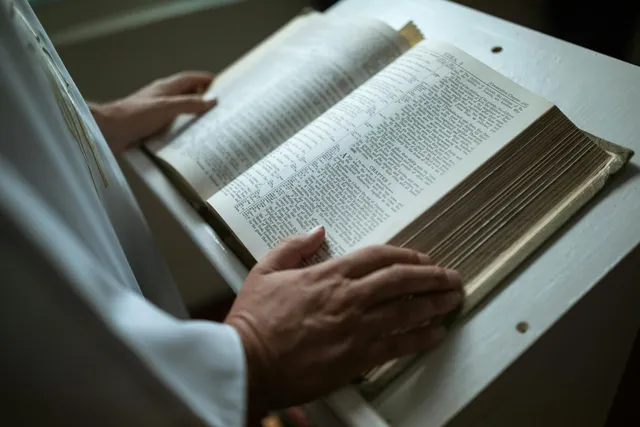
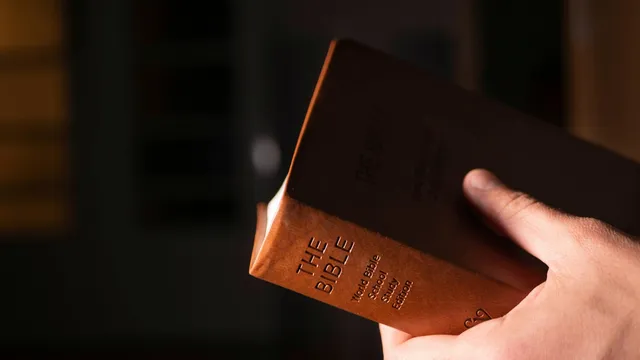
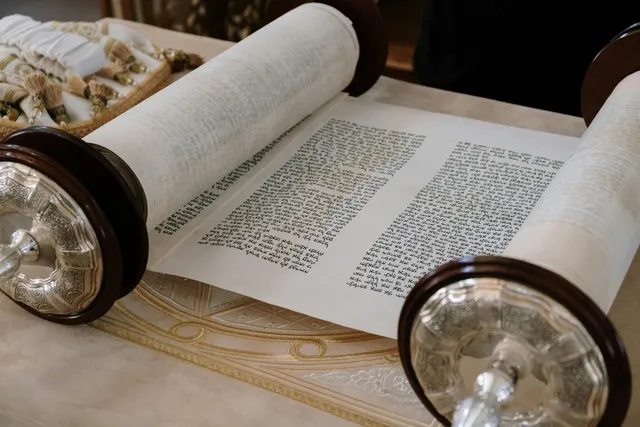
When you hold a Bible in your hands, you're really holding two immense and interwoven stories-the Old Testament and the New Testament. At first glance, this division may seem simple, even tidy: the first part is ancient history, the second part is centered on Jesus Christ and the early Church. But the truth runs deeper than a chronological or literary separation. The two testaments are not conflicting halves of a divided book-they form a single, living story of God's relentless love for humanity. To understand why there are two testaments, we need to see how each reveals a different phase in the same divine promise.
The Word Written Across Time
The Bible stretches across more than a millennium of human history. Written by prophets, poets, shepherds, kings, fishermen, and apostles, it carries the fingerprint of human voices-yet pulses with one Spirit. The Old Testament was written in the long centuries before the birth of Christ, in Hebrew (and a little Aramaic). These were the Scriptures Jesus Himself read, memorized, and quoted. The New Testament, written in Greek after His resurrection, tells how the long-promised Messiah fulfilled every covenant before Him and launched a new covenant sealed with His blood.
From Abraham to Paul, it's one story, one heartbeat of God pursuing His people. The word 'Testament' literally means 'covenant,' a sacred agreement. So when we speak of the Old Testament and New Testament, we're really talking about the Old Covenant and the New Covenant-the first one written in stone and ritual, the second written on hearts by the Spirit of grace (Jeremiah 31:31-33).
The Old Testament: Promise and Pattern
The Old Testament is not just background reading for Christians-it is the bedrock of faith, the unfolding Revelation of who God is. It opens with creation's beauty and humanity's tragic fall, then carries us into centuries of covenant and law, prophets and poetry, faithfulness and failure. Every story, even the painful ones, points forward to a deeper rescue that only God could bring.
In Genesis, God calls Abraham-an act of pure grace-to become the father of a nation that's meant to bless the world. Through Moses, He gives that nation the Law, a mirror that reveals both His holiness and human inability to meet it. Through kings and prophets, He keeps reminding His people of His faithfulness, calling them back again and again. And through the exile and return, He teaches that His presence isn't confined to a temple, but finds its home wherever hearts turn to Him in humility and trust.
Threads of Christ in Ancient Pages
For Christians, one of the most breathtaking realizations is seeing Christ woven all through the Old Testament. The lamb sacrificed on Passover, the suffering servant of Isaiah 53, the righteous branch promised to David-all these moments are shadows of the Messiah to come. Jesus Himself told His disciples, "These are the Scriptures that testify about me" (John 5:39). In every promise, every prophecy, every Psalms of yearning, the Old Testament points forward, whispering His name.
The New Testament: Fulfillment and Life
The New Testament opens with a miracle-the long wait is over. God's promises walk among us in the person of Jesus of Nazareth. The four Gospels don't erase the old-they complete it. Matthew begins by tracing Jesus' lineage to Abraham, signaling continuity. Mark bursts into the story like a trumpet, calling Israel to repentance as Isaiah's words come true. Luke shines with compassion for every outsider-the poor, the widow, the foreigner-fulfilling God's heart for justice. And John goes even deeper, declaring that the Word that spoke creation into being has now become flesh and dwelt among us (John 1:14).
Then comes the birth of the Church in Acts, showing that Christ's ministry didn't end with the cross-it multiplied through the Spirit into the lives of ordinary people transformed by grace. Paul's letters, full of theology and tenderness, explain what it means to live as new creations, no longer under the condemnation of the Law but under grace. The rest of the letters echo the same anthem of hope, and Revelation closes the story with a vision of all things made new again.
The New Covenant in Christ
When Jesus took bread and cup at the Last Supper, He declared, "This cup is the new covenant in my blood" (Luke 22:20). With those words, He linked centuries of longing to a single act of redemption. The Old Covenant relied on human obedience; the New Covenant rests on divine faithfulness. The sacrifices once repeated day after day found their completion in His once-for-all atonement. No longer were the people of God defined by ethnicity or ritual, but by faith in the One who fulfilled every promise. The New Testament isn't a replacement; it's a realization. It's God saying, "The time has come. I'm doing something new."
The Continuity of God's Story
It's tempting to think of the testaments as 'before' and 'after' books, as if the Old is an ancient relic and the New a modern Revelation. But Scripture doesn't read that way. The Apostle Paul saw the continuity clearly, calling the Law a "tutor" leading us to Christ (Galatians 3:24). The faith of Abraham and the faith of a 21st-century believer are one and the same-trust in the God who keeps His promises.
The two testaments speak to each other like call and response. The cries of the Old find their answer in the songs of the New. The suffering in Job finds solace in the resurrection of Christ. The longing Psalms echo into Revelation's hallelujahs. Every page is connected, and every Revelation deepens as the light grows brighter. Without the Old Testament, the New would lose its foundation. Without the New, the Old would remain an unfinished symphony. Together, they form the full melody of redemption.
Why Did God Choose to Reveal in Two Parts?
Maybe the deeper question isn't historical but relational: why did God choose to unfold His Word in two great movements instead of one? Part of it lies in how He relates to humanity. God meets us where we are and leads us step by step into truth. The Old Testament lays the groundwork-the understanding of sin, holiness, covenant, sacrifice, and promise. The New brings the fulfillment-the person of Jesus, who brings grace, forgiveness, and the Holy Spirit's indwelling presence.
In other words, God reveals Himself gradually, allowing His people to grow into the relationship. He never overwhelms; He invites. Just as a teacher builds lesson upon lesson, God builds Revelation upon Revelation until, in Christ, the picture becomes complete.
Law, Grace, and the Human Heart
The Law wasn't a mistake; it was a mirror. It showed us our need, our inability to reach perfection on our own. Paul described it as holy and good but powerless to save (Romans 7:12-13). The Law's purpose was not to make humanity righteous but to make humanity ready-for grace. When that grace came in Christ, the written code gave way to the Spirit working within. The two testaments are like two stages in the same journey: conviction and redemption, command and completion, shadow and substance. Both are gifts from the same loving God.
The Bible as One Story That Leads to a Cross
Picture Scripture as a vast arc-from creation to re-creation. In the beginning, the world is made good; in the end, it's made new. In the middle stands a cross, the hinge of all history. The Old Testament builds toward it through centuries of promise; the New Testament flows from it in rivers of grace. The cross binds them both, and the empty tomb seals their truth. That's why reading the Bible as one whole narrative makes it come alive-not as two disconnected testaments, but one continuous Revelation of Jesus Christ.
Living Between the Testaments
In a sense, every Christian today lives in the space between the pages-the place where the promises have been fulfilled, but the final redemption still awaits. We look back to the cross and resurrection, but forward to the kingdom fully realized. That's why both the Old and New Testaments remain vital to our daily walk. The prophets remind us of God's justice and patience. The Psalms teach us to pray with honesty. The Gospels remind us whom we follow. The epistles shape our community and character. We need them all, just as the heart needs both rhythm and breath.
From Pages to Practice
Understanding why the Bible has two testaments isn't merely an academic exercise-it reshapes how we live. The same God who spoke at Sinai still speaks through His Word today. The same Spirit who inspired prophets now dwells in believers. When we open Scripture, we aren't reading ancient archives; we're meeting the living God who continues His story in us. Each time we draw near, He invites us deeper into that ongoing covenant, one written no longer on stone tablets but in our hearts.
The One Story That Holds Us Together
So why does the Bible have Old and New Testaments? Because God's story is too vast, too patient, too profound to be confined to a single act. It is the story of a promise made and a promise kept. The first covenant teaches us our need for mercy; the second pours that mercy out in full measure through Christ. Together, they tell us that God is faithful from beginning to end. They remind us that His Word is not just history, but hope. And every time we turn its pages-from Genesis to Revelation-we rediscover the same heartbeat: God's steadfast love endures forever.
In our daily lives, that truth steadies us. It means that no season is wasted, no waiting is pointless, no chapter forgotten. The same Lord who walked with Abraham and Moses walks with you today. The same Spirit who breathed life into the prophets breathes life into your spirit now. And whether you're reading from the ancient songs of David or the letters of Paul, you are standing inside the same enduring covenant-one written by the hand of a faithful God who always finishes what He begins.